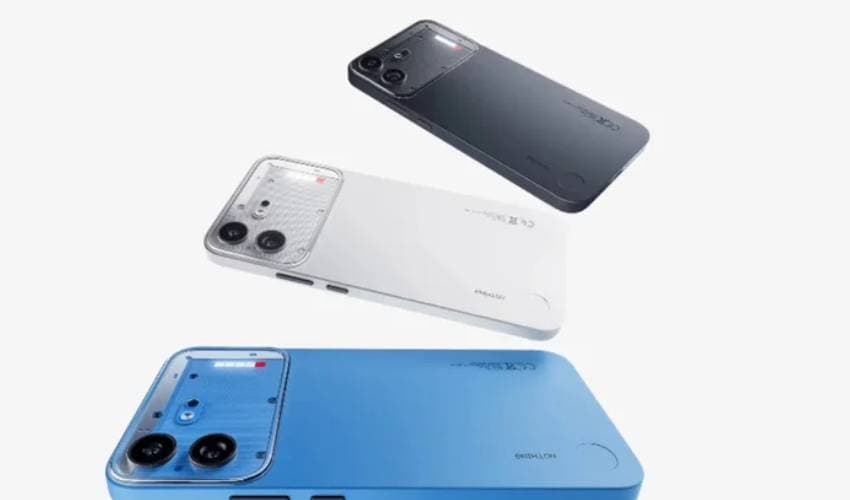
Nothing has introduced the Phone 4(b) as the first model in its new B-series smartphone lineup, offering a more affordable alternative to the Phone 4(a) by trimming features across several key areas.
Priced at £299 in the UK (around $399), the Phone 4(b) is £50 cheaper than the Phone 4(a), which debuted earlier this year at £349.
The lower price comes despite rising production costs across the electronics industry, driven partly by increasing demand for memory chips used in artificial intelligence data centres.
To reduce costs, Nothing has replaced the Phone 4(a)'s glass back with a plastic rear panel while retaining the company's signature transparent-inspired design and Glyph lighting.
Display and performance downgraded
The Phone 4(b) features a 6.77-inch OLED display, similar in size to its predecessor, but with a lower 1080 x 2344-pixel resolution instead of 1224 x 2720 pixels.
Its peak brightness has also been reduced from 4,500 nits on the Phone 4(a) to 2,000 nits, making outdoor visibility and HDR performance less impressive.
Under the hood, the new device is powered by Qualcomm's Snapdragon 6 Gen 4 processor, replacing the more capable Snapdragon 7s Gen 4 chip found in the Phone 4(a).
Although both phones offer the same base RAM and storage options, the Phone 4(b) uses slower UFS 2.2 storage rather than the faster UFS 3.1 standard.
Simplified cameras, bigger battery
Nothing has also simplified the rear camera system.
The Phone 4(b) includes a 50-megapixel main camera and an 8-megapixel ultra-wide sensor, removing the dedicated telephoto lens available on the Phone 4(a).
Battery capacity has received a modest upgrade, increasing to 5,200mAh on the international model from 5,080mAh on its predecessor.
However, charging speeds have dropped from 50W to 33W, meaning the larger battery takes longer to recharge.
Is it worth buying?
While the Phone 4(b) offers a lower entry price, analysts note that the savings are relatively small compared with the number of hardware compromises.
For buyers willing to spend slightly more, the Phone 4(a) still delivers a sharper display, brighter screen, faster processor, more versatile cameras and quicker charging, making it the stronger overall value despite its higher price.
The Phone 4(b) is aimed at budget-conscious users, but its feature reductions may make the Phone 4(a the more attractive option for many consumers.