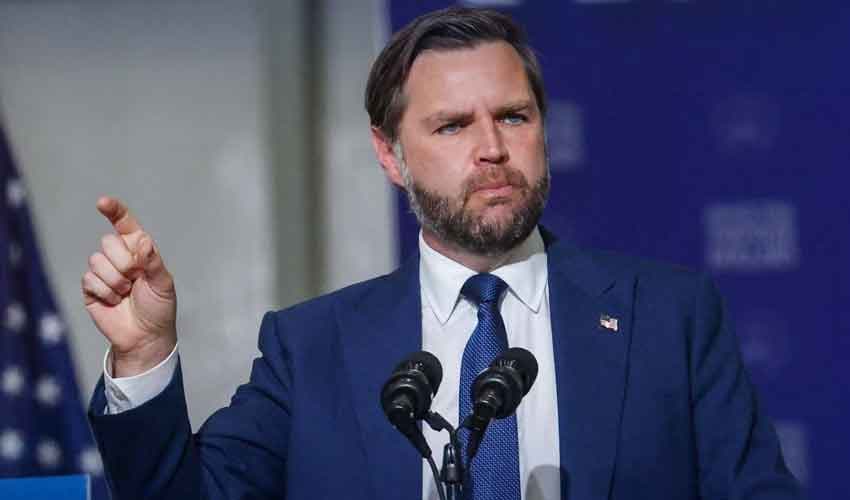
US Vice President JD Vance has alleged that some individuals within the Israeli government attempted to undermine Washington's negotiations with Iran in an effort to prolong the conflict.
Speaking on The Joe Rogan Experience podcast, Vance said diplomacy remains the best path to resolving the crisis, even as military pressure continues.
In a wide-ranging interview on The Joe Rogan Experience, JD Vance said he was convinced that certain individuals within the Israeli government had tried to steer the United States away from negotiations with Iran.
"I know beyond a shadow of a doubt that there have been people within the Israeli government who are trying to actually shift us away from that policy because they want to continue the military campaign," Vance said.
He claimed those individuals were also attempting to influence American public opinion.
"There are some people within their system... who are manipulating and trying to change American public opinion to keep the war going on indefinitely. Again, not towards any objective, but just indefinitely."
'America First' should guide US policy
While acknowledging that foreign governments routinely seek to influence Washington's policies, Vance said the real concern arises when American officials allow such influence to shape decision-making.
"I don't even mind an effort to try to influence foreign governments to try to influence the United States all the time. Israel does it, other countries do it. It's just sort of the nature of the beast," he said.
"What bothers me is actually when American leadership allows that influence to affect their judgment and to affect what they are advocating for."
Vance emphasized that his responsibility is to represent American interests above all else.
"I represent Americans first, and that's the way that I've tried to do this job."
The vice president pointed to a recent Time magazine article that he said described an Israeli government-funded influence campaign aimed at undermining the Trump administration's negotiations with Iran.
According to Vance, the report alleged that former Trump campaign manager Brad Parscale received funding from certain elements within the Israeli government through a $45 million lobbying contract, which was then allegedly used to pay online influencers critical of the ceasefire and the administration's diplomatic efforts.
Vance said many of those influencers had personally targeted him on social media and through media leaks.
"They're attacking me obsessively, saying that we should not be negotiating with Iran. We should just keep the military campaign going indefinitely."
He described the article as "worth reading," saying it identified people who had allegedly been paid through a former Trump campaign official while attacking him for pursuing the president's negotiation strategy.
Brad Parscale rejects allegations
Brad Parscale strongly denied the allegations.
In a statement on social media and to Time, Parscale said there was "not a single shred of evidence" that he had acted against the Trump administration or opposed its Iran policy.
"I have never funded, organized, or participated in any effort to undermine President Trump -- ever, including his MOU or ceasefire proposal," Parscale said.
He added that claims he coordinated a campaign to prolong the war were "completely false."
Vance says criticism of diplomacy not the problem
Despite his criticism, Vance stressed that he was not accusing the entire Israeli government of opposing negotiations.
He said he maintains good relationships with many Israeli officials, including Israel's ambassador to the United States, whom he described as "a really good guy."
"There are people within their government that I love, I have good relationships with. I hope, and I don't think that they're part of this," he said.
Vance also noted that many people inside Israel support diplomacy and recognize that an indefinite military campaign is not in Israel's long-term interests.
Trump made Iran strike decision independently
The vice president rejected suggestions that Israel had pressured or manipulated President Donald Trump into launching military action against Iran.
"I was in the room for those decisions," Vance said, insisting Trump independently concluded that Iran must not be allowed to obtain a nuclear weapon.
He dismissed allegations that Israel or any foreign country had "blackmailed" or controlled the president's decision-making.
According to Vance, the administration's objectives remain preventing Iran from acquiring nuclear weapons while ensuring the free flow of oil and gas through the region.
Vance argued that military force alone cannot resolve the crisis surrounding the Strait of Hormuz. He said diplomacy must accompany military pressure if Washington hopes to achieve lasting stability and protect global energy supplies.
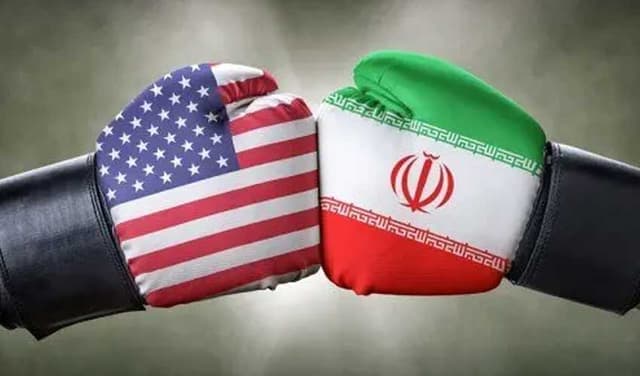
His remarks come amid renewed hostilities between the United States and Iran following the collapse of a Pakistan-mediated ceasefire, fresh US airstrikes, Iranian attacks on commercial shipping, and escalating military exchanges across the Middle East.
Vance addresses criticism over Israel stance
Responding to accusations that he is anti-Israel or antisemitic, Vance rejected the claims. "I have a ton of respect for the Jewish religion," he said.
"I've never heard a good compelling argument for why I'm an antisemite even though I've been accused of being antisemitic by many people."
He described himself as a moderate voice in the often polarized US debate over Israel.
"My attitude towards this is Israel is an ally like France or the UK. We are going to have disagreements with them; we are going to have agreements with them. There are areas where we're going to have similar interests and areas where our interests are going to diverge."
Foreign influence in US politics
During the podcast, Joe Rogan suggested concerns extend beyond lobbying, mentioning allegations that Israel exerts influence through funding, intelligence gathering and political pressure.
"The concern is that they're spying on American politicians," Rogan said.
Vance responded that while he understood those concerns, his focus remained on how foreign governments seek to shape American public opinion.
"My sense is that the way that all foreign influence works in the United States is people try to manipulate American public opinion, and then from manipulating public opinion they try to get the outcomes that they want."
He added that Israel is not the only country attempting to influence US politics but acknowledged it is "more effective than most."
Vance comments on Jeffrey Epstein files
During the same interview, Vance also addressed the Trump administration's handling of the Jeffrey Epstein files, acknowledging mistakes in how the releases were communicated.
"We absolutely screwed up the comms of the Epstein files," he said.
Vance argued that the administration should have released all available documents much earlier after reviewing and redacting information necessary to protect victims.
He defended former Attorney General Pam Bondi, saying he did not believe she acted maliciously but had overstated what evidence was available.
"I think Pam was trying to respond to the political moment. I think she overstated what we had and what we didn't have."
Vance rejected suggestions that the administration deliberately withheld information.
"Do I think the reason we screwed up the comms is because we were trying to hide something? No."
The vice president also speculated about Jeffrey Epstein's alleged connections to intelligence agencies. Asked whether Epstein had links to Israel's Mossad, Vance replied, "Yeah, Mossad or CIA or some other deep state, whether in America, Israel, or another country."
He claimed Epstein appeared to have connections to "the highest levels of American intelligence" as well as "the highest levels of Israeli intelligence."
Vance further suggested Epstein's Israeli political connections appeared stronger with figures on the country's political left than with conservatives.
Epstein died in a New York jail in 2019 while awaiting trial on federal sex trafficking charges. He had previously pleaded guilty in Florida in 2008 to procuring a minor for prostitution in a plea deal that drew widespread criticism.
Vance's comments came after the US Justice Department released more than 3 million pages of documents, 2,000 videos and 180,000 images under the Epstein Files Transparency Act, signed into law last November. Earlier releases included heavily redacted records, prompting criticism over delays and the pace of disclosure.