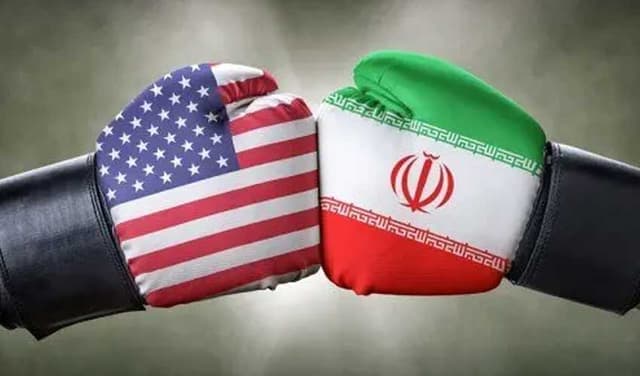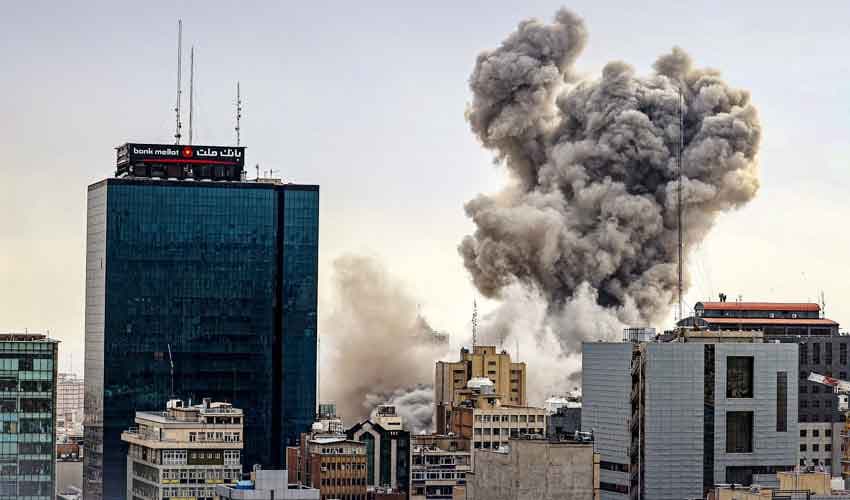
The United States launched two waves of military strikes against Iran on Wednesday, targeting coastal defenses, missile sites and military infrastructure linked to the Strait of Hormuz.
Iran responded with missile and drone attacks on US military facilities in neighbouring countries, raising fears of a wider regional conflict and further disruption to global energy supplies.
The latest escalation came after the United States reimposed a naval blockade on Iranian ports and launched fresh military operations aimed at weakening Iran's military capabilities.
According to US Central Command (CENTCOM), the first wave of attacks began at approximately 6am EDT (1000 GMT), targeting coastal defense systems and cruise missile storage and launch sites on Greater Tunb Island in the Strait of Hormuz.
A second wave followed around nine hours later, striking multiple locations across Iran, including Bandar Abbas, the country's largest port and a strategic naval hub for both the Iranian Navy and the Islamic Revolutionary Guard Corps (IRGC).
CENTCOM said US forces struck Iranian command centers, air defense sites, missile and drone capabilities, and coastal surveillance facilities as part of the operation.
The US military later confirmed it had completed the latest wave of strikes, saying the attacks were carried out under the direction of President Donald Trump.
Strait of Hormuz remains center of conflict
CENTCOM said the military operation is continuing to protect freedom of navigation in the Strait of Hormuz, one of the world's most important energy corridors.
The latest hostilities intensified after Iran announced late on Saturday that it had closed the Strait of Hormuz, with military operations now preventing commercial shipping from safely transiting the waterway.
Before the conflict, the strategic chokepoint carried about 20% of global oil and gas shipments.
The growing tensions have already affected energy markets, with Brent crude oil climbing to a one-month high of $84.95 per barrel on Wednesday.
US targets oil tanker heading toward Iran
The US military also revealed details of maritime operations conducted under the renewed naval blockade.
According to CENTCOM, American forces targeted an empty oil tanker flying the flag of Curacao after it allegedly ignored repeated warnings while attempting to sail toward Iran's Kharg Island, an important oil export terminal.
The military said Hellfire missiles were fired into the vessel's smokestack, disabling the ship.
Since resuming the blockade on Tuesday, US forces said they have redirected two vessels and disabled another attempting to approach Iranian territory.
Iran retaliates with attacks on US military sites
Iran responded by launching missile and drone strikes against US military facilities across the Gulf region.
The Islamic Revolutionary Guard Corps (IRGC) claimed responsibility for attacks targeting American military sites in Bahrain, Kuwait and Jordan.
According to the Guards, Iranian forces struck a gathering of US troops and targeted the early warning radar system at Ali Al Salem Air Base in Kuwait using missiles and drones. Iranian officials also claimed responsibility for targeting the Ali Al Salem Air Base, describing it as a strike against US military personnel stationed there.
Meanwhile, Kuwait activated its air defense systems to counter drone threats, while Bahrain's Interior Ministry confirmed that distress sirens sounded again across the country.
The Iranian army also said it targeted US military communication systems and fuel storage tanks at the Azraq base in Jordan, state media reported.
The Jordanian base hosts US military personnel and operations. There was no immediate comment from the Pentagon and the U.S. Central Command, nor from Jordan.
Jordan later intercepted eight Iranian missiles, its state news agency reported.
Explosions reported across Iran
Iranian media reported multiple explosions across several parts of the country following the US strikes. At least two explosions were heard in Bandar Abbas, while additional blasts or projectile strikes were reported near Ahvaz, Konarak, Sirik and Qeshm.
State broadcaster Press TV also reported at least two explosions in Khondab, around 250 kilometers southwest of Tehran.
Iran's Mehr News Agency reported that air defense systems were activated in Tehran to counter what it described as hostile threats.
Iran's state broadcaster IRIB reported that one of the US attacks struck near a hospital in Ahvaz that houses a pediatric cancer center.
According to the broadcaster, the hospital was temporarily evacuated, forcing families to move children outside the facility for safety. The report did not provide details on casualties at the hospital.
Iran insists MoU key to reopening Hormuz
Following the first wave of US strikes, Iran's top negotiator Mohammad Baqer Ghalibaf said the country's security depended on maintaining what he called "Iranian arrangements" in the Strait of Hormuz.
"We are in an essential and existential war with America," Ghalibaf declared.
Iran's Revolutionary Guards also warned it would continue to target US military assets in the region.
"The enemy should not assume it can sustain the current course of the conflict and turn it into a war of attrition," Revolutionary Guards spokesman Hossein Mohebbi said, according to Iran's Press TV.
"Iran's operations are currently focused on destroying US offensive military infrastructure in the region. The next phase will begin afterward."
Iranian military officials also reiterated that the only way to reopen the Strait of Hormuz is for Washington to comply with the 14-point Memorandum of Understanding (MoU) signed between the two countries in June.
Iran said implementation of its own regulations governing shipping through the Strait would remain in place until those commitments are honoured.
The Revolutionary Guards also stated that action would continue under Iran's regulations governing the strategic waterway.
US says strikes aim to weaken Iranian military
Three US officials told Reuters that the strikes are designed to degrade Iranian military capabilities before any future operations aimed at reopening the Strait of Hormuz.
The attacks specifically targeted assets that could threaten American naval forces or commercial shipping operating in the Gulf.
Trump says Iran wants deal
US President Donald Trump struck an optimistic tone despite the escalating conflict. Speaking at the Pennsylvania Defense and Innovation Summit, Trump said the United States would soon defeat Iran.
"We'll have Iran defeated soon. They'll be defeated very soon," Trump said.
He added that Iranian leaders "want to settle so badly."
"They don't like what we're doing, and they do want to settle. We'll find out whether or not we settle with them, or we just finish it off."
Trump also revealed that US negotiators had recently warned Iran to reach an agreement, saying they had told Tehran, "You better make a deal."
Amid the intensifying conflict, Trump announced what he described as a positive diplomatic development. According to the US president, Iran allowed an American citizen detained since December 2024 to leave the country.
Trump said the individual had been wrongfully detained under the Biden administration and thanked Iran for what he described as a gesture of goodwill.
"The United States of America appreciates this gesture of Goodwill by Iran," Trump wrote on Truth Social.
Human rights attorney Jared Genser identified the released American as Dena Karari, confirming she had been prevented from leaving Iran since December 2024.
"Dena is now safe and traveling back to the United States," Genser wrote on X while thanking Trump for helping secure her release.
War continues to reshape region
The current conflict began on February 28, when the United States and Israel launched attacks on Iran. Iran responded with strikes targeting Israel and Gulf countries hosting US military bases.
Since then, the war has expanded to include renewed fighting involving Iran-backed Hezbollah in Lebanon.
According to Iranian news agency Tasnim, citing a Health Ministry official, 35 people have been killed in US attacks during July alone.
Overall, the conflict has killed thousands of people, displaced millions across Iran and Lebanon, driven oil prices higher and shaken global financial markets.
This week, Trump reiterated previous threats to target Iranian energy infrastructure and also warned that bridges could become future military targets. The 1949 Geneva Conventions prohibit attacks on facilities considered essential to civilian populations.
Earlier this year, international legal experts argued that strikes on such infrastructure could constitute war crimes under international humanitarian law.
Trump also drew international criticism in April after threatening to destroy Iran's "entire civilization" before a temporary ceasefire was reached with Tehran.