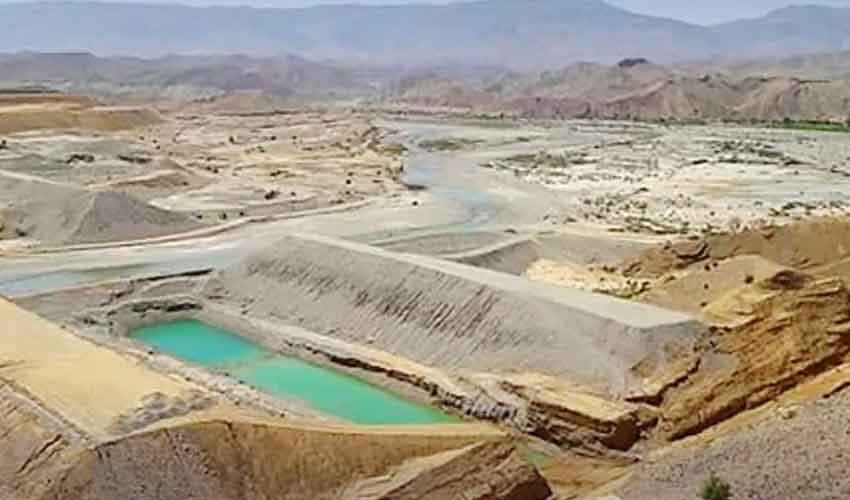
The Federal Constitutional Court has barred all courts from interfering in the construction of the Nai Gaj Dam until the project is completed, while setting aside the related judgements and directions issued by the Sindh High Court.
The court ruled that disputes between the Water and Power Development Authority and the contractor must be handled according to the procedure laid down in the dam construction contract.
The Federal Constitutional Court declared the relevant decisions and orders of the Sindh High Court to be without lawful effect.
According to the judgement, the High Court issued directions without properly considering the applicable law and the contractual dispute-resolution mechanism agreed upon by WAPDA and the contractor.
The court observed that the earlier orders also failed to adequately consider provisions of the WAPDA and National Accountability Bureau laws.
It said the constitutional jurisdiction of a High Court under Article 199 could not be invoked to effectively rewrite a commercial contract between the parties.
No court to intervene until dam completed
The Constitutional Court directed that no court should interfere in matters relating to the Nai Gaj Dam project until construction is completed. It said any dispute arising between WAPDA and the contractor must be addressed through the mechanism already included in the construction agreement.
The court explained that the directions were intended to prevent further legal obstacles from delaying an important public infrastructure project.
The Nai Gaj Dam litigation had earlier been heard by a two-member bench headed by Chief Justice Aminuddin Khan after both WAPDA and the contractor presented arguments over delays and cost-related disputes.
CJ Aminuddin Khan authors judgement
The detailed 22-page ruling was written by Federal Constitutional Court Chief Justice Aminuddin Khan. The judgement observed that decisions exceeding constitutional limits could cause a serious breakdown in the administration of justice.
It stressed that courts must remain within their lawful jurisdiction and should not interfere in specialised contractual and administrative matters where an agreed legal remedy already exists.
The court found that the Sindh High Court’s intervention had overlooked the proper legal framework governing the dispute.
WAPDA ordered to decide complaint within 15 days
The Constitutional Court directed WAPDA to decide the contractor’s complaint within 15 days of receiving it. WAPDA must examine the grievance in accordance with the terms of the construction contract and the applicable law.
The ruling makes the contractual dispute-resolution process the primary forum for addressing disagreements over the project.
Documents from the earlier Sindh High Court proceedings show that the dispute involved consultancy and construction-supervision issues, including decisions on escalation payments and compliance with previous judicial orders.
The court ruled that WAPDA would be free to initiate a fresh tendering process if the contractor violated the terms of the agreement. Any re-tendering must be conducted according to the law and applicable procurement procedures.
The direction gives WAPDA authority to take administrative action if the existing contractor fails to fulfil its contractual obligations.
However, the authority must first process the contractor’s complaint within the prescribed 15-day period.
Court seeks to prevent further project delays
The Constitutional Court said its ruling was aimed at removing further legal hurdles affecting completion of the Nai Gaj Dam.
It noted that prolonged litigation and repeated judicial intervention could delay the completion of an important public-sector development project.
By restoring the contractual dispute-resolution mechanism, the court sought to ensure that technical and commercial disagreements did not continue to obstruct construction.
The judgement also reinforces the distinction between constitutional judicial review and matters that fall within contractual, administrative or regulatory processes.
What ruling means for Nai Gaj Dam
The ruling does not decide the technical or financial claims made by either WAPDA or the contractor. Instead, it requires the parties to resolve those issues through the procedure included in their agreement.
WAPDA must respond promptly to the contractor’s complaint, while retaining the right to re-tender the remaining work if a contractual violation is established.
Until the project is completed, courts have been restrained from issuing orders that could interfere with its construction or the agreed dispute-resolution process.


.jpg&w=640&q=75 "Concerns raised over data security at DGPC")