The United States has placed the safe passage of ships through the Strait of Hormuz and Iran’s buried highly enriched uranium at the centre of any potential agreement, as Iranian Foreign Minister Abbas Araghchi arrived in Oman on Saturday for crucial talks.
Washington has demanded a public and written commitment that Iran will not attack commercial tankers again, while US officials have warned that there will be no deal unless Tehran hands over the nuclear material described by President Donald Trump’s administration as “nuclear dust.”
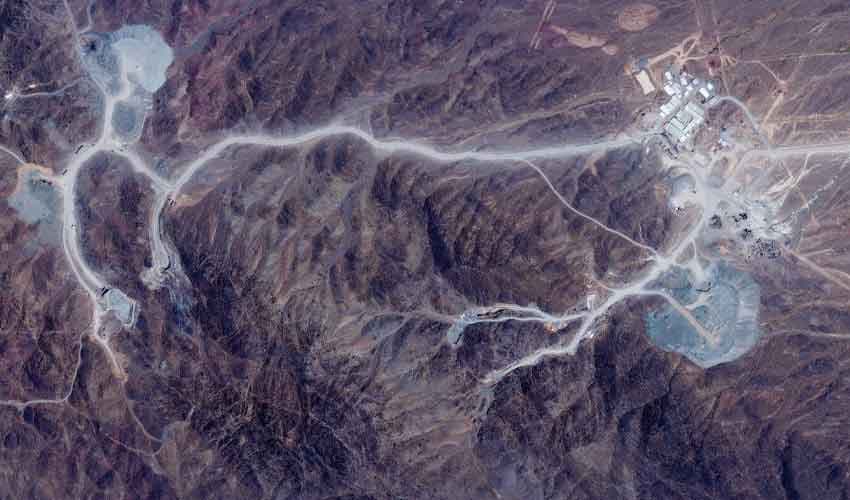
A US official told ABC News that the issue of Iran’s so-called “nuclear dust” remained firmly on the negotiating table. The term refers to highly enriched uranium believed to be buried beneath rubble following US airstrikes on Iranian nuclear facilities.
The official said Iran must either surrender the material or face what Washington described as low-cost military options designed to ensure it remains buried underground permanently.
“Either they’re going to give us the nuclear dust or we have very low-cost military options to ensure that it remains buried underground forever,” the official said.
According to the official, the United States retains military, diplomatic and economic tools that could be used to pressure Tehran if it refuses to cooperate.
Washington would prefer to excavate and take control of the remaining nuclear material, officials said. However, if Iran did not behave like what they called a “normal country,” the US could pursue alternatives, including ensuring the material remains inaccessible underground.
The official made clear that the nuclear material was not a secondary issue but a key condition of any agreement.
“If we don’t get the dust, we do not have a deal with Iran,” the official said.
Washington seeks written Hormuz commitment
The United States has also demanded a written Iranian commitment that commercial tankers will not be targeted again in the Strait of Hormuz, according to sources cited by Al Arabiya.
Washington warned Iran through intermediaries that any further hostile activity in the waterway would carry “grave consequences.”
The sources said the US would respond to additional attacks in the strait and warned that a lack of cooperation from Tehran could lead to an escalation of military action.
Also Read: US seeks Iranian pledge to free up Strait of Hormuz
US officials want Iran to publicly confirm that all shipping lanes will remain open, vessels will be able to move safely and no tolls will be imposed.
Before the war, approximately one-fifth of the world’s oil supplies passed through the Strait of Hormuz, making any disruption a serious threat to global energy markets.
Araghchi arrives in Oman for talks
Iranian state media reported that Araghchi arrived in Oman on Saturday to discuss arrangements for the safe passage of ships through the strategically important waterway.
Oman has been mediating efforts to end the conflict, which began when the United States and Israel launched airstrikes on Iran on February 28.
The war has spread insecurity across the Gulf, disrupted global energy supplies and pushed oil prices higher around the world.
CBS News and its British partner, the BBC, reported that US Vice President JD Vance, Secretary of State Marco Rubio, special envoy Steve Witkoff and Trump’s son-in-law Jared Kushner were expected to lead Saturday’s negotiations with Araghchi.
It was not immediately clear whether the US officials would attend the discussions in Oman in person or participate virtually.
Iran’s Fars news agency later cited a source as saying that no negotiations would take place until Washington retreated from its current positions.
Trump directs team to continue negotiations
Despite renewed hostilities, Trump has directed his senior advisers to continue negotiations with Iran. US officials said the president was giving his negotiating team time and space to reach an agreement, but warned that the diplomatic window would not remain open indefinitely.
One official described the situation as a “wait-and-see moment,” while another said Trump was allowing talks to proceed, “but not a lot of time.”
Also Read: Iran has asked US to continue talks, claims Trump
Trump said on Friday that Washington and Tehran had agreed to continue discussions despite the week’s military escalation.
However, he also declared that the ceasefire reached between the two countries last month was over.
“The Islamic Republic of Iran has asked us to continue ‘talks.’ We have agreed to do so, but the United States has stated to them, in no uncertain terms, that the Cease Fire is OVER!” Trump wrote on Truth Social.
US claims Iran privately admitted mistake
Senior US officials said Iranian representatives had privately acknowledged to Trump administration advisers that the attacks on commercial ships in the Strait of Hormuz were a mistake.
According to the officials, Iran said the attacks had been initiated by an “errant” faction of hardliners seeking to undermine negotiations.
“They came back to the table and said, ‘We screwed up. We made a mistake. Let’s keep talking,’” one US official said.
Washington wants Tehran to acknowledge the mistake publicly because the Trump administration considers the tanker attacks a violation of the interim ceasefire agreement.
Iran has not publicly claimed responsibility for the attacks.
Analysts have said Tehran has previously used pressure on maritime traffic as leverage in negotiations, although Iranian officials have maintained that the latest attacks were not authorised by the central government.
US disputes Iran’s account of tanker attacks
Although Iranian officials reportedly blamed an unauthorised element within their system, the Trump administration believes the ships were targeted for a different reason.
US officials said Washington understood that a southern shipping lane running along Oman’s coast would remain open under the interim memorandum.
However, Iran was allegedly surprised by how quickly commercial traffic resumed and how much oil and gas was moving through that southern route.
Also Read: Iran denies Trump claim Tehran requested for talks
According to one US official, Tehran then backed away from the original understanding.
The administration expects Iran to clarify after the Oman talks that the strait will be reopened and managed in the same way it was before the conflict began.
One official warned that if this was not Tehran’s position, “it’s not going to be a great day for them.”
US links basic shipping guarantees to nuclear talks
US officials said reopening the Strait of Hormuz was considered the simplest part of the interim agreement.
One official warned that if Iran could not honour commitments concerning commercial navigation, negotiators would never reach the more difficult issue of its nuclear programme.
Washington therefore views the Hormuz pledge as an immediate test of Iran’s ability and willingness to comply with a broader agreement.
The US has said that continued hostile activity would be met with a combination of military and economic pressure.
Iran accuses US of violating interim agreement
Araghchi, meanwhile, accused Washington of breaching the ceasefire arrangement after the US revoked a licence authorising the sale of Iranian crude.
The licence was withdrawn on Tuesday after commercial vessels were attacked.
“There can only be mutual compliance,” Araghchi wrote on X.
Also Read: Iran's supreme leader pledges revenge for slain father
Iran has maintained that both sides must honour their commitments and that any violation by Washington will be met with reciprocal action.
Tehran also disputed Trump’s claim that it had requested direct talks with the United States.
Iranian state television said Tehran had not sought negotiations but had agreed to receive Qatari mediators.
Qatari mediators meet Iranian officials
Qatari negotiators met Iranian officials on Friday in an effort to de-escalate tensions and discuss the security of the Strait of Hormuz, according to a person familiar with the matter.
The mediation followed attacks on three Qatari and Saudi commercial tankers earlier in the week.
Those incidents prompted the United States to strike Iranian sites, while Iran responded by targeting US military facilities in Gulf states.
Despite the exchange of attacks, no fresh incidents were reported on Friday or early Saturday.
Senior US officials said recent conversations with Iran had remained constructive and productive.
Trump threatens Iran over alleged assassination plot
Trump also said he had ordered the US military to prepare for strikes against Iran if Tehran carried out or attempted to carry out an assassination of the US president.
“1000 Missiles are Locked and Loaded and aimed at the Islamic Republic of Iran, with thousands of more to immediately follow,” Trump posted on Truth Social.
He said the military had been instructed to launch a massive response if Iran attempted to kill him.
The Wall Street Journal and other US media outlets reported that Israel had shared intelligence with Washington concerning an alleged new Iranian plot to assassinate Trump.
Also Read: Trump says 1,000 missiles aimed at Iran if it targets him
US officials declined to comment on those intelligence reports but said the president did not make decisions based on fear or threats.
Iran did not immediately respond to Trump’s latest remarks.
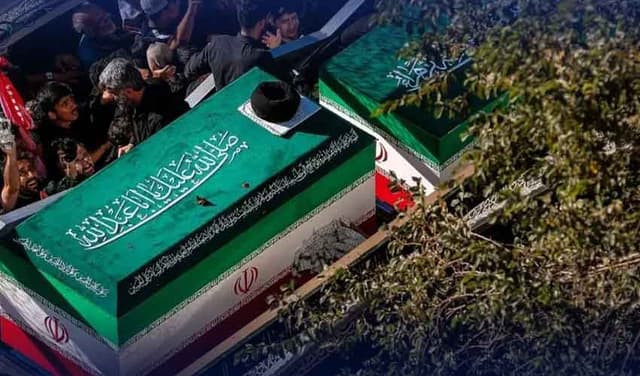
The assassination allegations resurfaced as Iran held funeral ceremonies for its slain Supreme Leader Ayatollah Ali Khamenei.
Khamenei was killed in an airstrike on February 28, the first day of the war. A large crowd of mourners gathered for the funeral on Thursday, with some carrying banners reading, “We Will Kill Trump.”
The display added to fears that hostility between Washington and Tehran could intensify despite ongoing diplomatic contacts.
US strikes leave 17 dead in Iran
At least 17 people were killed in US strikes on six Iranian cities on Wednesday and Thursday, according to the head of public relations and information at Iran’s Health Ministry.
Another 115 people were wounded in the attacks.
The latest violence has cast further doubt on the future of the interim agreement reached last month to help end the conflict.
The war is now in its fifth month and has killed thousands of people, restricted global energy supplies and raised concerns about a wider economic downturn.
Oil prices climb as tensions return
The renewed confrontation in the Gulf has driven oil prices higher after several weeks of steady declines.
Crude prices recorded their biggest weekly rise in eight weeks, increasing pressure on consumers and creating a politically sensitive issue for Trump ahead of November’s congressional elections.
The outcome of the Oman talks is expected to determine whether the Strait of Hormuz can return to normal commercial operations and whether negotiations can progress towards the more complex issue of Iran’s nuclear programme.