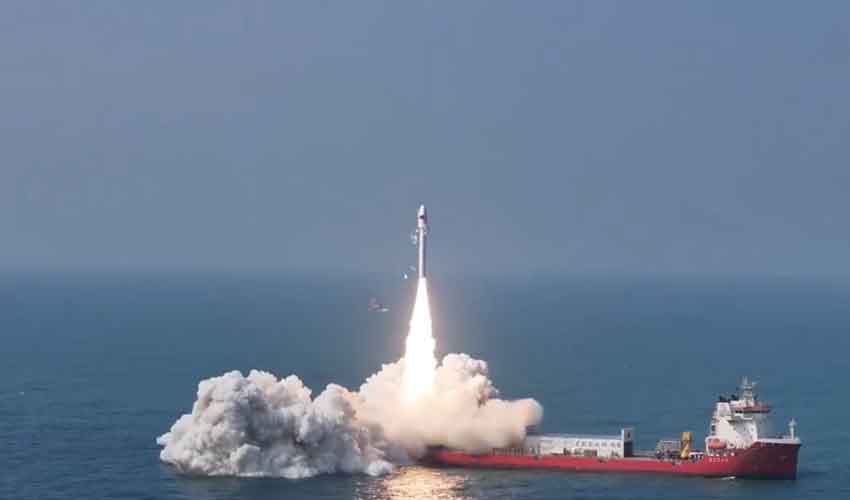
Pakistan has successfully launched its second indigenous Earth observation satellite, EO-2, marking a major milestone in the country’s space program.
According to officials, the launch significantly strengthens Pakistan’s Earth observation, imaging, and strategic planning capabilities.
A spokesperson for Suparco confirmed that EO-2 was launched from the Yangjiang Seashore Center in China.
The successful deployment of the satellite represents an important step forward in Pakistan’s growing space ambitions and technological advancement.
Enhanced Earth observation, imaging
The spokesperson said EO-2 will enhance the country’s Earth observation and advanced imaging capabilities. The satellite will provide high-quality data to support national planning and better resource management.
Its addition to Pakistan’s satellite fleet will improve the continuity and accuracy of observations, enabling more reliable monitoring of land, water, and environmental resources.
Officials highlighted that EO-2 will play a crucial role in governance and disaster prevention. The satellite’s data will support disaster management efforts, including monitoring floods, earthquakes, and other natural hazards.
It will also assist in long-term strategic planning by providing accurate and timely information for development projects.
Symbol of growing self-reliance
According to the Suparco spokesperson, the EO-2 project demonstrates Pakistan’s increasing self-reliance in satellite manufacturing.
The successful launch reflects the country’s expanding expertise in space technology and indigenous satellite production.
Director General Suparco Irfan Aslam said the satellite will further enhance Pakistan’s Earth observation and imaging capabilities, strengthening the nation’s space expertise.
He added that EO-2 will provide critical data for planning and resource management, reinforcing Pakistan’s progress in the space sector.
With the addition of EO-2, Pakistan’s satellite fleet has grown, ensuring improved monitoring capacity and greater precision in observations.