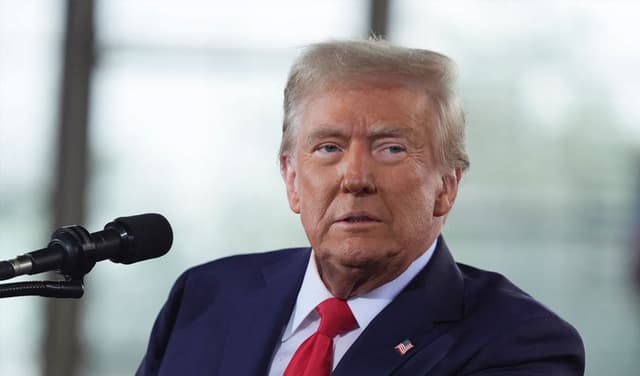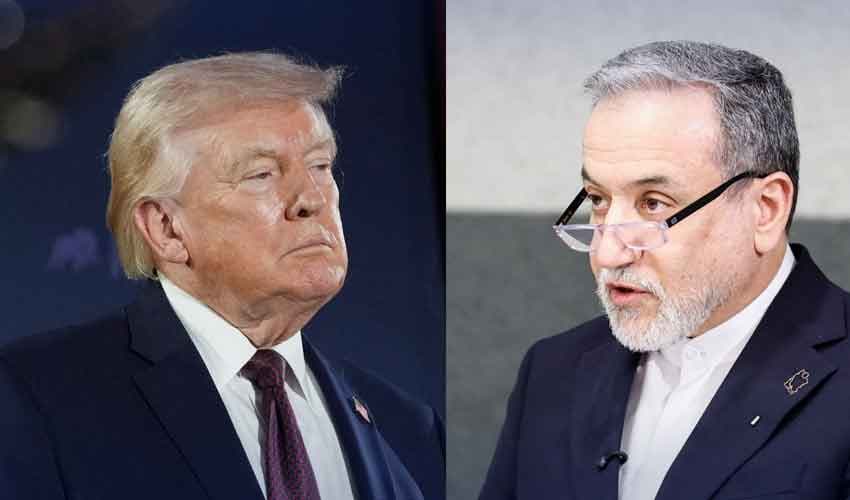
US President Donald Trump has confirmed that Washington is holding talks with Iran to negotiate an end to tensions, expressing cautious optimism while acknowledging that Tehran is not yet ready to finalize an agreement.
Speaking at the White House on Friday, Trump said the Middle East's geopolitical landscape had shifted significantly and claimed Iran was becoming more serious about negotiations.
Addressing reporters during a White House event, President Trump confirmed that communication between Washington and Tehran was ongoing.
"We are talking to them," Trump said. "I think they're being serious. I think they are being by far the most serious that we've seen them, but that doesn't mean we get there. We'll see what happens."
Despite the ongoing discussions, Trump stressed that Iran was still not prepared to reach a final deal.
"Iran is not ready for a deal yet," he said, adding that he believes Tehran is now taking negotiations more seriously than before.
Middle East dynamics have changed
The US president also argued that the balance of power in the region has shifted. According to him, Iran's influence across the Middle East has declined, saying the country is "no longer a problem."
Responding to a question about a possible US-Saudi nuclear agreement, Trump reiterated that no such deal would move forward unless Saudi Arabia joins the Abraham Accords.
"There will be no deal with Saudi Arabia until it becomes part of the Abraham Accords," he said.
Trump also warned that it would be "very bad" if China and Russia provided assistance to Iran.
Araghchi says US approach remains main obstacle
Meanwhile, Iranian Foreign Minister Abbas Araghchi offered a sharply different assessment while attending the Shanghai Cooperation Organization (SCO) foreign ministers' meeting in Kyrgyzstan.
Speaking to IRGC-affiliated Tasnim News, Araghchi said exchanges of messages with the United States were continuing, but emphasized that mediation was not the central issue.
According to Araghchi, Iran has no problem with mediation efforts. However, he argued that Washington's threatening and pressure-based approach remains the biggest obstacle to progress in peace talks.
Iran says won't accept threats
The Iranian foreign minister said Tehran would never respond positively to the language of force, intimidation, or pressure.
"Iran will not bow to American bullying," Araghchi said, adding that the country neither fears threats nor will it tolerate threatening language.
He stressed that Iran would not retreat from its principled position under any circumstances and would continue pursuing its national interests until what he described as the legitimate demands of the Iranian people are achieved.
Consultations with Russia, China continue
Araghchi said Iran remains in regular contact with both Russia and China, describing consultations with the two countries as ongoing.
He revealed that he held detailed discussions with Chinese Foreign Minister Wang Yi and Russian Foreign Minister Sergey Lavrov during the SCO meeting whenever opportunities arose.
The Iranian foreign minister also acknowledged discussions involving Pakistan on various diplomatic initiatives, but clarified that the core challenge in US-Iran relations is not the absence of mediators.
"Naturally, there are talks with Pakistan as a mediator regarding various initiatives and proposals," he said, while insisting that Washington's overall approach remains the primary obstacle.
Strait of Hormuz remains core priority
Araghchi reaffirmed that protecting Iran's rights and interests in the strategically important Strait of Hormuz remains one of Tehran's fundamental principles.
He said Iran would safeguard those interests "at all costs" and would continue defending the country's position until its national objectives are fulfilled.
Speaking after the SCO summit in Kyrgyzstan, Araghchi described the organization as a growing regional bloc whose members must work together to counter what he called unilateral US and Western policies.
He said discussions at the meeting largely focused on confronting unilateralism and linked the issue directly to what he described as aggressive US actions against Iran.
According to Araghchi, cooperation among regional powers remains essential in responding to Western efforts to impose a hegemonic agenda on international relations.