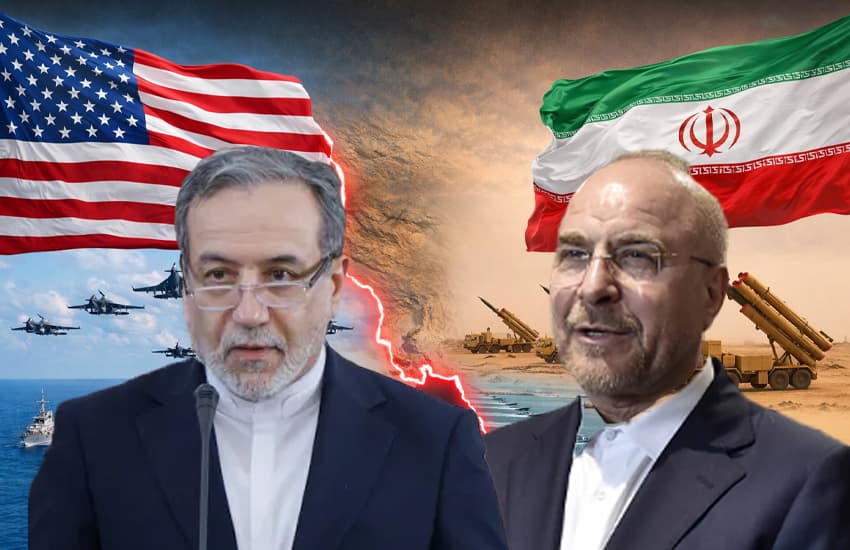
Iranian Foreign Minister Abbas Araghchi on Thursday accused the United States of committing war crimes through attacks on Iran's critical infrastructure, saying the strikes violated international law and the United Nations Charter.
In a statement posted on Telegram, Araghchi said US attacks on what he described as vital infrastructure, along with threats to target bridges and power plants, demonstrated "the criminal intent of the US ruling body to commit heinous crimes."
He said the attacks were "undoubtedly a flagrant violation of the United Nations Charter and the fundamental principles of international law."
Araghchi added that the strikes amounted to "serious international crimes" under international criminal law, including the four Geneva Conventions of 1949, and said governments had an obligation to prosecute and punish those responsible.
He also accused US officials of using "absurd rhetoric and diabolical threats" against Iran, saying the actions were directed at the Iranian people for "insisting on their independence, legitimate rights, and human dignity."
The Iranian foreign minister said those responsible for the attacks could not avoid legal accountability by arguing that they had acted under orders from their superiors.
There was no immediate response from the United States to Araghchi's remarks.
Iran Must Rely On Its Own Strength: Ghalibaf
Meanwhile, Iran's Parliament Speaker Mohammad Bagher Ghalibaf has said that Tehran must rely on its own strength in dealing with the United States, arguing that Washington would continue to pursue policies against Iran regardless of whether the two sides were at war or engaged in negotiations.
In a statement posted on social media, Ghalibaf said the United States sought to weaken Iran whenever possible. "The US seeks to hit Iran and advance its interests whenever it can," Ghalibaf said. "This is not limited to war, negotiations, or just this current US president," he added.
Ghalibaf said Iran's approach to both conflict and diplomacy should be based on long-term national interests and security considerations rather than short-term political developments.
"Our view of war or negotiations must be based on national interests and security, realistic and long-term; therefore, we have no choice but to rely on our own strength and become stronger," he said.
His comments came as tensions between Tehran and Washington remained high following recent military exchanges and diplomatic disputes over the future of their understanding. There was no immediate response from US officials to Ghalibaf's remarks.