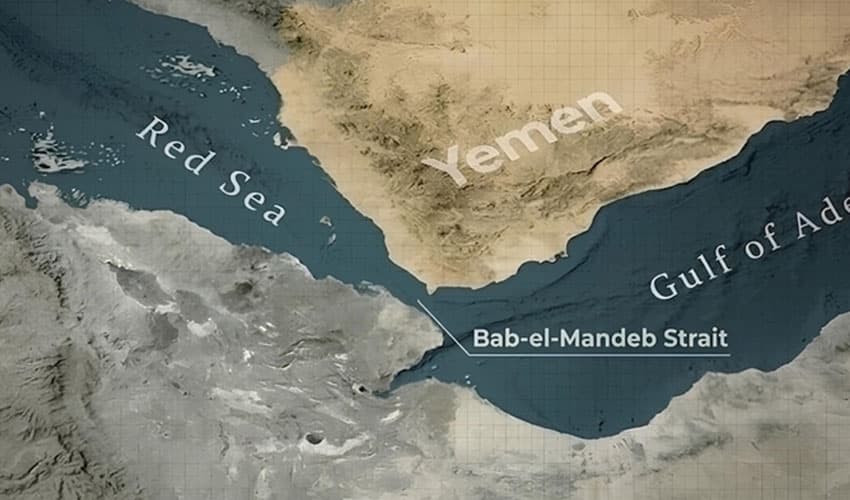
Iran has instructed Yemen's Houthi movement to prepare to block the Bab al-Mandab Strait if the United States attacks Iranian power infrastructure, according to a Reuters report citing three informed sources.
The report said the proposal has been discussed within Iran's leadership, with the message recently conveyed to Tehran's Houthi allies by senior Iranian officials.
A source close to the Houthis told Reuters the group has already deployed missiles and drones near the Bab al-Mandab Strait and is awaiting orders to begin attacks on shipping if instructed.
Neither Iran's Foreign Ministry nor the Houthi movement immediately responded to Reuters' requests for comment.
The reported preparations come as tensions between Tehran and Washington continue to escalate following US President Donald Trump's warning that the United States could target Iran's power infrastructure.
The Bab al-Mandab Strait is one of the world's most important maritime chokepoints, linking the Red Sea to the Gulf of Aden. Any disruption would further strain global energy supplies, particularly after Iran's closure of the Strait of Hormuz, another vital oil transit route.
According to Reuters, around 7% of global energy supplies are currently transported through the Red Sea, with Saudi Arabia diverting a significant portion of its oil exports through its Red Sea port of Yanbu after disruptions in the Gulf.
The report added that representatives of Iran's Islamic Revolutionary Guard Corps (IRGC) already present in Yemen would oversee the timing of any move to block the waterway.
Regional sources told Reuters that Saudi Arabia is taking the reported threats from Iran and the Houthis seriously, amid growing concerns that renewed fighting could target Red Sea shipping and energy infrastructure.
Security analysts warned that simultaneous disruptions in both the Strait of Hormuz and the Bab al-Mandab Strait would severely impact global oil markets and international shipping.
The Houthis previously targeted commercial vessels in the Red Sea during the Gaza conflict, forcing many shipping companies to reroute cargo around southern Africa, significantly increasing costs and transit times.
Iran warns Strait of Hormuz a 'red line'
Meanwhile, Iran said that the Strait of Hormuz was an inviolable "red line", warning that if US President Donald Trump carried out his threat to attack Iran's infrastructure, it would strike all infrastructure across the Gulf region.
The US launched a fifth night of attacks on Wednesday and reimposed a naval blockade of Iran's ports, which Washington says is aimed at reopening the Strait of Hormuz, closed by Iran last Saturday after a fragile truce collapsed.
After the first strikes on Wednesday night, Tehran's top negotiator Mohammad Baqer Qalibaf issued a statement saying: "We are in an essential and existential war with America".
Iranian army spokesman Brigadier General Mohammad Akraminia said on Thursday that the Strait of Hormuz, which carried about a fifth of global oil and gas shipments before the war, was a "red line" for Iran over which it maintains firm control.
"The Americans thought that by attacking some of our bases on the southern coasts of the country, they could take control of this strategic strait," Akraminia said.