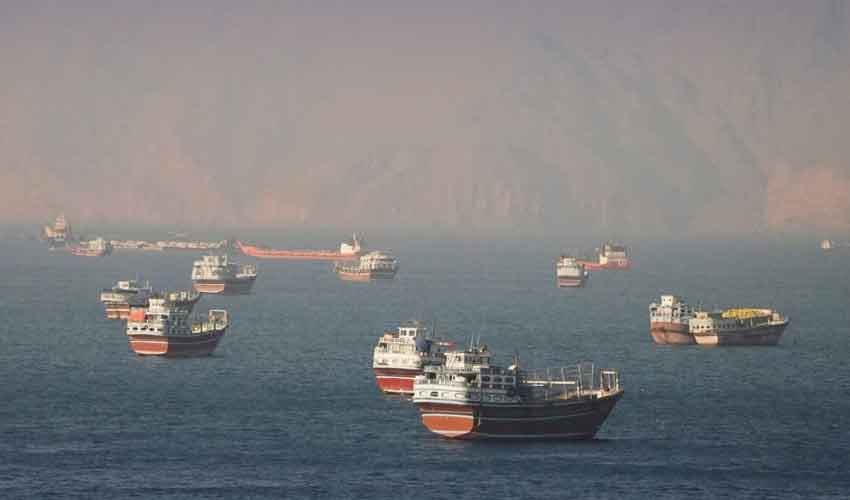
Shipping traffic through the Strait of Hormuz fell to its lowest level in a week on Tuesday as vessel operators continued to avoid the strategic waterway amid ongoing hostilities in the Middle East, according to shipping data.
Kpler data showed that only eight vessels were tracked in the strait on Tuesday, down from a 10-day average of around 12 and the lowest daily count since August 5.
Only one vessel, a coal carrier, was recorded leaving the strait, while the remaining ships were still travelling through the waterway.
All seven vessels entering the strait used the Iranian route, according to the data.
Shipping activity remains sharply below normal
Separate data from LSEG showed 11 vessel transits through the strait on Tuesday, compared with 14 the previous day.
The decline highlights the impact of continued tensions on one of the world's most important shipping routes.
Before Iran closed the waterway following US-Israeli attacks that began on February 28, around 130 to 140 ships typically passed through the Strait of Hormuz each day.
Iran has said the strait will remain closed unless Washington accepts its conditions, adding to uncertainty for global shipping and energy markets.
Red Sea traffic remains higher
While activity in Hormuz declined, vessel traffic through the Bab al-Mandab Strait at the southern end of the Red Sea remained comparatively stronger.
Kpler data showed that 30 vessels crossed Bab al-Mandab on Tuesday, above the 10-day average of 25.
The contrasting figures indicate that shipping companies continue to adjust routes and operations in response to security risks across key waterways in the Middle East.
The Strait of Hormuz is particularly significant for global energy markets because a substantial share of the world's oil and liquefied natural gas shipments normally passes through the waterway.