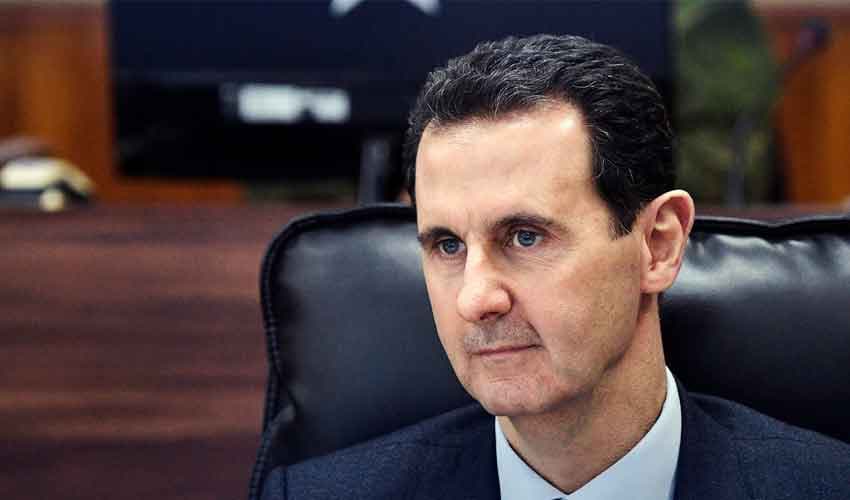
A Syrian court has sentenced former president Bashar al-Assad to death in absentia, convicting him of crimes committed during the country’s civil war, including premeditated murder, torture, arbitrary detention and crimes against humanity.
The Damascus Criminal Court also sentenced former Assad-era security chief Atef Najib to death for premeditated murder and torture linked to the violent crackdown in Deraa in 2011.
The court found that crimes committed by Assad’s government in Deraa province in 2011 amounted to crimes against humanity.
According to Syria’s state news agency Sana, Judge Fakhr al-Din al-Arrian, who presided over the case, convicted Assad of the premeditated murder of multiple people, including children, as well as torture, arbitrary detention and crimes against humanity.
The ruling marks the first death sentence against Assad by Syria’s transitional authorities, which began prosecuting figures from the former government this year, both in person and in absentia.
Atef Najib sentenced over Deraa crackdown
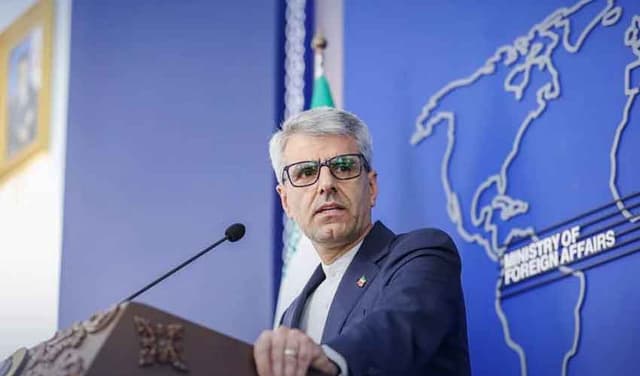
Atef Najib, Assad’s maternal cousin and a former Syrian army brigadier general, was also sentenced to death after being tried in person.
Najib headed the Political Security Branch in Deraa in 2011, when the province became the birthplace of the uprising that eventually developed into Syria’s devastating civil war.
He was convicted of killing, torture and arbitrary detention, as well as participating in the suppression of peaceful protests with live ammunition and systematic killings and torture of detainees that resulted in deaths inside detention centres.
Najib was detained after the fall of Assad’s government and became one of the highest-ranking former regime officials to face trial.
Other former regime officials also sentenced
Court documents named several other former regime officials, including Assad’s younger brother Maher al-Assad, former defence officials and senior security figures.
According to the report, a total of nine former regime officials, including Bashar al-Assad, Maher al-Assad and Atef Najib, were sentenced to death on charges involving murder and torture.
Najib appeared in court, while Assad, Maher al-Assad and other fugitives were tried in absentia. The court also ordered that Bashar and Maher al-Assad be pursued internationally.
Other fugitives named in the case include Fahd Jassem al-Freij, Mohammad Ayman Ayoush, Louay Ali al-Ali, Qusay Ibrahim Mahyoub, Wafiq Saleh Nasser and Talal Fares al-Asimi.
Assad fled to Russia after fall of govt
Bashar al-Assad and his brother Maher fled to Russia in December 2024, after insurgent forces entered Damascus and ended decades of Assad family rule.
Assad had ruled Syria for 24 years, following his father Hafez al-Assad’s long presidency. The former president has remained in Russia since fleeing Syria, while most senior figures of his former regime are also believed to be outside the country.
The transitional authorities have since arrested hundreds of former government officials and security personnel, although many senior figures remain at large.
Deraa crackdown helped trigger uprising
Deraa had long been regarded as a stronghold of support for the Assad government, but the actions of Atef Najib, who controlled political security in the province, played a significant role in turning public sentiment against the regime.
The initial crackdown on protests in Deraa and elsewhere in Syria involved deadly violence by government forces and loyalist militias. By the end of 2011, the unrest had developed into a full-scale civil war.
Thousands of civilians were killed during the early stages of the conflict, while allegations of torture, arbitrary detention and other abuses became central to international criticism of the Assad government.
First major legal action against Assad
The death sentence represents a major development in efforts to hold senior members of the former Syrian government accountable.
In December last year, Syrian authorities issued an arrest warrant for Assad on murder and torture charges, marking the first legal action against the former president by the country he had ruled for more than two decades.
Syrian dissidents had also pursued legal cases against Assad in Western countries over the past decade, but those efforts did not result in a criminal conviction against the former president.
The latest ruling comes as Syria’s transitional authorities expand prosecutions of former regime officials, bringing senior figures before the courts for alleged crimes committed during the conflict.