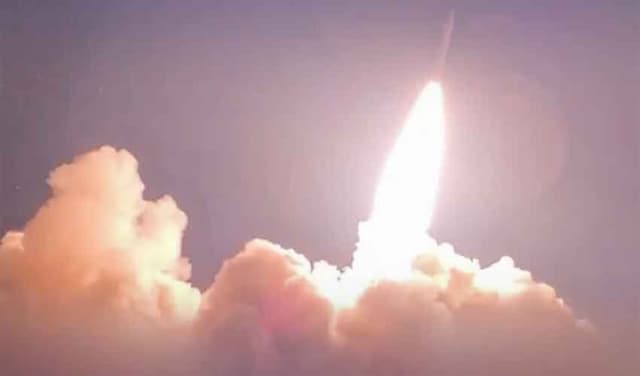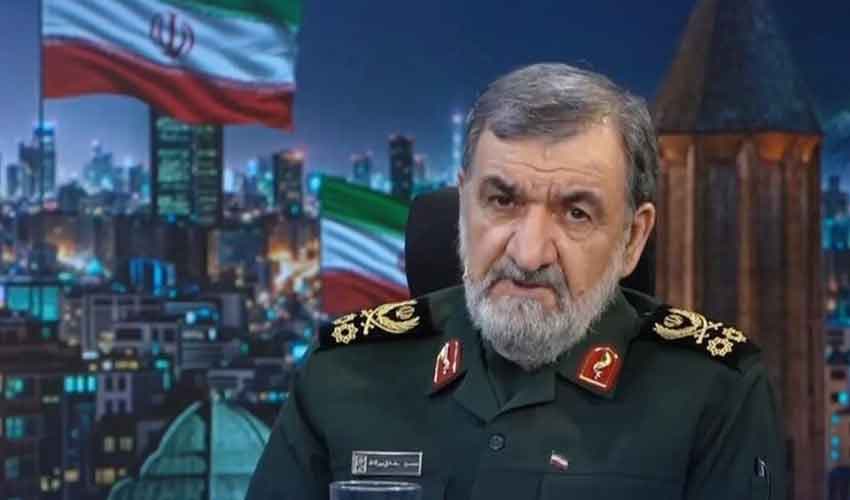
Iran has issued one of its strongest warnings since the latest phase of the conflict began, saying it will launch a full-scale offensive if the United States continues its military campaign for another two to three days.
The warning comes as fighting intensifies across the Middle East and Iranian forces continue targeting US military assets in the region.
Major General Mohsen Rezaei, a senior military adviser to Iran's Supreme Leader Ayatollah Mojtaba Khamenei and a former commander of the Islamic Revolutionary Guard Corps (IRGC), said Tehran is prepared to dramatically escalate the conflict if US attacks persist.
Speaking to Iranian state television (IRIB), Rezaei warned that Iran would no longer limit itself to proportional retaliation.
"If US strikes continue for several more days, we will move into a phase of full-scale offensive operations," he said.
Rezaei added that Iran would no longer be confined to "retaliatory, like-for-like responses" and warned that "no political border will be safe" if the United States continued its military campaign.
Tehran threatens broader military campaign
According to Rezaei, Iran has so far exercised restraint to avoid turning the conflict into a wider regional and international crisis. He claimed Tehran deliberately refrained from launching a ground offensive or conducting heavier cross-border attacks to prevent a broader security crisis.
However, he warned that this policy would change if Washington continues its strikes.
Rezaei said Iran would deploy additional military capabilities, including ground forces, while expanding the scope of the war beyond its current level.
"The United States must wait for expanded waves of missile and drone attacks," he warned, cautioning Washington against launching any ground operation against Iranian territory.
Iran warns US bases will no longer be safe
Rezaei said the policy of pursuing "both war and negotiation" had now ended. He stated that if US attacks continue, Iran's armed forces will no longer restrict their operations to retaliatory strikes, warning that American bases and forces would no longer be safe "within any political borders."
He also cautioned against any attempt by the United States to seize Iranian territory, saying Tehran would respond with offensive military operations.
Also Read: US-Iran war intensifies as Tehran strikes Gulf nations
Rezaei also said Iran would not abandon its pursuit of revenge for the killing of its leader, arguing that the country's future security and long-term stability depended on carrying it out.
He maintained that Iran's responses so far had already been "very heavy," but warned that the intensity of military operations would increase further in the coming days if the conflict continued.
Rezaei accuses US of violating ceasefire framework
The senior adviser said Iran's memorandum of understanding with the United States was effectively dead.
According to Rezaei, Washington violated the framework agreement through several actions, including Israel's failure to withdraw from southern Lebanon, the creation of what he described as an illegal alternative shipping route in the Strait of Hormuz despite the existence of Iran's legal maritime route, attacks on Iranian territory that violated its sovereignty, and the failure to release Iranian assets.
He argued that the United States had signed the agreement as part of a strategy to exert maximum pressure on Tehran.
Claims over Islamabad talks, naval blockade
Rezaei alleged that following the Islamabad talks, Washington adopted a policy of pursuing war and negotiations simultaneously. He claimed Iran accepted a two-week ceasefire in good faith, but the United States used that period to complete its naval blockade while diplomatic negotiations were still underway.
According to Rezaei, these developments convinced Tehran that diplomacy under the previous framework was no longer possible.
Warning to countries hosting US forces
Rezaei appealed to the people of regional countries, including Kuwait, Jordan, the United Arab Emirates and Qatar, to help prevent further escalation.
At the same time, Iran's Islamic Revolutionary Guard Corps (IRGC) warned countries hosting US military forces to prepare for what it called a "corresponding response."
According to Iran's semi-official Tasnim News Agency, the IRGC urged those governments to activate civil defence units, protect civilians and move them away from potential military targets because their territories were allegedly being used as launchpads for attacks on Iran.
IRGC claims attacks on US bases in Kuwait
Tasnim reported that the IRGC Ground Forces used missiles and drones to strike the US military logistics hub at Camp Arifjan in Kuwait, claiming casualties among American personnel.
The IRGC also claimed it targeted the Ali Al Salem Air Base in Kuwait, saying it disabled the base's radar systems and destroyed a weapons maintenance hangar and a drone facility.
Also Read: Iran attack damages Kuwait power, water plant
These claims have not been independently verified.
Separately, Iran's semi-official Tasnim News Agency reported that Iranian forces intercepted a vessel in the Strait of Hormuz.
Citing an informed military source, the report said the Thai-flagged ship attempted to pass through the strategic waterway without obtaining the required permission from the IRGC Navy and ignored repeated warnings before being targeted.
Conflict continues to expand
Over recent days, the US military has carried out multiple waves of strikes across Iran's southern provinces, saying the operations are intended to degrade Tehran's ability to threaten commercial shipping in the Strait of Hormuz after Iranian attacks on vessels in the area.
Iran has responded with repeated missile and drone attacks targeting US military bases and facilities across the Middle East, raising fears that the confrontation could expand into a wider regional war.