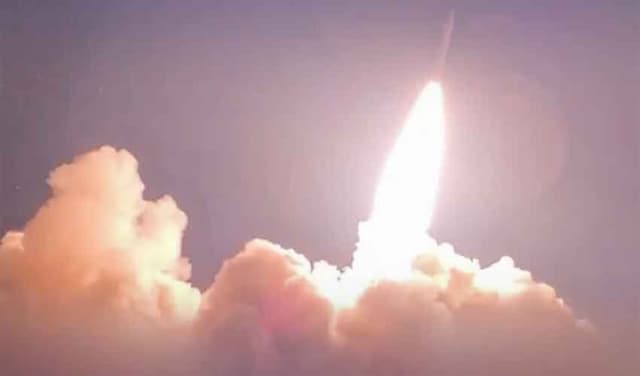
The United States and Iran have sharply escalated their military confrontation, exchanging fresh attacks for a seventh consecutive night after a fragile ceasefire collapsed.
The latest strikes have expanded the conflict across the Gulf, threatened critical infrastructure, and intensified concerns over global oil supplies through the Strait of Hormuz.
The US military said it completed another wave of attacks on Iran late Friday under the direction of President Donald Trump, marking the seventh straight night of American operations.
According to the US Central Command (CENTCOM), the strikes targeted surveillance sites, military logistics infrastructure, underground weapons storage facilities and maritime capabilities. The military said fighter aircraft, aerial drones, warships and other military assets were used during the operation.
CENTCOM added that more than 50,000 US service members remain deployed across the Middle East and are "vigilant, lethal, and ready."
The US military also confirmed that its latest campaign included strikes on military logistics infrastructure, marking the first time in more than a week that it publicly acknowledged targeting infrastructure-related sites.
Iranian civilian infrastructure suffers damage
Iranian media reported that explosions rocked multiple cities, including Yazd, Ahvaz, Lar, Bandar Abbas, Sirik, Qeshm Island, Omidiya, Jask and Khorramabad, as US attacks continued overnight.
In Hormozgan province, Iranian state television said three people were killed and eight others were injured after strikes damaged bridges, a road tunnel and other transport routes. Authorities later closed several roads across the province.
Iranian officials also reported that electricity facilities and desalination pumps in Jask County were struck, cutting drinking water supplies to several villages.
A deputy governor in Hormozgan said US rockets hit desalination pumps at Bunji village's dock, while local authorities said damage assessments and restoration work were underway.
Separately, Iran's semi-official Tasnim news agency reported that US strikes heavily damaged two bridges along the Bandar Abbas-Rudan highway, killing several civilians and injuring others.
Earlier on Friday, Iranian state media said at least five bridges were struck in southern Iran. Seven people were reported killed in Bandar Khamir, where the train station was also hit. An airport in Iranshahr, near Pakistan's border, was also reportedly targeted.
According to Iran's Ministry of Health, the overall death toll from U.S. attacks had reached 38 by the morning of July 16, while more than 400 people had been injured.
Iran retaliates with attacks across Gulf
Iran responded by launching attacks against several US allies hosting American military bases, including Bahrain, Kuwait, Qatar and Jordan.
Iranian authorities also announced attacks on a US vessel operating in the northern Indian Ocean.
Tasnim News Agency, citing Iran's military, said missile strikes targeted aircraft hangars, fuel storage tanks and communication bridges at Bahrain's Sheikh Isa Air Base, alleging the facility had been used to launch operations against Iran.
Iran's Revolutionary Guards also claimed they destroyed Bahrain's main artificial intelligence centre and a depot used for US drones with ballistic missiles and drones.
Saudi Arabia activated early civil defence warnings in at least two areas, though no damage had been reported. Earlier in the conflict, Iranian strikes had already targeted Saudi energy infrastructure.
Kuwait comes under missile, drone attack
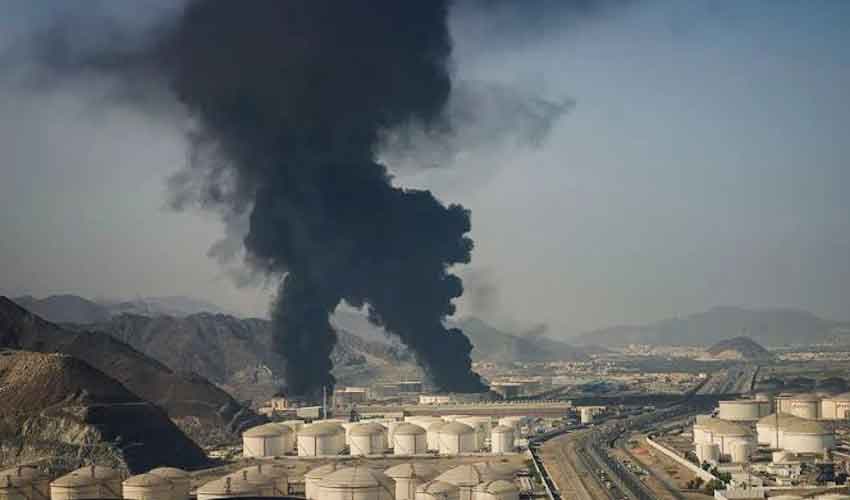
Kuwaiti authorities confirmed that an Iranian attack hit one of the country's major power generation and water desalination stations, causing a fire, damaging infrastructure and disrupting numerous electricity generation units.
The Kuwaiti military later announced that its air defence systems were actively intercepting Iranian missiles and drones. Authorities said any explosions heard across the country were the result of defensive interceptions and urged residents to follow official safety instructions.
Kuwait Airways temporarily suspended takeoffs and landings at Kuwait International Airport following the attacks after previously announcing widespread flight rescheduling because of airspace closures.
Jordan intercepts Iranian missiles
Jordan's military said its air defence systems intercepted and destroyed 10 Iranian missiles that entered the kingdom's airspace early Saturday.
Officials said the interceptions were carried out to protect national sovereignty and public safety. No casualties or material damage were reported, while military engineers began clearing missile debris.
Separate reports also claimed that attacks on two military bases in Jordan injured some US personnel, although further official confirmation remained limited.
Strait of Hormuz emerges as key battleground
The confrontation at sea intensified as both Washington and Tehran attempted to control shipping through the Strait of Hormuz, a strategic waterway responsible for roughly one-fifth of global oil shipments.
The United States said it was enforcing a naval blockade around Iran. US forces reportedly redirected four commercial vessels, disabled one ship and boarded another to enforce maritime restrictions.
Iran's Revolutionary Guards said they intercepted four vessels that allegedly violated Iranian shipping rules using a combined missile and drone operation.
Iranian state television quoted the Revolutionary Guards as declaring that until US "aggression" ends, it would not be possible to export chemical fertilizers or "a single drop of oil and gas" from the region.
Iranian military officials also declared that the Strait of Hormuz had become "extremely dangerous" and claimed it was effectively closed.
At sea, US Marines boarded a tanker near the Strait of Hormuz during renewed security operations.
Iranian media also claimed two oil tankers exploded and caught fire after passing through what it described as a mined route south of the strait. The US military rejected those reports, calling them false.
Meanwhile, armed men seized another vessel off Yemen, heightening concerns about security near the Bab el-Mandeb Strait, another critical global shipping route.
Cruise missile launched at US vessel
Iran's state news agency IRNA reported that the Iranian navy fired a shore-to-sea cruise missile toward what it described as a hostile US vessel in the northern Indian Ocean.
Iranian military officials claimed the missile forced the American vessel to move outside the operational range of Iran's navy after creating "fear and panic."
Iran's Revolutionary Guards also claimed they shot down a US MQ-9 drone over Bushehr.
The renewed escalation has rattled global energy markets. Benchmark Brent crude rose more than 4% on Friday, reaching its highest level in more than a month and extending gains for a third consecutive week.
Analysts say prolonged disruption in the Strait of Hormuz could significantly affect global oil and gas supplies while increasing political pressure on President Donald Trump ahead of November congressional elections.
Trump leaves military options open
US President Donald Trump has repeatedly warned that the United States could broaden its campaign against Iran by targeting additional infrastructure and energy facilities.
He has also declined to rule out a possible ground assault on Iran's coast or islands, while US officials say recent operations in southern Iran are intended to preserve a wider range of military options.
International legal experts have previously argued that attacks on infrastructure essential for civilians could violate the 1949 Geneva Conventions and potentially amount to war crimes.
Trump also drew international criticism earlier this year after threatening to destroy Iran's civilization before the two sides briefly reached a ceasefire.
Iran warns of full-scale offensive
Mohsen Rezaei, an adviser to Iran's Supreme Leader and former Revolutionary Guards commander, warned that continued US attacks would trigger a broader military response.
"If US strikes continue for several more days, we will move into a phase of full-scale offensive operations," he said in remarks carried by Iranian state television.
United Nations Secretary-General Antonio Guterres expressed concern over the latest escalation, particularly attacks affecting civilian infrastructure in Iran and across the wider region.
His spokesperson said the UN remained deeply worried about growing risks to civilians and the possibility of a broader regional conflict.
Conflict enters dangerous new phase
The current war began on February 28 when the United States and Israel launched attacks on Iran, prompting Tehran to retaliate against Israel and Gulf states hosting American military bases.
Since then, the conflict has killed thousands, displaced millions, disrupted global energy markets and pushed the Middle East closer to a wider regional war, with the collapse of last week's ceasefire once again raising fears of full-scale conflict.