The United States and Iran exchanged another round of military attacks on Friday, marking the sixth straight night of hostilities despite last month's truce.
The renewed escalation has widened the conflict across the Gulf, disrupted global energy shipping, and intensified fears of a broader regional war.
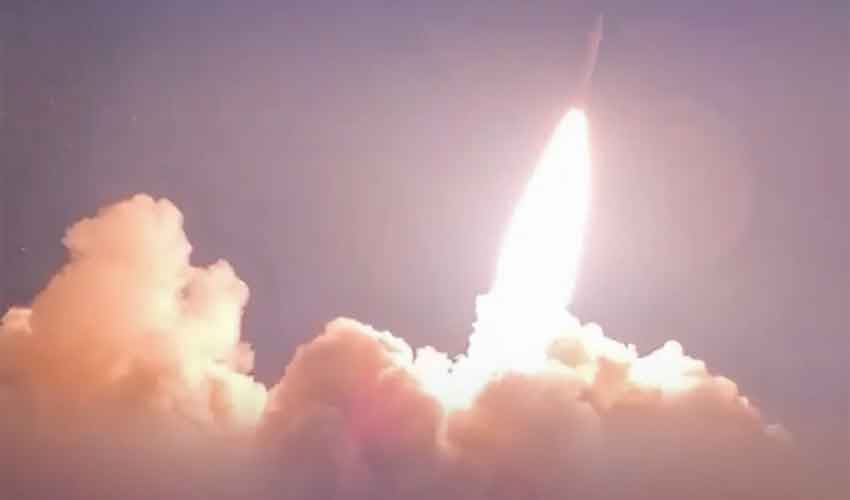
Iran said it launched fresh missile and drone attacks on US military facilities in the Gulf early Friday after another night of American strikes on Iranian military infrastructure.
According to Iranian military officials, US facilities in Bahrain and Kuwait were targeted. Iranian forces also continued attacks on US bases in neighboring countries, including an American air base in Jordan.
In Qatar, several explosion-like sounds were reported in the capital Doha, while the Interior Ministry confirmed that a child was injured by shrapnel during air defense operations. Qatari authorities activated emergency security measures, urged residents to remain in safe places, and confirmed that forces were responding to multiple aerial threats.
Bahrain also sounded danger sirens, advising residents to remain cautious, while Kuwait's military said its air defense systems intercepted enemy missiles and drones. Kuwaiti authorities reported material damage to important facilities following the Iranian attacks.
Sixth consecutive night of Iran strikes
The US military confirmed it carried out another night of operations aimed at further weakening Iran's military capabilities.
The US Central Command (CENTCOM) said fighter jets, drones, and warships launched precision strikes against dozens of Iranian military targets, including:
-
Coastal surveillance sites
-
Air defense positions
-
Military logistics infrastructure
-
Maritime capabilities
-
Military facilities on Qeshm Island
-
Sites near Bandar Abbas, home to Iran's largest commercial port and major naval and Revolutionary Guard installations
CENTCOM said the attacks specifically targeted locations believed to have been used for launching Iranian missiles and drones.
"The attacks are aimed at further degrading Iranian military capabilities," CENTCOM said, adding that US forces remain fully prepared to carry out any assigned mission.
CENTCOM also stated that approximately 50,000 US troops remain deployed across the Middle East.
Southern Iranian cities under heavy attack
Iranian state media reported widespread strikes across southern Iran overnight.
Bandar Abbas came under repeated missile attacks, with explosions reported across various parts of the city. Iranian television said a communication tower was destroyed, causing widespread power outages.
Authorities also reported attacks on:
-
Bandar Abbas railway branch station
-
Bandar Abbas city airport
-
A key bridge connecting Bandar Abbas with Shiraz
-
Various military and infrastructure sites throughout Hormozgan province
Iranian media said civilian vehicles were crossing some bridges when the strikes occurred, raising concerns about civilian casualties.
Traffic was temporarily halted on the Bandar Abbas-Kahuristan-Lar highway after damage to the Shur River bridge, although authorities later confirmed the road had reopened.
Bridges, airports, transport infrastructure damaged
Iranian media reported that several strategic bridges were targeted during the latest US strikes.
Among the reported targets were:
-
The Shur River bridge near Bandar Khorasan
-
Three bridges in Bandar Khamir
-
Additional bridges across southern coastal regions connecting Bandar Abbas with Iran's interior
The destruction temporarily disrupted transportation between southern coastal provinces and inland regions. Power supplies were also suspended at Iranshahr Airport following one of the attacks.
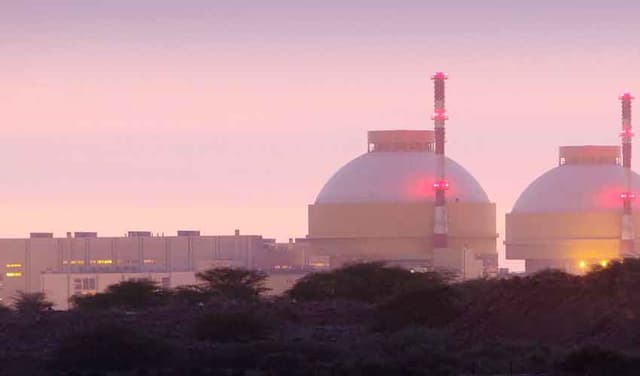
Iranian media further reported explosions in Bushehr, Ahvaz, Chabahar, Hamidiyah in Khuzestan province, and areas near the Bushehr nuclear facility. Four separate explosions were also reported on Qeshm Island.
Casualties reported after bridge strikes
Iran's state news agency IRNA said seven people were killed in strikes targeting bridges in Bandar Khamir, a southern port city.
Separate Iranian reports said two people were killed and eight others injured across Hormozgan province. Another report said one civilian died and eight others were injured after a residential area in Bandar Abbas was hit.
Reuters said it could not independently verify the casualty figures or the extent of the reported damage.
Strait of Hormuz shipping disrupted again
The renewed fighting has once again severely disrupted shipping through the Strait of Hormuz, the world's most important oil and natural gas transit route.
Tehran resumed its blockade of the strategic waterway, while Washington reinstated its blockade of Iranian ports beginning Wednesday.
CENTCOM maintained that the Strait of Hormuz and surrounding waters remain open for commercial shipping but warned vessels not to violate the US naval blockade.
US forces said they searched one commercial ship while enforcing the blockade, diverted three vessels attempting to pass through restricted areas, and disabled another ship after it ignored repeated warnings.
The renewed disruptions pushed global energy prices higher as concerns grew over oil and gas supplies.
Pressure on another strategic waterway
According to Reuters sources, Tehran has also indicated it could encourage Yemen's Houthi movement to target the Bab al-Mandeb Strait, another critical global shipping route at the entrance to the Red Sea, if Washington continues striking Iranian infrastructure.
Iran had already targeted ships traveling through a designated shipping corridor in the Strait of Hormuz last week.
The International Energy Agency (IEA) said oil and gas supplies through the Strait of Hormuz should improve but warned that prolonged tensions could significantly affect global energy markets.
Iran seeks control over Strait of Hormuz
Iranian sources told Reuters that Tehran's objective is to establish greater authority over the Strait of Hormuz.
Under plans outlined after last month's memorandum of understanding, Iran wants all commercial vessels to use a shipping lane closer to its coastline and intends to begin charging passage fees after a 60-day negotiation period.
Washington, meanwhile, has encouraged ships to use an alternative route closer to Oman's coastline.
US strikes along Iran's southern coast have specifically targeted military infrastructure believed to support Tehran's ability to control the strait.
However, Iranian Army spokesperson Brigadier General Mohammad Akraminia dismissed that strategy, saying Iran could strike the Strait of Hormuz from anywhere within its territory.
Military pressure, diplomacy open
White House Press Secretary Karoline Leavitt said President Donald Trump would not allow what she described as "active acts of terrorism" in the Strait of Hormuz to continue without consequences for Iran.
At the same time, she said the president remains open to diplomacy.
Trump has also refused to rule out deploying ground forces, including a possible operation to seize Kharg Island, Iran's primary oil export terminal.
The US president has further warned that Iranian power plants and bridges could face additional attacks next week if Tehran refuses to resume negotiations.
Tehran says diplomacy remains preferable
Despite the escalating conflict, Iranian sources told Reuters that Tehran does not want the confrontation to derail last month's memorandum of understanding, which Iranian officials believe secured many of their strategic objectives.
Inside Iran, however, continued bombing has heightened public anxiety.
"Living with this fear that war could start again is very exhausting. You cannot live like this. Personally, I want diplomacy to prevail," Mahlegha, a 46-year-old government employee in Tehran, told Reuters.