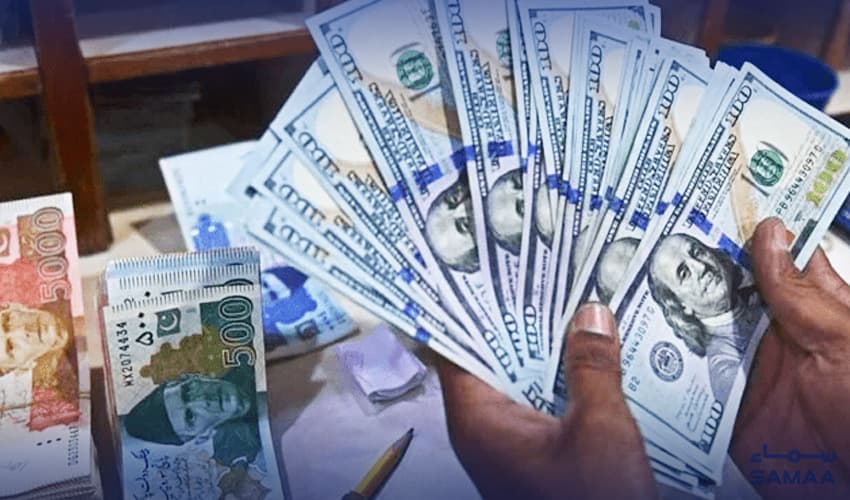
Pakistan received more than $16 billion in external financing during the last fiscal year, according to official documents, helping the country meet its financing needs despite falling short of its annual borrowing target.
Saudi Arabia emerged as Pakistan's largest bilateral financial supporter, while international financial institutions, commercial banks and multilateral lenders also extended significant assistance.
Official documents show Pakistan secured more than $16 billion in external loans during the last fiscal year, equivalent to approximately Rs4,517 billion. Despite the substantial inflows, the government did not fully achieve its annual foreign borrowing target of $19.92 billion.
According to the documents, Pakistan received $3.072 billion less than the targeted amount during the fiscal year.
Pakistan's external financing accelerated sharply toward the end of the fiscal year. Official figures show the country borrowed more than $4 billion in June 2026 alone, making it one of the highest monthly inflows during the year.
Saudi Arabia provides largest assistance
Saudi Arabia remained Pakistan's biggest bilateral financial partner during the fiscal year. According to the documents, the Kingdom provided $3 billion in fresh deposits, strengthening Pakistan's foreign exchange reserves.
Saudi Arabia also extended a $1 billion loan and provided $1 billion in oil financing, offering additional support for the country's external financing requirements.
Multilateral financial institutions remained key contributors to Pakistan's financing programme. According to the documents, various international financial institutions collectively provided more than $5 billion in loans.
The Asian Development Bank (ADB) extended $1.77 billion in financing, while the World Bank provided more than $1.5 billion in loans during the fiscal year.
Bilateral partners contribute additional funding
Apart from multilateral institutions, several friendly countries, including Saudi Arabia and China, collectively extended $1.35 billion in loans.
The Economic Affairs Division also confirmed that a Chinese bank refinanced a $1.70 billion loan, helping Pakistan manage its external debt obligations.
Pakistan also relied on commercial borrowing to meet its external financing needs. Official documents show the government secured $1.90 billion in commercial loans from international banks.
Of this amount, a British bank provided $200 million in commercial financing during the fiscal year.
Naya Pakistan Certificates attract over $3bn
The government also mobilized significant funding through Naya Pakistan Certificates.
According to official documents, Pakistan received more than $3 billion through investments in the certificate programme during the last fiscal year.
The Economic Affairs Division said Pakistan received $420 million from the International Monetary Fund (IMF). In addition to this amount, Pakistan also received installments under the IMF's $7 billion loan programme, providing further financial support during the fiscal year.
Project and non-project financing
The financing package included both development-related and budgetary support.
According to official documents, Pakistan received $3.43 billion in project loans, while $12.72 billion came in the form of non-project loans.
Alongside external borrowing, Pakistan also secured $149.5 million in grants during the fiscal year, according to official records. The grants supplemented external financing and supported various government programmes.
Financing target falls short
Although Pakistan secured substantial external funding from bilateral partners, multilateral lenders, commercial banks and investment instruments, the country remained $3.072 billion below its annual external financing target of $19.92 billion.
The latest figures underscore Pakistan's continued reliance on foreign financing to support its economy, strengthen foreign exchange reserves and meet fiscal and external financing obligations.