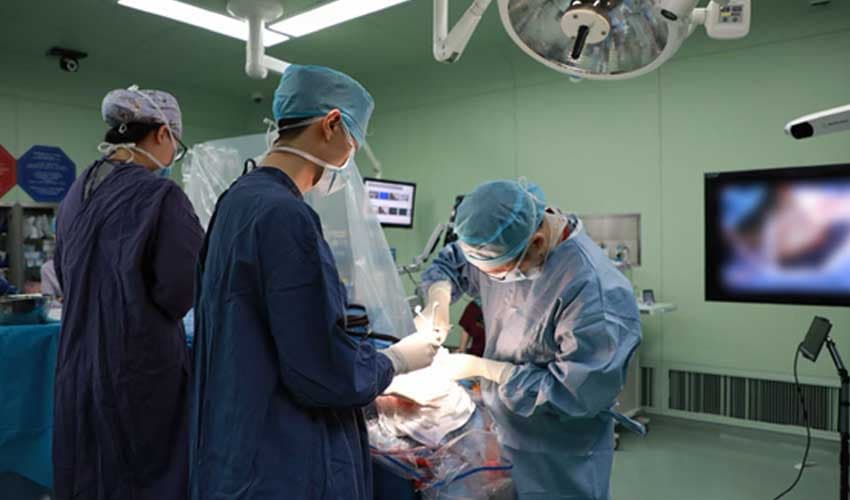
A hospital in Shanghai has completed the world’s first commercial implantation of a brain-computer interface (BCI) designed to help a person with paralysis regain hand movement.
The procedure was carried out at Huashan Hospital, affiliated with Fudan University, using the Neural Electronic Opportunity (NEO) system, an implant developed by Shanghai-based Neuracle Technology.
According to China Daily, the device became the first implantable brain-computer interface to receive commercial approval from Chinese regulators earlier this year. The approval allows the technology to be used in medical treatment rather than only in research projects.
The first patient was a man who suffered a cervical spinal cord injury in a road accident ten years ago. Despite years of rehabilitation, he continued to face serious loss of hand function.
After assessment by a team of medical specialists, doctors selected the patient for the implant procedure. Hospital officials said the operation was successful and the patient remained in stable condition after surgery.
Doctors also reported that the implanted system recorded clear and stable brain signals during the procedure, showing that the device was working properly.
The NEO system detects electrical signals produced when a person intends to move their hand. Artificial intelligence software then interprets these signals and converts them into commands for an external assistive device, allowing hand movement without depending on damaged spinal cord pathways.
Unlike some experimental brain implants that place electrodes directly inside brain tissue, the NEO device uses electrodes placed on the outer surface of the brain’s protective membrane. Researchers said this approach may lower surgical risks while still collecting signals needed to identify movement intentions.
The surgery took place four months after the NEO system received regulatory approval, following medical training, hospital preparation and patient screening.
Experts said the procedure marked an important step in bringing brain-computer interface technology from research laboratories into clinical use. Researchers believe the technology may help people with paralysis achieve greater independence in daily activities, although more studies are needed to examine its long-term safety and effectiveness.
China Daily reported that the development also reflects China’s increasing role in the global effort to advance brain-computer interface technology.