The researchers from the Shenzhen Institutes of Advanced Technology (SIAT), under the Chinese Academy of Sciences, have found that ageing weakens the blood-brain barrier (BBB), a protective system that controls what enters the brain from the bloodstream.
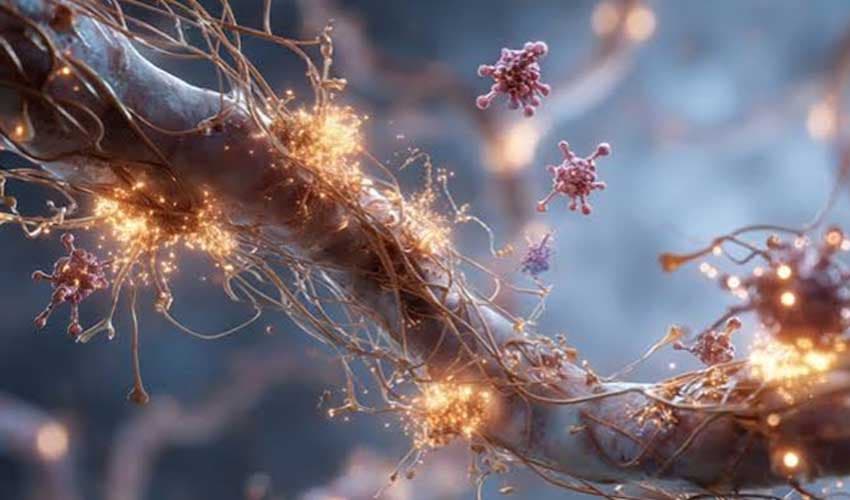
The study, published in the journal Neuron, found that ageing does not first damage the barrier by creating gaps between cells. Instead, it disrupts the internal transport system of cells in the brain’s blood vessels, allowing unwanted substances to leak into brain tissue.
Using ageing mice, the researchers found that leakage in the blood-brain barrier began in middle age and increased over time, particularly in the hippocampus, the part of the brain linked to learning and memory.
The researchers identified two key proteins involved in the process. Levels of the protective protein Mfsd2a fell with age, while Caveolin-1, which increases cellular transport, became more active. Restoring Mfsd2a or reducing Caveolin-1 activity reduced leakage in older mice.
The team also found that higher levels of TGF-β1, a molecule linked to inflammation and ageing, may trigger these changes by weakening the brain’s protective system.
The researchers said the findings could help future efforts to protect brain health and slow age-related cognitive decline. However, further research is needed to determine whether the same approach can safely benefit humans.
The findings added to growing evidence that keeping the brain’s blood vessels healthy may help preserve memory and cognitive function as people age.