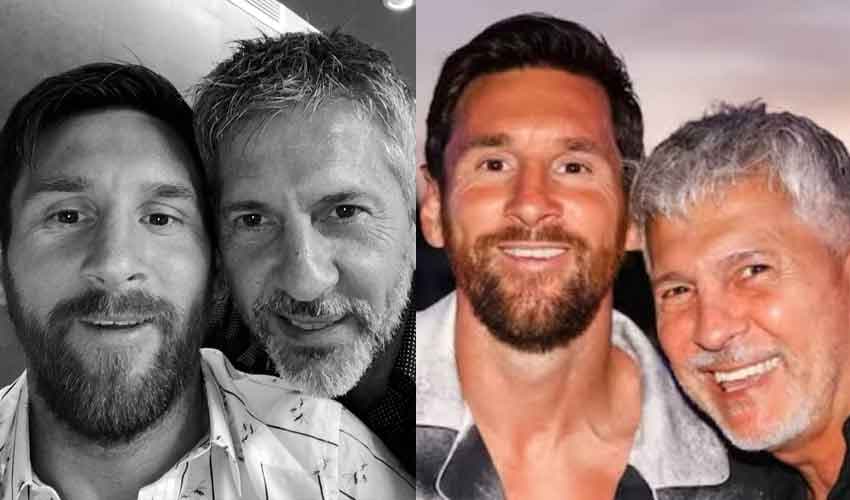
Jorge Messi, the father and longtime representative of football icon Lionel Messi, has died at the age of 68 after a prolonged illness, according to multiple Argentine and Spanish media reports.
The Messi family had confirmed earlier this year that Jorge was undergoing medical treatment and recovering under supervision. His death reportedly occurred at a hospital in his hometown of Rosario, although the family has not publicly disclosed an official cause of death.
Jorge Messi’s health became a matter of public attention during the 2026 World Cup, when Lionel Messi became emotional after scoring for Argentina against Algeria.
Asked about his tears, Messi said they had “absolutely nothing to do with football” and that he had experienced “a few difficult days.”
Former Argentina international Juan Pablo Sorin later asked Messi whether the emotion was related to his family and the national team. Messi indicated that it was primarily about his family, saying they were going through a difficult moment.
Messi family asked for privacy
Following speculation about Jorge’s health, the Messi family issued a statement confirming that he was receiving medical care.
The family said Jorge was “under medical supervision” and was recovering and progressing favorably given his condition. They also expressed concern about reports and speculation surrounding what they described as a strictly private family matter.
The family thanked people for their affection and concern while asking the public and media to respect Jorge’s privacy, confidentiality and personal space throughout the treatment process.
At the end of July, Lionel Messi also missed the Major League Soccer All-Star Game, with reports suggesting he had travelled to be with his father.
He returned to action a few days later in an MLS match, but Jorge’s health remained a concern for the family.
Jorge Messi’s crucial role in Lionel’s early career
Jorge Messi was a central figure in his son’s football journey from the beginning.
When Lionel was playing in the youth system at Newell’s Old Boys and required hormone treatment for a growth disorder, Jorge worked to find a way to finance the expensive treatment.
After struggling to secure sufficient financial support in Argentina, Jorge explored alternatives, including a possible move to River Plate, before eventually taking his 13-year-old son to Spain.
Jorge stayed alongside Lionel as the family adjusted to life in Europe and supported his son while his football future remained uncertain.
The move eventually led Lionel to Barcelona and La Masia, where he developed into one of the greatest players in football history.
The famous agreement that paved the way for Messi’s move to Barcelona was reportedly written on a napkin by then sporting director Carles Rexach at the Pompeia Tennis Club on December 14, 2000.
Messi went on to become Barcelona’s greatest goalscorer, scoring 672 goals in 778 appearances for the club.
Father remained behind the scenes
Although Jorge was deeply involved in his son’s career, he generally avoided the spotlight and rarely gave interviews.
His presence, however, remained constant at Argentina matches, family occasions and major moments throughout Lionel Messi’s career.
Jorge also served as Lionel’s representative, handling negotiations with football clubs and commercial companies and helping build the business operation surrounding the global star.
Jorge’s family and legacy
Jorge Messi is survived by his wife, Celia, sons Lionel, Rodrigo and Matias, daughter Maria Sol, and several grandchildren.
His death has prompted an outpouring of condolences and tributes from football fans and figures around the sport, with many remembering the sacrifices he made while supporting Lionel’s extraordinary career.
For many supporters, the emotional scenes involving Messi during the World Cup now carry an added poignancy as the circumstances behind his distress become clearer.
As tributes continue to emerge, attention is also turning to the Messi family’s request for privacy as they grieve their loss.