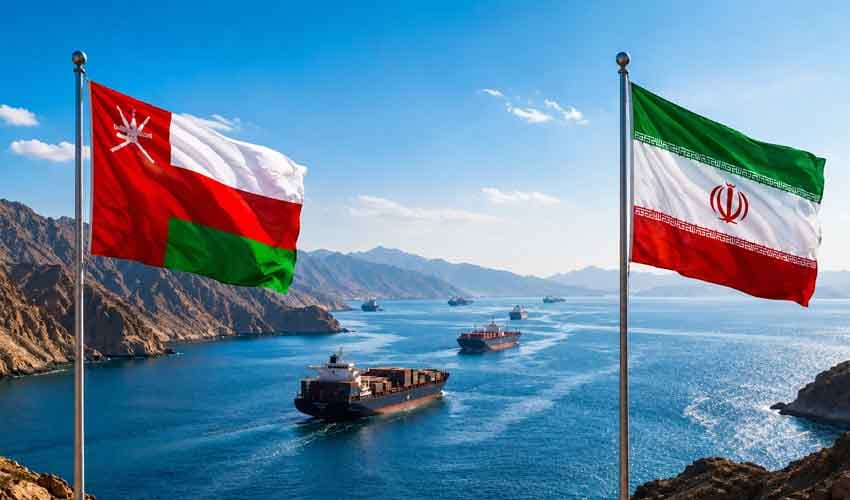
Iran and Oman have finalised the general framework of an agreement aimed at easing commercial shipping through the Strait of Hormuz, a development that could pave the way for the reopening of the strategic waterway and the restoration of energy supplies.
Hassan Ghashghavi, spokesperson for Iran’s Parliament National Security and Foreign Policy Committee, said the final text and details would be announced soon, but stressed that implementation remains subject to approval at the highest decision-making levels.
According to the Islamic Republic News Agency, Ghashghavi said the general framework of the agreement had been determined and that Tehran and Muscat had reached broad consensus on its outline.
“We are waiting for both the final agreement and a joint statement that will clarify many of the general guidelines,” Ghashghavi said, adding that the public should wait for the definitive outcome.
He said the final news and details were expected to be published shortly, while emphasizing that final approval from senior authorities was still required before implementation.
Joint statement in final drafting stage
Iranian Foreign Ministry spokesperson Esmaeil Baghaei said earlier that a joint statement between Tehran and Muscat was under review and in its final drafting stage.
Baghaei said negotiations between Iran and Oman were moving forward and that an agreement could be reached if “certain third parties” did not obstruct the process.
The proposed agreement centres on a new shipping arrangement through the Strait of Hormuz, potentially allowing commercial vessels to resume transit and helping restore energy supplies through the vital waterway.
US expects deal soon
The developments came as Washington also indicated that negotiations over the Strait of Hormuz were making progress.
A US official familiar with the discussions told Reuters on Friday that Washington expected Iran and Oman to reach a deal soon.
The official said the United States would lift its blockade of Iranian ports once an agreement was announced that restored commercial shipping without impediments.
Also Read: US expects deal soon on Strait of Hormuz
“US actions will continue to be performance-based and tied to Iran’s implementation of its commitments,” the official said.
Proposed temporary shipping route
Iranian officials have said the arrangement under discussion would establish new shipping routes through the Strait of Hormuz.
Under the proposed system, commercial vessels could enter the Persian Gulf through an Iranian-controlled route and exit through an outbound lane controlled by Oman.
A US official familiar with the negotiations said the temporary arrangement had been discussed and could remain in place for 60 days, giving negotiators time to work toward a long-term agreement to fully reopen the strait while continuing discussions on a nuclear deal.
Also Read: Trump orders investigation into leak of US military stockpile information
The arrangement would effectively formalize Iran’s role in controlling part of the waterway, although the US official cautioned that nothing would be final until the agreement was publicly announced.
Dispute over tolls and control
Omani officials have proposed a Gulf-backed mechanism under which Iran could receive voluntary contributions based on a model used for Asia’s Strait of Malacca.
The proposed voluntary payments would help cover security and environmental protection costs, according to a source familiar with the proposal.
The United States, however, maintains that the Strait of Hormuz is an international waterway and opposes fees, tolls or requirements for vessels to obtain Tehran’s permission before transiting.
Another US official said the Trump administration wants complete freedom of commercial navigation through the strait.
“Any temporary routes will be without any impediments,” the official said, adding that this meant no approvals, permissions, tolls or charges. The official also stressed that no party controls the lanes or the ability to transit the international waterway.
The timing of any potential agreement remains unclear.
Pezeshkian defends talks with US
The developments surrounding the Strait of Hormuz come amid broader diplomatic efforts between Iran and the United States.
Iranian President Masoud Pezeshkian has reaffirmed Tehran’s commitment to dialogue to safeguard Iran’s rights while insisting that the country will not be forced to surrender.
In an interview published on the website of his office on Friday, Pezeshkian defended his government’s decision to negotiate with Washington and sign a memorandum of understanding aimed at ending the conflict.
He said Iran would remain committed to its obligations as long as the United States fulfilled its commitments under the MoU.
Also Read: Trump says Iran war nearing end as diplomatic efforts intensify
“Wherever they fail to fulfill their commitment, we have no obligation to continue,” Pezeshkian said.
Earlier this week, Pezeshkian denied reports that he was stepping down and said he would continue his work resolutely.
His remarks came amid reports of divisions within Iran’s leadership over the MoU.
Yemen tensions raise wider regional concerns
While attention remains focused on the Strait of Hormuz, tensions have also escalated elsewhere, particularly in Yemen, raising concerns that the wider conflict could spread across the region.
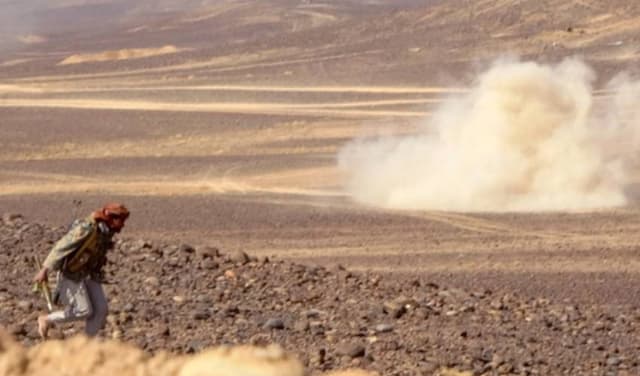
The Houthi group said Friday that it launched a large-scale missile and drone attack against a major government military camp in the oil-rich northeastern province of Marib.
Houthi military spokesperson Yahya Sarea said the group targeted government troops, weapons depots, vehicles and military equipment at the Sahn al-Jinn camp near Marib city using a large number of missiles and drones.
Sarea said the attack followed what the Houthis described as the detection of Saudi-backed military mobilization and reinforcements in the area, alleging that Saudi Arabia was preparing for military action.
Soldiers killed and wounded in Marib
A military official said four government soldiers were killed and four others wounded after a Houthi drone struck pro-government forces in Harib district in southern Marib.
The official spoke on condition of anonymity.
Missile and drone attacks were also reported in other government-controlled areas of Marib on Friday.
The latest attacks followed a wave of Houthi strikes a day earlier against Saudi-backed government forces in Marib and neighboring Hadramout.
On Thursday, Sarea said Houthi ballistic missiles and drones had targeted military camps and troop gatherings in the two provinces, claiming that hundreds of government personnel had been killed or wounded.
UN warns of renewed Yemen conflict
Marib, which is rich in oil and natural gas, was among the most fiercely contested areas during Yemen’s civil war and remains a key stronghold of the internationally recognized government.
UN Special Envoy for Yemen Hans Grundberg warned Friday of a growing risk of renewed large-scale conflict amid escalating Houthi attacks against Saudi tankers and Yemeni government forces.
Grundberg also expressed concern over attacks on civilian infrastructure, including airports, as well as the broader escalation of regional tensions.
“Taken together, these developments risk jeopardizing the gains of the 2022 truce,” Grundberg said, warning that the developments could draw Yemen into a broader regional confrontation.
The UN envoy said he had held intensive discussions in recent weeks with Yemeni parties, regional actors and international partners to explore ways to reduce tensions.
He urged all sides to exercise maximum restraint, avoid actions that could trigger military retaliation and engage in good-faith negotiations under UN auspices.
What happens next?
The Iran-Oman agreement remains dependent on final approval at the highest levels in Tehran and the public release of its final text and joint statement.
If implemented, the proposed arrangement could provide a temporary pathway for commercial shipping through the Strait of Hormuz while negotiations continue over a longer-term framework.
However, major differences remain over navigation rights, Iranian control, tolls and the conditions demanded by Washington for the full restoration of unrestricted commercial shipping.