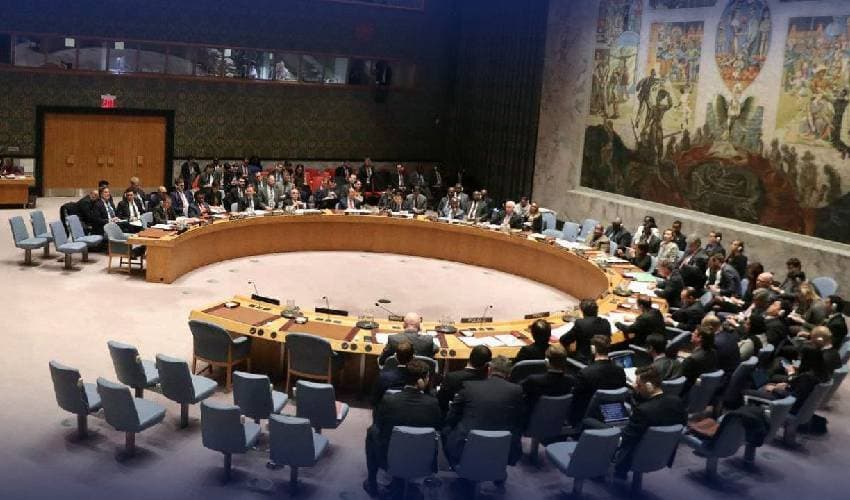
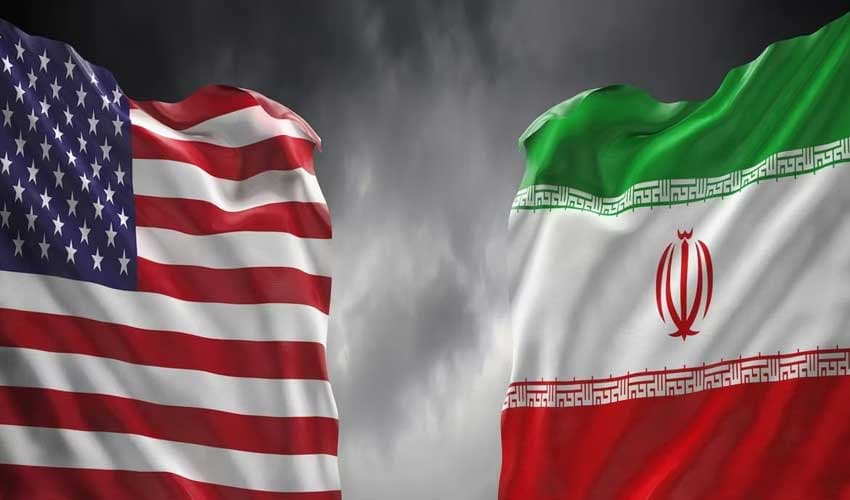
The United States and Iran exchanged sharp accusations during a tense United Nations Security Council session on Thursday, with both sides blaming each other for escalating tensions in the Gulf and undermining the June 17 Islamabad Memorandum of Understanding (MoU).
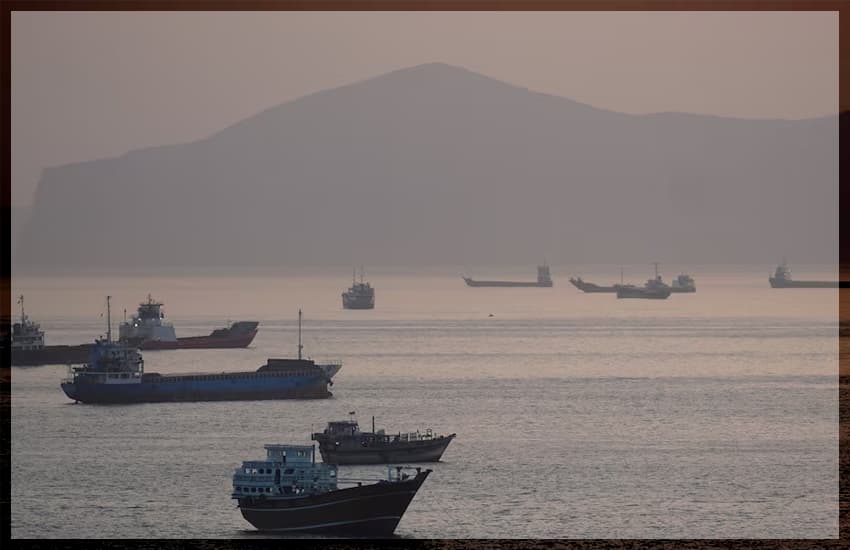
The emergency meeting, convened at Bahrain's request following Iranian strikes, focused on attacks targeting Bahrain and Kuwait, threats to commercial shipping in the Strait of Hormuz, and the fragile diplomatic process between Washington and Tehran.
US Ambassador Mike Waltz warned that President Donald Trump's patience was "not unlimited" as Iran continued attacks on neighboring countries and international shipping despite ongoing diplomatic efforts.
"I cannot stress enough that the possibility of a real transformative positive opportunity for the nation and people of Iran is on the table," Waltz told the council.
He urged Tehran to stop attacking its neighbors and keep the Strait of Hormuz open, saying Iran "cannot — and we cannot allow it to — hold the world's economy hostage." Waltz also warned that closing international waterways could not be justified as self-defense under the UN Charter.
"We say to Iran that the closure of international waterways is unacceptable and is not considered self-defence," he said.
According to the US envoy, 136 countries co-sponsored a Security Council resolution demanding that Iran keep the Strait of Hormuz open.
US says world does not support Iran
During his address, Waltz called on Iran to choose diplomacy over confrontation.
"Today we once again urge Iran to take the path of peace and dialogue," he said. "The world is not with Iran. Even Iran's own people are not with this government."
He also claimed that Iran's neighboring countries do not support Tehran's policies.
"Iran cannot always choose the path of death and destruction," Waltz said, adding, "Iran cannot silence us on our own soil. Perhaps it is possible in Tehran, but not in the United Nations Security Council."
Responding directly to Iran's ambassador, Waltz declared, "This is not Tehran. This is the United States of America. This is the United Nations Security Council. You will not silence this body."
Iran rejects US and Western accusations
Iran's Ambassador to the United Nations, Amir Saeid Iravani, strongly rejected the statements made by the United States, Bahrain and several Western members of the Security Council.
"I categorically reject the baseless allegation made by the United States. Once again, the representative of the United States has resorted to lies and disinformation against Iran," Iravani said.
He also dismissed accusations from Bahrain and Western countries, saying they were attempting to shift blame away from what Tehran described as unlawful US and Israeli aggression against Iran.
Iran accuses Security Council of failing responsibilities
Iravani said the Security Council had failed to fulfill its responsibilities, encouraging impunity and further illegal actions.
According to the Iranian envoy, the United States and Israel bear full responsibility for the consequences of what he described as aggressive wars and must be held fully accountable. He further alleged that Washington had repeatedly violated its commitments under the Islamabad MoU by carrying out additional attacks against Iran's sovereignty and territorial integrity.
Tehran defends military response
Iran maintained that its military actions were carried out under its inherent right to self-defense as recognized by the UN Charter. Iravani said Iranian strikes specifically targeted US military installations, bases and assets in the region from which attacks on Iran had been launched.
"No Security Council resolution can deprive a Member State of its inherent right to self-defense under the UN Charter," he said.
He warned that if aggression against Iran continued, or if the United States continued violating the Islamabad MoU, Tehran would continue exercising its right to defend its sovereignty and territorial integrity.
Iran's ambassador argued that the presence of US military bases in the Persian Gulf had made the region less secure.
"It should have been clear that the presence of US military bases and foreign interference in the Persian Gulf region brings nothing but insecurity," Iravani said. "The US has no coastal border in our region. It is not their waters. It is not their neighbourhood."
He added that regional security should be managed exclusively by neighboring countries rather than foreign powers. Iravani also warned neighboring states that hosting US military bases made them more vulnerable rather than safer.
Bahrain accuses Iran of targeting civilians
Bahrain's Foreign Minister Abdullatif Al-Zayani accused Iran of deliberately attacking civilian infrastructure, residential neighborhoods and critical facilities. He said the attacks killed three civilians and injured 465 others.
Al-Zayani also rejected Iran's arguments, saying Security Council Resolution 2817 had already condemned Iranian attacks on neighboring countries and threats to international navigation.
US rejects Iran's self-defense claim
Waltz displayed photographs showing damage in Bahrain and questioned Iran's characterization of its actions as defensive. He asked whether civilians, hotel guests and first responders struck during the attacks were "lying."
He also criticized attacks on Singaporean and Panamanian-flagged commercial vessels, calling them an attempt at "global blackmail."
"It is a cynical, sad, and sick attempt at global blackmail. Plain and simple," Waltz said.
Iran responds with counter-accusations
Iravani accused 10 countries in the region, including Bahrain, of facilitating US and Israeli military operations by allowing their territory and airspace to be used. He also accused Washington of preventing international commercial vessels from reaching Iranian ports.
Addressing Waltz directly, he asked whether such actions amounted to collective punishment. "You were at war with Iran. Why did you prevent international vessels from reaching Iranian ports?" he said.
The Iranian envoy also claimed polling showed that 70% of Americans opposed the administration's war policy toward Iran.
Iran reaffirms commitment to Islamabad MoU
Despite the sharp exchanges, Iran said it remained committed to implementing the Islamabad Memorandum of Understanding, including provisions related to the Strait of Hormuz. Iravani said technical dialogue had begun under the June 17 agreement, provided the United States faithfully fulfilled its own obligations.
He warned that any outside interference or attempts to create parallel arrangements would violate the agreement.
UN urges restraint and diplomacy
UN Assistant Secretary-General Elizabeth Spehar told the Security Council that Secretary-General Antonio Guterres welcomed the joint decision by the United States and Iran to de-escalate tensions and exercise restraint.
She said the Islamabad MoU offered "a measure of hope that dialogue and diplomacy can regain momentum."
Diplomatic efforts remain under pressure following two days of talks in Doha covering frozen Iranian assets, the Strait of Hormuz and Lebanon. The negotiations were paused on July 1 and are expected to resume after the funeral ceremonies for former Iranian Supreme Leader Ayatollah Ali Khamenei, which begin in Tehran on July 4 and conclude with his burial in Mashhad on July 9.



.jpg&w=1920&q=75)
.jpg&w=1920&q=75)