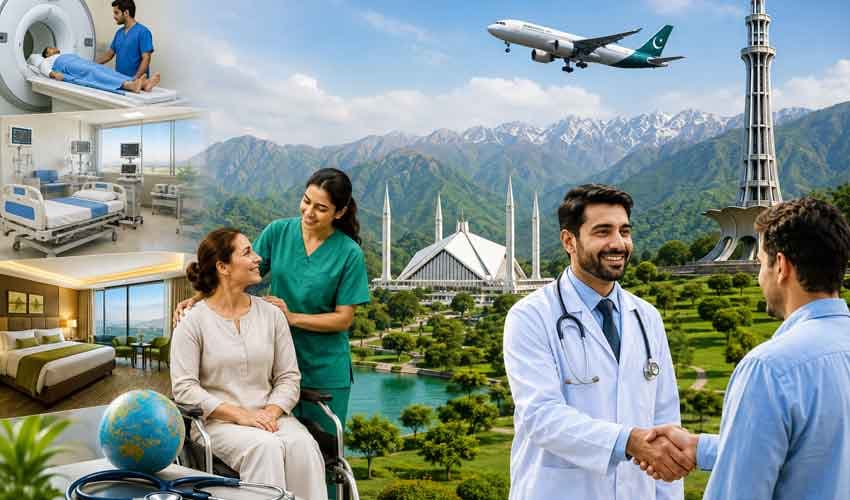
Pakistan is preparing an ambitious plan to become a regional hub for global health tourism, with the government targeting up to $10 billion in annual revenue within the next five years.
The initiative, developed by the Special Investment Facilitation Council (SIFC), Ministry of Health and Health Tourism Working Group, aims to attract patients from around the world by offering quality medical treatment at comparatively lower costs.
The federal government has decided to promote health tourism as part of a broader effort to advance healthcare, tourism and national economic prosperity together.
Under the proposed plan, international patients will be offered access to quality and affordable treatment facilities in Pakistan, while overseas Pakistanis will also be encouraged to seek medical care in the country.
Muhammad Arshad Khan, CEO of the Prime Minister Sehat Card, told Samaa TV that Pakistan has a significant cost advantage over several major healthcare markets.
Treatment costs up to 70% lower
Arshad Khan said the cost of medical treatment in Pakistan is 60 to 70% lower than in Europe, the United States, Canada and Gulf countries.
He said this price advantage, combined with quality healthcare facilities, could make Pakistan an attractive destination for patients seeking affordable treatment.
The initiative is aimed at bringing patients from different parts of the world to Pakistan while strengthening the country's healthcare and tourism sectors.
Visa policy to be relaxed
As part of efforts to attract foreign patients, the government plans to relax visa policies and introduce special facilities for international visitors seeking medical treatment.
The proposed measures are intended to make the process of travelling to Pakistan for healthcare easier and more convenient.
Arshad Khan said the health tourism system will also be fully digitalized on the model of the Prime Minister's Health Card, creating a more streamlined process for patients.
Pakistan has already begun contacts with Bangladesh and several other countries to explore opportunities for health tourism, according to Arshad Khan.
He highlighted Bangladesh as a potentially significant market, saying around 800,000 Bangladeshi patients spend $6 billion every year on treatment abroad.
Pakistan hopes to attract a portion of this international medical spending by offering competitive prices and quality healthcare services.
Health tourism to benefit multiple industries
The proposed health tourism initiative is expected to generate benefits beyond hospitals and healthcare providers.
According to the plan, increased international patient arrivals could also boost pharmaceutical companies, hotels, airlines and the food industry, creating wider economic activity.
The government sees health tourism as a potential source of foreign exchange while simultaneously strengthening Pakistan's medical infrastructure and related service industries.
The government expects health tourism to become a major contributor to the national economy, with the sector projected to generate $10 billion annually within the next five years.
Officials believe Pakistan's comparatively low treatment costs, potential visa facilitation, digitalized services and expanding healthcare infrastructure can help position the country as a competitive destination for international patients.