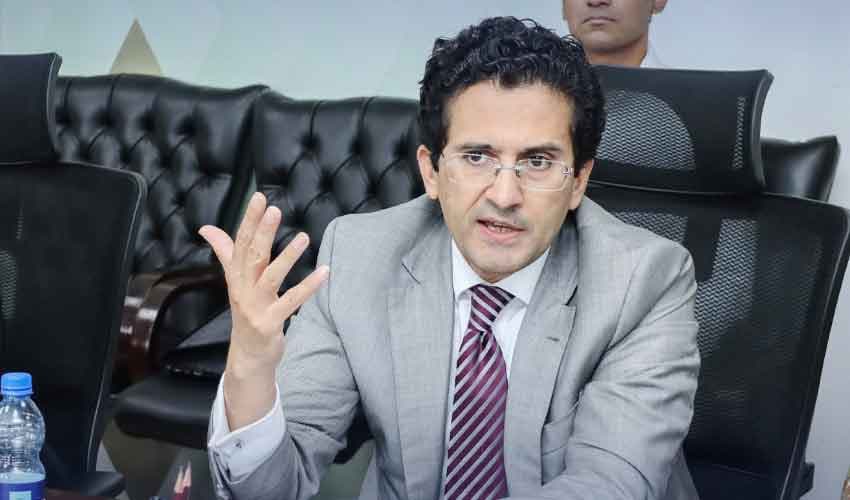
Federal Petroleum Minister Ali Pervaiz Malik has said Pakistan is still facing a major challenge over petroleum prices, but consumers could receive “good news” within the next two days if international oil prices remain stable.
Speaking in Lahore, the minister said the government had managed to prevent a petroleum shortage despite severe global and regional pressures, while acknowledging that high fuel costs continue to affect the public.
Ali Pervaiz Malik said petroleum prices are determined on the basis of a seven-day average, with the Oil and Gas Regulatory Authority (OGRA) responsible for determining the rates. He said if international prices remain stable over the next two days, there could be positive news for consumers.
The minister, however, acknowledged that petroleum prices remain expensive both internationally and in Pakistan, adding that the challenge facing the country is still significant.
Govt prevented fuel shortage
Malik said Prime Minister Shehbaz Sharif and his team ensured that Pakistan did not face a shortage of petrol during the recent period of regional tension.
He said efforts on both the economic and foreign-policy fronts helped prevent a fuel crisis, despite the challenges created by the conflict involving Iran and the United States.
“There was no shortage of petroleum products in Pakistan during the tension,” the minister said.
He added that the government had faced multiple challenges but continued working to provide relief to the public despite limited resources.
Global oil prices create major pressure
According to Malik, the international oil market witnessed extreme price pressures during the conflict. He said crude oil had at one point reached $170 per barrel, while diesel prices climbed to $280 and petrol reached $170.
At another point, he said diesel and petrol prices were moving toward $500, highlighting the severity of the pressure facing energy-importing countries.
Malik said the economic difficulties created by the US-Iran conflict also affected Iran and presented Pakistan with several challenges. He said the situation demonstrated how vulnerable countries can become when energy prices rise sharply in international markets.
Petrol levy collection exceeded target
The petroleum minister said Pakistan collected Rs1,900 billion in petroleum levy last year against a target of Rs1,700 billion.
He acknowledged that the high cost of petroleum products has a wider impact on the economy because rising fuel prices increase transportation and production costs, ultimately pushing up the prices of other goods.
“The people are suffering” because of expensive petroleum products, he said.
Malik added that petrol remains expensive, but the government did not allow shortages to develop anywhere in the country.
Prices reduced after agreement
The minister said Prime Minister Shehbaz Sharif reduced petroleum prices as soon as an agreement was reached and conditions allowed for relief. He said the government had tried its best to control oil prices within its available capacity.
Malik recalled that the prime minister had also promised to establish a transparent petroleum pricing system.
He said the government had been forced to take difficult decisions while trying to put Pakistan on a path toward economic development.
Pakistan heavily dependent on imported energy
Malik questioned why Pakistan has continued meeting its energy requirements through imports for around 80 years. He also questioned why successive governments had not made greater progress in discovering and developing the country’s domestic oil and gas reserves.
He said Pakistan imports around 90% of its energy from abroad, making the country particularly exposed to fluctuations in international oil prices.
The minister acknowledged that people are facing temporary hardship because of the current prices, but said the government is working to address the underlying challenges.
Malik said Pakistan has gas reserves in areas, including Waziristan and Balochistan, pointing to the potential for greater reliance on domestic energy resources. He said the country needs to focus on development and move beyond repeatedly dealing with energy shortages and international price shocks.
The minister said Pakistan’s next major objective is to achieve progress on the economic front and put the country firmly on a development trajectory.
New infrastructure push planned
Malik said the prime minister and field marshal have assigned one of the world’s most prestigious companies the responsibility of building energy infrastructure within three months.
He presented the initiative as part of efforts to strengthen Pakistan’s energy infrastructure and address long-standing weaknesses in the sector.
The government believes greater domestic capacity can eventually help reduce the country’s dependence on costly imported energy.
Pakistan’s regional role also changing
The petroleum minister said Pakistan has now emerged as a net security provider in the region, adding that the national conversation has shifted toward how to place the country on a sustainable path of development.
He said Pakistan had faced various challenges as a result of the Iran-US conflict but had managed to navigate the period without allowing a petroleum shortage.
Malik also said the prime minister took difficult decisions that helped put the country on the path toward development.
OGRA responsible for price determination
Clarifying the mechanism behind petroleum prices, Malik said OGRA is responsible for determining the rates. He explained that prices are calculated using a seven-day average of international market rates.
Therefore, he said, the direction of global oil prices over the next two days will be important in determining whether consumers receive relief in the upcoming price review.

.jpg&w=640&q=75 "Flour prices rise in parts of country")