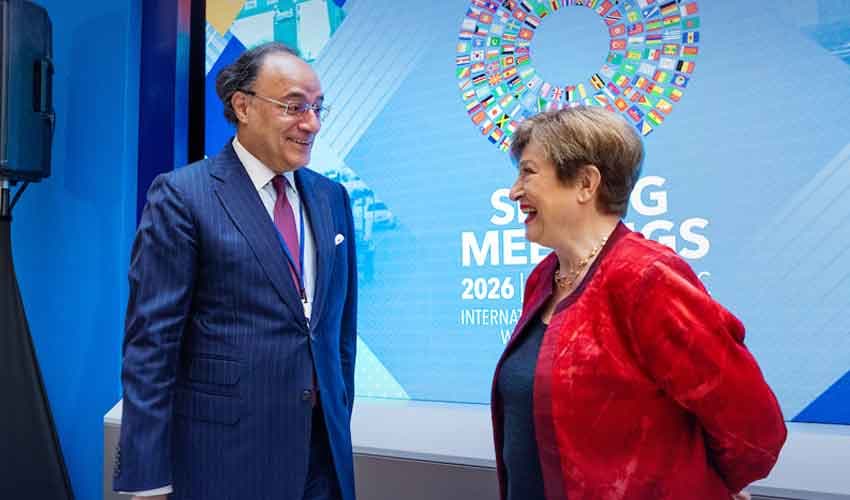
Pakistan’s economic reform efforts have received a major boost as IMF Managing Director Kristalina Georgieva acknowledged the country’s progress.
Finance Minister Muhammad Aurangzeb held a series of high-level meetings to strengthen financial ties and investor confidence.
During a meeting in Washington, IMF Managing Director Kristalina Georgieva praised Pakistan for effectively implementing its reform program. She noted that the country’s measures have helped maintain economic stability and improve investor confidence.
The IMF emphasized that continuing structural reforms alongside sound economic policies will be crucial for sustaining long-term growth and improving public welfare.
The minister confirmed that Pakistan has reached a staff-level agreement with the IMF under the Extended Fund Facility (EFF) and Resilience and Sustainability Facility (RSF) programs. He expressed hope for positive progress when the IMF Executive Board reviews the agreement, expected in May.
Aurangzeb also briefed officials on steps being taken to meet fiscal year 2026 obligations, stating that Pakistan has secured external financial arrangements to fulfill these commitments.
Fitch and global rating agencies
In Washington, the finance minister met officials from Fitch Ratings and appreciated their continued engagement with Pakistan’s credit profile. He thanked the agency for affirming Pakistan’s “B” credit rating, calling it a positive signal for global investors.
Aurangzeb outlined Pakistan’s plan to maintain a strong presence in global capital markets. He highlighted instruments such as Panda bonds, Eurobonds, international Sukuk, and ESG-linked bonds as part of the strategy.
In a separate meeting with representatives from JPMorgan Chase, the minister shared plans for Pakistan’s return to international capital markets after a four-year gap.
He also briefed them on the Global Medium Term Note Program, noting that rupee-linked, dollar-denominated instruments could be issued soon.
Meeting with ADB, regional cooperation
Aurangzeb also met Masato Kanda, President of the Asian Development Bank, describing the recently signed Country Partnership Strategy as a major milestone. He appreciated ADB’s support, particularly in providing credit enhancement for Pakistan’s first Panda Bond issuance.
The minister reiterated progress on the IMF program and invited Masato Kanda to visit Pakistan.
Global forums and investor outreach
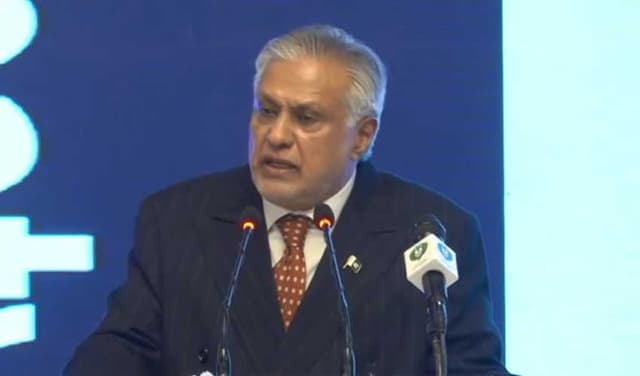
The finance minister attended the launch of the Borrowers Platform in Washington, highlighting that many developing countries are under severe debt pressure. He pointed out that high interest rates and tight global financial conditions are affecting development and limiting investment capacity for sustainable growth.
Aurangzeb stressed that domestic reforms are essential and already underway, while also noting structural barriers in the global financial system that restrict access to loans.
Middle East crisis and economic response
Addressing the City Macro Forum, Aurangzeb described the ongoing Middle East crisis as a major supply shock. He said the government has prepared a three-phase response to manage its economic impact.
He also briefed investors on Pakistan’s economy and key progress under the IMF program, reaffirming that reforms remain on track.
The finance minister expressed gratitude for the financial support provided by Saudi Arabia, acknowledging its role in stabilizing Pakistan’s economy. He announced that Pakistan’s global bond program will be launched soon, including Eurobonds, Sukuk, and rupee-linked bonds.