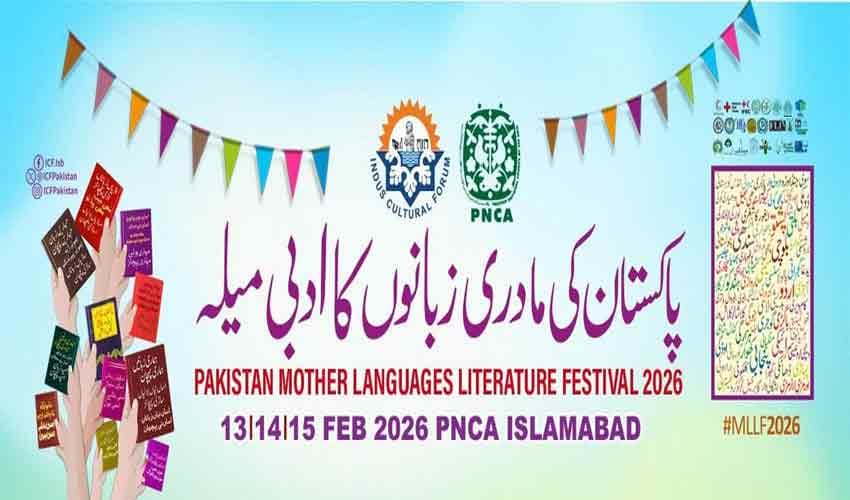
The second day of the Pakistan Mother Languages Literature Festival carried forward a vibrant celebration of the country’s linguistic and cultural diversity, bringing together prominent poets, scholars, translators, researchers, and performers.
The day saw a dynamic lineup of discussions, book launches, documentary screenings, theatrical performances, and a grand multilingual mushaira.
Organised by Indus Cultural Forum for over a decade, the festival marked its 11th edition this year in collaboration with Pakistan National Council of the Arts.
Building on the momentum of the opening day, the second day focused on literary heritage, cultural preservation, and contemporary creative expression across Pakistan’s diverse mother languages.
The day began with two back-to-back sessions honouring literary legends representing 12 Pakistani languages who had received lifetime achievement awards on the festival’s opening day.
Among those recognised were Ayaz Gul (Sindhi), Rai Muhammad Khan Nasir (Punjabi), Ashiq Khan Buzdar (Seraiki), Dr. Abdul Saboor Baloch (Balochi), and Tahira Ahsas Jattak (Brahui). Moderated by Usman Qazi and Humaira Ishdaq, the discussions reflected on their literary contributions and the evolving role of regional languages in Pakistan’s intellectual landscape.
A major highlight of the day was the launch of nearly 50 books across 15 Pakistani languages, including 10 novels, nine translated works from Pakistani and international literature, and nine research and non-fiction titles covering subjects ranging from psychology to literary criticism. A multilingual mushaira also introduced 18 new poetry collections by participating poets.
Emphasising cross-cultural literary exchange, the translations segment featured works rendered from English, Pothohari, Pashto, and Sindhi into various Pakistani languages, showcasing translation as a vital bridge between diverse literary traditions.
The afternoon session turned attention to the preservation of Pakistan’s endangered cultural expressions, featuring a documentary screening on the Boreendo supported by UNESCO. Speakers including Jawad Sharif, Salman Tahir, Sonya Rehman, Dr. Qasim Sodhar, Raaziq Faheem, and Gulzar Gichki highlighted the growing threat to traditional arts, instruments, and crafts, calling for a comprehensive approach to their protection.
A compelling theatrical performance in the main auditorium addressed the theme of climate change through indigenous and regional languages, demonstrating how environmental challenges can be communicated more effectively through local linguistic contexts.
Throughout the day, speakers and authors reaffirmed the essential role of mother languages in shaping cultural identity, creative expression, and intellectual discourse. The festival concluded with a captivating Sufi music performance by Nizam, featuring Wajeh Nizami and Rubaya Pirzada, who presented a fusion of guitar, sitar, and tabla.