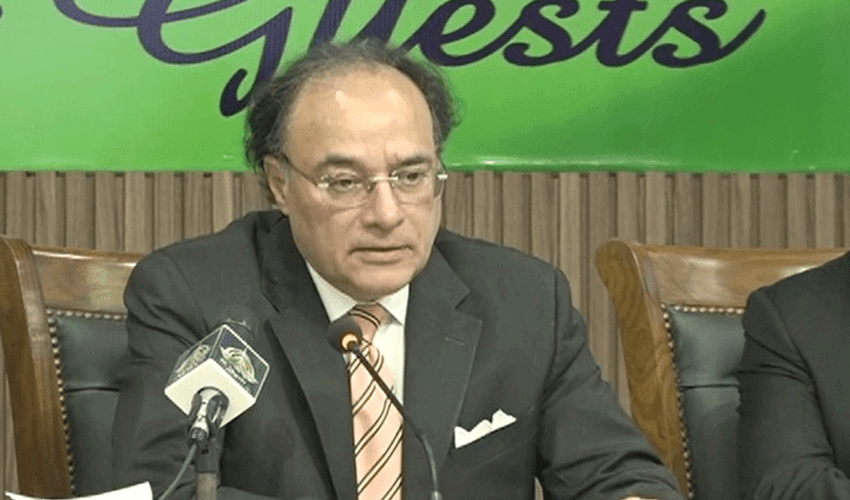
Federal Finance Minister Muhammad Aurangzeb said the government alone cannot provide jobs to Pakistan’s 240 million people, stressing the need for private sector growth and economic reforms.
He was addressing the Pakistan Economic Growth Conference at the Federation of Pakistan Chambers of Commerce and Industry (FPCCI).
Speaking at the conference in Lahore, Aurangzeb acknowledged the scale of Pakistan’s population challenge.
“The government cannot provide jobs to 240 million people,” he said, underscoring the need to create an environment where businesses and investors can generate employment opportunities.
He added that Prime Minister Shehbaz Sharif would personally address the economic challenges and related issues in the coming days.
Economy on path of stability
The finance minister expressed optimism about the country’s economic trajectory. He said Pakistan’s foreign exchange reserves are continuously increasing and the economy is moving toward stability and development.
Aurangzeb also noted that cement production is rising, signaling activity in the construction sector.
The minister said work is underway in the construction sector and that taxes related to construction are increasing. He acknowledged challenges faced by developers and bankers, including recovery issues, but assured that the government is working on solutions.
Aurangzeb also said reforms in property tax are in progress and promised “good news” soon. He emphasized that the government is expanding the tax net to bring more sectors into the formal economy.
Focus on digitalisation, transparency
Highlighting structural reforms, Aurangzeb said digitalization of the economy will enhance transparency and increase revenues. According to him, digital reforms are expected to improve documentation and reduce leakages in the system.
The finance minister revealed that Pakistan’s IT exports are currently bringing in around $10 million, but said less than half of the export earnings are being repatriated through official channels.
He claimed that the remaining amount is going out through hundi and hawala remittances, depriving the country of valuable foreign exchange.
Trade, banking issues with Iran
Aurangzeb acknowledged that traders are facing problems related to banking transactions with Iran.
He said he plans to speak with Iran’s finance minister to address these concerns. While the banking system between Pakistan and Iran has improved, he admitted that challenges still persist.
The prime minister is personally overseeing the matter, he added.
Calling rice Pakistan’s most important crop, the finance minister said wheat and cotton are also key agricultural products.
He noted that the government wants to move beyond traditional constraints and is working on reforms to strengthen the agricultural and export sectors.