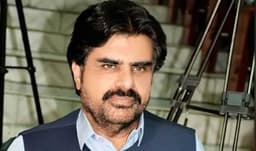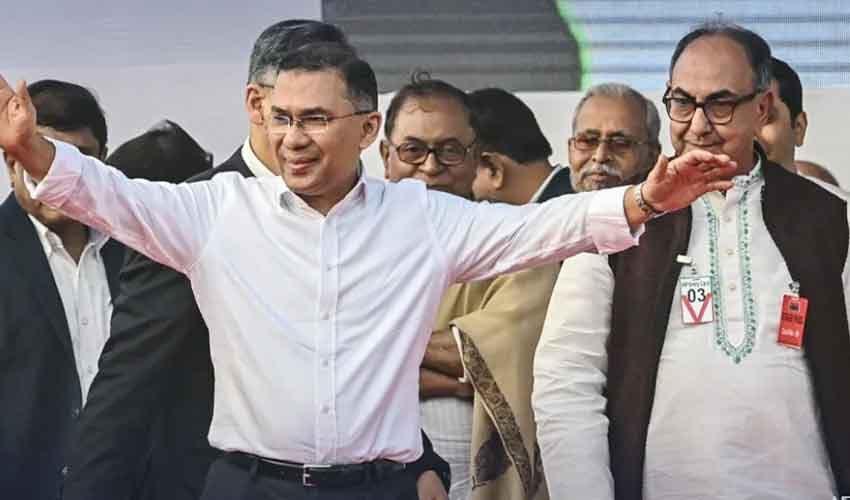
Less than two months after returning from nearly two decades of self-imposed exile in London, Tarique Rahman is poised to become Bangladesh’s next prime minister following a dramatic electoral turnaround.
A coalition led by his Bangladesh Nationalist Party (BNP) crossed the halfway mark in parliamentary elections during early counting on Friday, according to local broadcaster Ekattor TV — marking one of the most remarkable political comebacks in the country’s history.
Thursday’s election signaled a stunning reversal of fortune for the soft-spoken 60-year-old leader.
Rahman left Bangladesh in 2008 after being released from detention under a military-backed caretaker government that had launched a crackdown on corruption. He said at the time that he needed medical treatment.
For 17 years, he lived in self-imposed exile in London, running party affairs from abroad while facing multiple legal cases at home.
His return last Christmas came after a youth-driven uprising in August 2024 toppled long-time prime minister Sheikh Hasina of the Awami League. Hasina fled to New Delhi, ending her extended grip on power.
Political legacy shaped by history
Born on November 20, 1965, in Dhaka, Tarique Rahman is the son of former prime minister Khaleda Zia and former president Ziaur Rahman, the founder of the BNP and a leading figure in Bangladesh’s independence movement.
Ziaur Rahman ruled the country from 1977 until his assassination in 1981.
Rahman studied international relations at the University of Dhaka but later dropped out and entered business, establishing ventures in textiles and agro-products before formally entering politics in 1990.
Also Read: Bangladesh's BNP wins two-thirds majority in landmark election
Between 2001 and 2007, during his mother Khaleda Zia’s tenure as prime minister, he held key party positions. Although he never occupied a government post, he was widely seen as an influential strategist within the party.
During that period, he earned the nickname “Dark Prince,” as he was perceived to be shaping decisions from behind the scenes — a charge he has denied.
Imprisonment, charges, acquittals
In 2007, the government of Sheikh Hasina Wajid brought corruption charges against Rahman, leading to his imprisonment.
In 2018, he was sentenced to life imprisonment in absentia over a 2004 grenade attack on a rally addressed by Hasina that killed and injured many. He consistently denied all allegations, calling them politically motivated.
Following the collapse of Hasina’s government in August 2024 and the installation of an interim administration, Rahman was acquitted in all cases.
Return home, personal loss
Rahman returned to Dhaka in December after hearing about the deteriorating health of his mother, Khaleda Zia.
On December 30, 2025, Khaleda Zia passed away. After her death, Rahman formally assumed full leadership of the BNP and pledged to carry forward her political mission.
His return drew a hero’s welcome from supporters, energized by what they described as a patriotic leader coming home after years of sacrifice.
Since his return, Rahman has worked to reshape his public image.
Gone, observers say, is the brash political operator associated with the BNP’s 2001–2006 era. Instead, he has projected himself as a calm statesman advocating peace, stability, and reconciliation.
“What does revenge bring to someone? People have to flee from this country because of revenge. This does not bring anything good,” Rahman said in an interview with Reuters, flanked by his daughter Zaima. “What we need at the moment in the country is peace and stability.”
Also Read: Pakistan congratulates BNP on Bangladesh election victory
He has pledged to restore “people’s ownership of the state,” rebuild democratic institutions, and practice accountability.
“Only by practicing democracy can we prosper and rebuild our country,” he said. “If we practice democracy, we can establish accountability.”
Policy vision for new Bangladesh
Rahman has promised to recalibrate Bangladesh’s international partnerships to attract investment without tying the country too closely to any single power — a contrast to Hasina, who was widely seen as aligned with New Delhi.
He has outlined plans to expand financial aid for poor families and reduce reliance on garment exports by promoting industries such as toys and leather goods.
He also proposed introducing a two-term, 10-year limit for prime ministers to deter autocratic tendencies.
During the campaign, he announced youth welfare measures and pledged to change the country’s destiny through economic reform and democratic revival.
Rahman landed in Dhaka accompanied by his cardiologist wife and barrister daughter Zaima.
He admitted that events had unfolded so quickly that he barely had time to reflect. “I don't know how we have passed every minute since we landed,” he said.
Adding a softer touch to his renewed public image, the family’s seven-year-old half-Siberian cat, Jebu, has gone viral on social media.
Inside the BNP, party insiders say Rahman maintains firm control. Since returning, he has directly overseen candidate selection, electoral strategy, and alliance negotiations — roles he previously managed remotely from London.
Historic moment for supporters
Supporters describe Rahman as courageous, brave, and fearless.
They say he lived a patriotic life during his 17 years abroad and returned to win the hearts of the people. His sweeping electoral victory is being hailed by backers as historic.
While he is undeniably a product of dynastic politics, Rahman insists his primary focus is restoring and sustaining democracy.
“So we want to practice democracy, we want to rebuild our country,” he said — signaling what could be the beginning of a new chapter in Bangladesh’s political landscape.