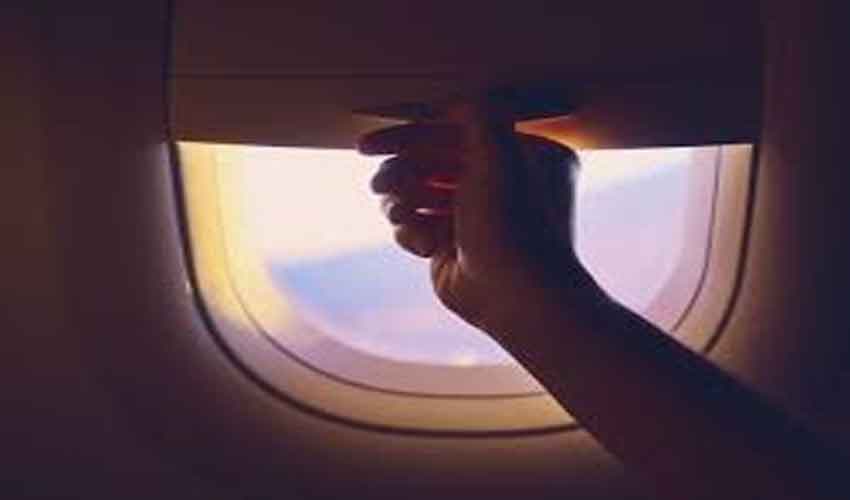
Many passengers find it puzzling when flight attendants repeatedly request that window shades be kept open before landing.
While bright light can sometimes be uncomfortable for the eyes, experts say this instruction is not for convenience but is an important safety measure designed to save lives.
Reports indicate that on commercial flights, the crew advises passengers to open the window shades a few minutes before landing.
Although this may seem trivial, it is actually a standard safety procedure followed by airlines worldwide, especially during the most critical phases of flight, such as takeoff and landing.
Experts explain that open window shades allow both cabin crew and passengers to quickly detect emergencies. If smoke, fire, or sparks appear in any part of the aircraft, everyone can immediately see the situation and make timely decisions about the safest exit routes.
A well-lit cabin also helps keep passengers mentally alert. In a dark environment, people are more likely to be drowsy or inattentive, whereas staying alert is crucial during important phases like landing. Open shades also allow flight attendants to monitor the cabin more effectively and observe passengers’ reactions.
Another key reason is eye adjustment. During daytime, if evacuation becomes necessary, closed shades can make it harder for passengers’ eyes to adapt to sudden bright light, potentially slowing their response.
Similarly, at night, having some view of the outside helps eyes adjust to the environment, enabling quicker and safer evacuation in an emergency.
Open shades also help crew quickly assess which exit doors are safe to use. If one side has fire, smoke, or obstacles, the crew can immediately direct passengers to a safer exit, and passengers are more likely to follow instructions confidently when they can see the outside conditions.
Experts emphasize that this procedure is not limited to a single country or airline. It is a globally recognized aviation safety protocol, considered an essential part of overall safety systems, ensuring that passengers and crew are protected under consistent rules and training no matter where they are traveling.