Archaeologists working at Mohenjodaro have uncovered a protective wall encircling the ancient city, a discovery experts are calling a major breakthrough. The find is expected to reshape understanding of the city’s administration, transport, and defense systems.
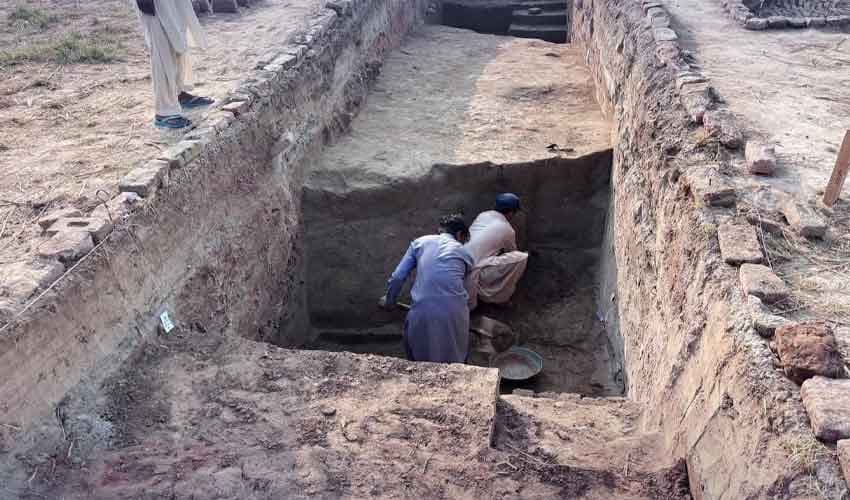
During ongoing excavations in Larkana, experts discovered a mud-brick wall built around the central city of Mohenjodaro. Archaeologists say the structure functioned as part of the city’s defense and transportation network.
Structures long believed to be simple foundations have now been identified as a regular city wall. Based on new evidence from soil layers and excavation data, experts confirmed the wall’s true purpose.
Trade, traffic, administration
According to archaeologists, the wall was likely constructed to regulate trade, control traffic flow, and support the city’s administrative and planning system. The discovery provides new insight into the sophistication of urban life in the Indus Valley Civilization.
The excavation is being conducted under the Sindh Department of Antiquities and Archaeology as part of the Pakistan–US Joint Archaeological Mission. A joint team of American and Pakistani experts is participating in the research.
International experts leading project
The excavation is being carried out under the leadership of American experts Jonathan Mark Kinair and Asma Ibrahim, with local supervision by Curator Ehsan Abbasi. Professor Ali Lashari is also overseeing aspects of the mission.
In 1950 and 1951, British archaeologist Sir Arthur Trohiller had described the structure as a mud-brick foundation. New excavations and stratigraphic evidence have now confirmed it as a protective city wall.
Excavation work to resume soon
Curator Ehsan Abbasi said the excavation process of the wall will resume shortly. Further digging is expected to reveal additional details about the city’s layout and infrastructure.
Experts believe the discovery will significantly aid future research and help promote tourism at Mohenjodaro. The finding highlights Sindh’s rich archaeological heritage on the global stage.
Sindh minister congratulates archaeologists
Provincial Minister for Culture, Tourism and Antiquities Syed Zulfiqar Ali Shah congratulated the team on the discovery. He said it underscores the global importance of Sindh’s historical legacy.
Syed Zulfiqar Ali Shah described the success of the Pakistan–US Joint Archaeological Mission as a strong example of international cooperation. He reaffirmed that the Sindh government will continue to provide full support for the protection, research, and promotion of archaeological sites.