Following the emergence of new Nipah virus cases in India, the Sindh government has issued a precautionary advisory to protect public health. Officials have stressed that no case of the deadly virus has been reported in Pakistan to date.
The advisory was issued by the Sindh Health director general after India confirmed fresh Nipah virus cases. Authorities described the move as a precautionary step, emphasizing that Pakistan currently remains free of the virus.
According to the advisory, Nipah is a highly dangerous zoonotic virus that can be transmitted from animals to humans. Initial symptoms include fever, headache, cough, body aches, and vomiting.
Risk of severe illness and brain inflammation
The health DG warned that the virus can lead to severe respiratory illness and brain inflammation in serious cases. Due to these risks, the public has been advised to strictly follow preventive and protective measures.
Citizens have been instructed to implement guidelines issued by the Federal Ministry of Health. The advisory urges people to consume fresh fruits and food, particularly during cold weather, and to thoroughly wash all food and drink items before use.
Experts warn of potential causes
Medical experts say there can be multiple reasons behind the spread of new viruses. They have urged the public to remain cautious and adopt protective habits to avoid any potential epidemic.
Border and airport screening
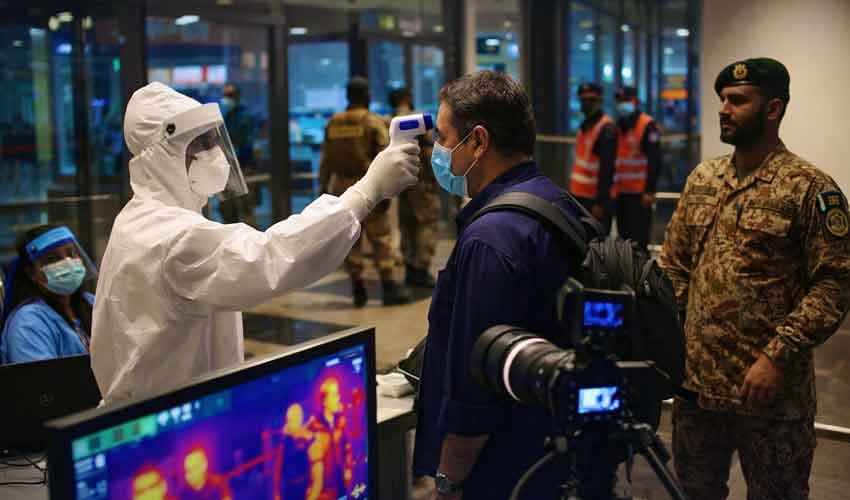
Meanwhile, authorities across Pakistan have ordered enhanced screening of travelers entering the country. The Border Health Services department said all travelers will undergo thermal screening and clinical assessment at airports, land borders, and seaports.
Also Read: Pakistan issues alert over Nipah virus spread in India
Officials said travelers must provide their transit history for the past 21 days to determine whether they passed through Nipah-affected or high-risk regions. Authorities noted there are no direct flights between India and Pakistan, and travel remains extremely limited.
Other Asian countries step up controls
Several Asian countries, including Thailand, Singapore, Hong Kong, Malaysia, Indonesia, and Vietnam, have also tightened airport screening. In Hanoi, Vietnam’s health department ordered screening at Noi Bai Airport, especially for passengers arriving from India and West Bengal.
India’s health ministry said authorities identified and traced 196 contacts linked to the two confirmed cases. None showed symptoms, and all tested negative for the virus.
What is Nipah virus?
Nipah is a rare viral infection that spreads mainly from infected animals, particularly fruit bats, to humans. While it can be asymptomatic, it often has a high fatality rate of 40% to 75%, depending on healthcare capacity, according to the World Health Organization.
The virus was first identified more than 25 years ago during an outbreak among pig farmers in Malaysia and Singapore. As of December 2025, there have been 750 confirmed Nipah cases worldwide, resulting in 415 deaths, according to the Coalition for Epidemic Preparedness Innovations.
WHO lists Nipah as priority pathogen
The WHO classifies Nipah as a priority pathogen due to its high mortality rate and lack of a vaccine. India continues to report sporadic infections, particularly in Kerala, one of the world’s highest-risk regions for Nipah.