The issue of sending a 10-member parliamentary delegation to Makkah and Madinah at government expense every year in Rabiul Awwal has moved forward, as the National Assembly Standing Committee on Religious Affairs has submitted written recommendations to the Ministry of Religious Affairs.
The National Assembly Standing Committee on Religious Affairs has formally sent its recommendations to the Ministry of Religious Affairs. Samaa TV has obtained a copy of these recommendations, which outline detailed arrangements for the proposed annual visit.
The ministry will forward the recommendations to the National Assembly speaker for final approval.
Proposal: Secretariat to bear expenses
According to the recommendations, the National Assembly Secretariat should bear the cost of air tickets for the parliamentary delegation. It has also been proposed that the Secretariat cover food and drink expenses in Madinah and Makkah.
The committee further recommended that accommodation be arranged in hotels or official residences for the delegation.
The standing committee suggested appointing a protocol officer for the delegation. It also recommended including the secretary of the Standing Committee on Religious Affairs as part of the delegation.
Additionally, the khateeb of the Jamia Mosque at Parliament House should be included as a religious guide.
Nomination process, political representation
Under the proposal, the National Assembly speaker and the Ministry of Religious Affairs would meet committee members in the first week of Muharram every year to finalise nominations. The speaker is advised to nominate at least one member from each parliamentary party represented in the National Assembly.
Members of the Standing Committee on Religious Affairs would automatically be included in the delegation.
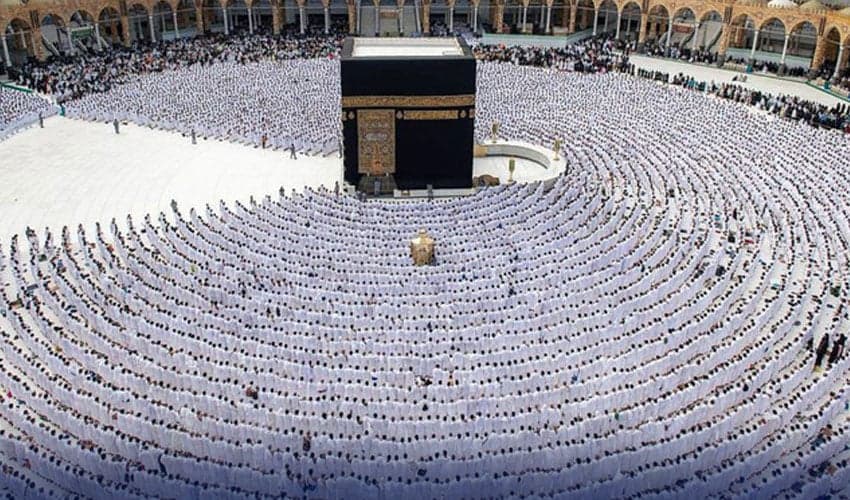
The parliamentary delegation would travel to Saudi Arabia in the second week of Rabiul Awwal each year. The delegation would visit the Rauza-e-Rasool (PBUH) and offer prayers and salutations on behalf of the people of Pakistan.
The stay in Saudi Arabia would be seven days, during which members would also receive medical facilities at government expense.
The Directorate General of Hajj, Jeddah would be responsible for arranging accommodation and transport in Madinah and Makkah. These arrangements are included as part of the Standing Committee’s formal recommendations.
The recommendations were prepared by a four-member sub-committee of the Standing Committee on Religious Affairs. The sub-committee was chaired by Shagufta Jumani, with Asia Naz Tanoli, Samina Khalid Gharki, and Syed Samiullah as members.
National Assembly spokesperson clarifies
Following public debate, the National Assembly spokesperson issued a clarification stating that members of parliament are not provided any facility to perform Hajj or Umrah at government expense.
He said that under a National Assembly resolution passed in November 2016, a delegation visits the Rauza-e-Rasool (PBUH) on 21 Rabiul Awwal every year at members’ own expense.
No treasury approval so far
According to the spokesperson, all members of that delegation bear their own travel and other expenses. Under existing SOPs, the Ministry of Religious Affairs provides only administrative facilitation and bears no financial cost.
He added that any proposal for a visit at government expense may reflect the personal opinion of a member, but no such proposal has been approved or implemented, and there is no approval from the government treasury for Hajj or Umrah for members of parliament.