As Lego prepares to roll out its Smart Play system, attention is turning to the technology inside its new Smart Bricks. Beyond lights and sound, Lego says custom wireless charging was essential to keep play seamless and distraction-free.
Lego recently unveiled its Smart Play system, marking one of the biggest changes to the iconic brick in years. While the first three Smart Play sets have already sparked discussion, much of the focus has landed on the Smart Brick itself.
One of the most notable features is not visible at first glance. It is how the Smart Brick stays powered and recharges without interrupting play.
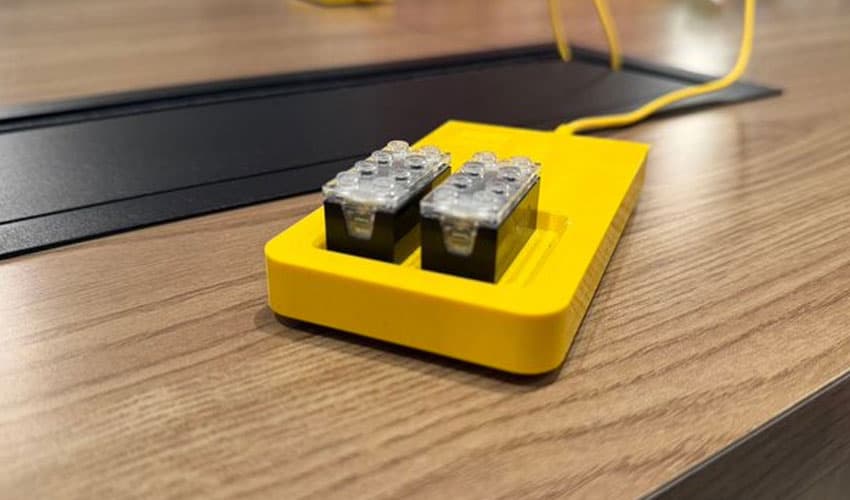
The Smart Brick is recharged by placing it on a bright yellow Lego wireless charger. Lego says a typical play session delivers close to 40 minutes of active use.
The brick can remain in standby for significantly longer, and Lego notes that this charging method is designed not to damage battery cells over time.
Why Lego avoided standard wireless charging
Unlike smartphones that rely on Qi charging, Lego’s wireless system is entirely custom. According to Lego, this decision was intentional.
Tom Donaldson, Head of Lego’s Creative Play Lab, said the goal was not simply wireless convenience. Lego wanted Smart Bricks to charge even when they are built into a model.
Donaldson explained that Lego wanted charging “at height,” meaning the Smart Brick could remain embedded inside a structure while receiving power.

He confirmed that the technology supports pass-through power, allowing energy to travel through other Lego bricks. In practice, a Smart Brick inside a Lego car could charge while the model is parked or driven onto the charger.
According to Donaldson, this capability was not part of early designs and represented a major technical leap for the project.
He said Lego set “pretty high ambition levels,” which ultimately pushed the company toward a proprietary charging system rather than relying on existing standards.
Eight years in making
Development of Smart Play’s charging technology began around eight years ago. At that time, wireless charging solutions were far less flexible than they are today.
Lego says standard approaches could not support its vision of uninterrupted play, where Smart Bricks behave like regular Lego pieces instead of electronic components that need constant removal or alignment.
The first-generation Lego wireless charger is bundled with the three Smart Play Star Wars sets currently available for preorder.
It can charge up to two Smart Bricks at once, in any orientation, and has been compared to Apple’s canceled AirPower concept—though this version is shipping.
For Lego, the charger is more than a technical accessory. It is part of a broader philosophy to keep technology invisible.
The aim is for Smart Play to feel like Lego first, with advanced tech quietly supporting the experience rather than defining it.