Two of Haiti's top leaders said on Friday they planned to proceed with a plan to remove Prime Minister Alix Didier Fils-Aime, though the timeline remained unclear, despite U.S. warnings against doing so in the last days of their mandate.
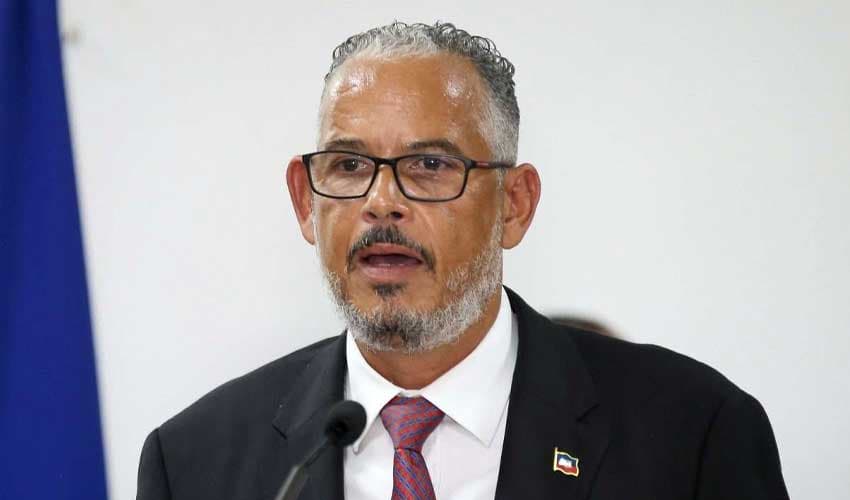
"We are the ones who appointed Didier Fils-Aime in November 2024. We are the ones who worked with him for a year, and it is up to us to issue a new decree naming a new prime minister, a new government and a new presidency," Transitional Presidential Council (CPT) member Leslie Voltaire told a press conference.
The CPT, which sacked its first prime minister six months into the job, was appointed to oversee a move towards Haiti's first election in a decade, but this was repeatedly pushed back due to worsening insecurity amid conflict with powerful gangs.
It acts as the country's top executive body.
Five of nine CPT members have signed a resolution to remove Fils-Aime, several of those members have said. However, it has yet to be published in the country's official gazette, a necessary step before the decision becomes legally valid.
Voltaire spoke alongside fellow CPT member Edgard Leblanc Fils, who said the plan was to replace Fils-Aime within a maximum of thirty days. Voltaire said there would be a "pause" to allow political groups to find an acceptable solution for the political succession.
The CPT, which sacked its first prime minister six months into the job, was appointed to oversee a move towards Haiti's first election in a decade, but this was repeatedly pushed back due to worsening insecurity amid conflict with powerful gangs.
It acts as the country's top executive body.
Five of nine CPT members have signed a resolution to remove Fils-Aime, several of those members have said. However, it has yet to be published in the country's official gazette, a necessary step before the decision becomes legally valid.
Voltaire spoke alongside fellow CPT member Edgard Leblanc Fils, who said the plan was to replace Fils-Aime within a maximum of thirty days. Voltaire said there would be a "pause" to allow political groups to find an acceptable solution for the political succession.