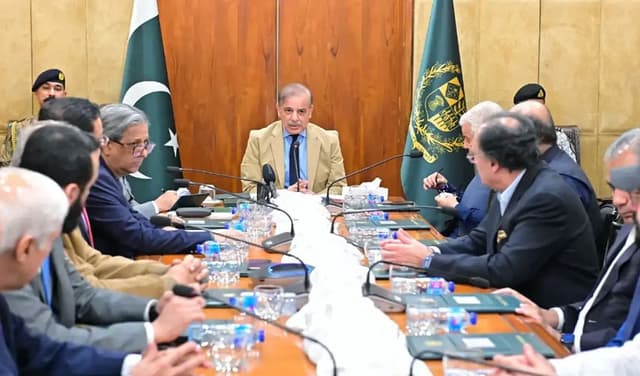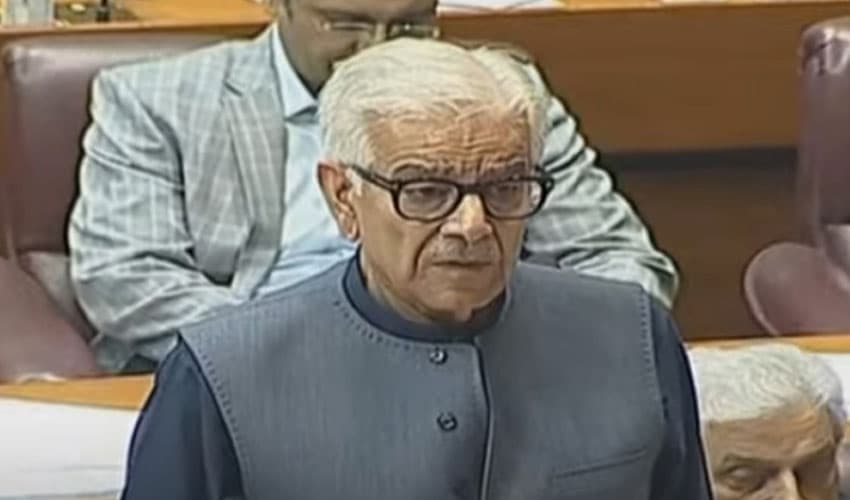
Defence Minister Khawaja Asif on Tuesday said the proposed 28th Constitutional Amendment, aimed at empowering local governments, had to be withdrawn despite political consensus, as he criticised the continued centralisation of authority at the provincial level.
Speaking on the floor of the National Assembly, Mr Asif said that although the 18th Amendment was designed to devolve power, it failed to empower people at the grassroots.
He argued that most authority remains concentrated in provincial capitals, leaving districts and cities without effective governance structures or decision-making powers.
Referring to recent incidents in Karachi, the defence minister said the situation highlighted the urgent need for a functional local government system in major urban centres, including Karachi, Lahore, Peshawar and Quetta.
“There is no effective local government anywhere in the country,” he said, adding that even where such systems exist, they lack real authority. He stressed that meaningful empowerment requires transferring powers to districts, tehsils and ward levels.
Mr Asif warned that without empowering citizens at the grassroots, parliament itself would lose its purpose.
“Until you empower the 250 million people of Pakistan, this House will be meaningless,” he said, adding that true representation begins with representing people “in the streets.”
Karachi incident highlights accountability gap
Calling the recent Karachi fire incident a wake-up call, Mr Asif said the failure to extinguish the blaze exposed the absence of local accountability mechanisms.
“If there were local government representatives in every district and neighbourhood, people would know whom to hold responsible,” he said, urging lawmakers to take precautionary steps through constitutional reform.
Military eras had stronger local govts
Highlighting what he termed an irony, the defence minister noted that military rulers — Generals Ayub Khan, Zia-ul-Haq and Pervez Musharraf — had all introduced empowered local government systems with regular elections every five years.
“In contrast, we civilians hesitate to hold local government elections,” he said, adding that provincial capitals often resist devolving authority under various pretexts.
Mr Asif also referred to China’s governance model, saying President Xi Jinping rose through a structured local governance process rather than “descending by parachute.”
He further revealed that plans for a uniform curriculum from Gwadar to Gilgit, aimed at promoting national cohesion alongside provincial identity, were also dropped due to lack of consensus.
“There was no conflict of interest,” he said. “Education gives a national identity, but we had to abandon that as well.”
Concluding his address, Mr Asif reiterated the need for a strong and empowered local government system to improve service delivery, accountability and public participation.
“If we want to solve people’s problems and give them their rights,” he said, “we must pass a meaningful constitutional amendment that empowers the entire nation.”