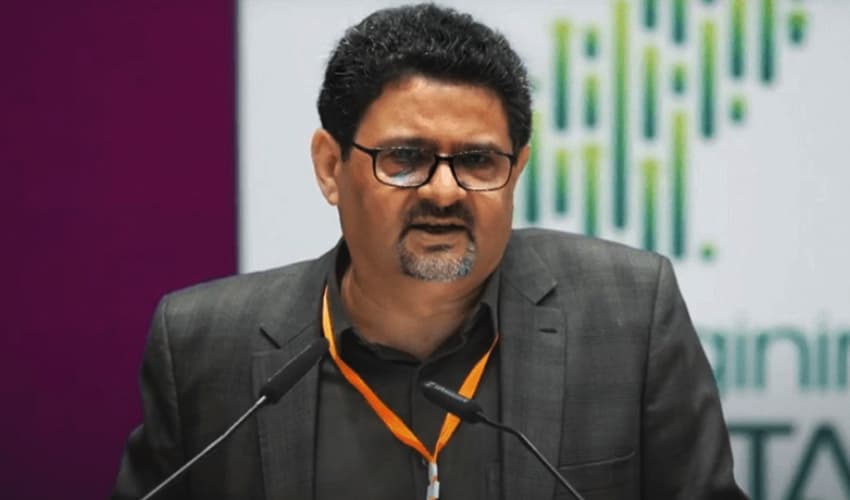
Former finance minister Miftah Ismail on Monday called for revising the NFC Award and cutting federal expenditures, saying Pakistan is missing key economic opportunities despite favourable global conditions.
Speaking on Samaa TV’s programme Nadeem Malik Live, Miftah Ismail said Pakistan must rethink the National Finance Commission (NFC) Award and reduce federal expenses to stabilise the economy.
He pointed out that Rs4,000 billion has been allocated for the Public Sector Development Programme (PSDP), stressing that spending priorities need urgent reassessment.
Tax Burden Skewed Against Salaried Class
Miftah said exporters bear around 60 percent of the tax burden, while the salaried class contributes nearly 40 percent, calling the structure unfair and unsustainable.
He questioned how Pakistani exporters could remain competitive if electricity and gas prices continue to rise compared to regional economies.
The former finance minister revealed that each MNA has been allocated Rs25.25 crore, arguing that real tough decisions are not about taxing salaries.
“Difficult decisions are not made by imposing taxes on salaried people,” he said, adding that refusing unnecessary allocations to MNAs and MPAs would be a more meaningful step.
Global oil prices at historic lows
Miftah highlighted that global oil prices have dropped below $60 per barrel, calling it an unprecedented opportunity for Pakistan.
He added that crude oil and edible oil prices are also low, yet the country has failed to capitalise on these conditions to boost exports or revive economic growth.
Questioning the lack of export growth, Miftah said Pakistan’s economy is barely functioning despite institutional support for the government.
He stressed that providing tax incentives to selected sectors, rather than burdening salaried individuals, would qualify as genuine reform.
Miftah said Pakistan is still selling electricity the same way it did in 2012, while overall consumption remains lower than in Bangladesh and India.
He noted that subsidies have been provided up to 200 units, yet high tariffs continue to restrict industrial and household usage.