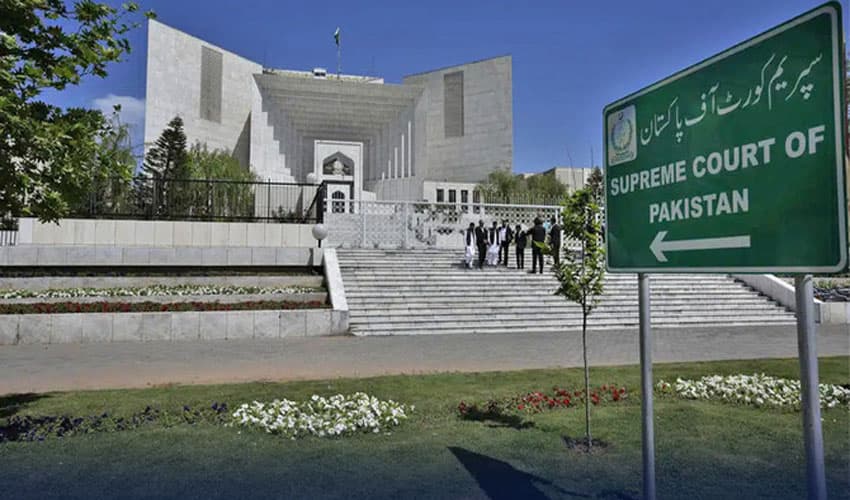
The Supreme Court on Thursday granted bail to a man accused of rape and forcible rape after a detailed hearing in which judges raised serious questions about the investigation, evidence, and legal standards required in such cases.
A three-judge bench of the Supreme Court of approved bail for Mudassar, noting shortcomings in the investigation and delays in medical examination. The court emphasized that bail does not amount to acquittal and that the trial court will decide the case on merit.
Judges question investigation quality
Justice Jamal Mandokhel observed that the more serious the allegation, the more rigorous and thorough the investigation should be. He also noted that not all incidents of this nature are even reported, often due to social pressure and concerns over family honour.
During the hearing, the government lawyer informed the court that the victim’s medical examination was conducted after a delay of two months.
Justice Mandokhel questioned whether the medical report was even against the accused, pointing out that such delays can seriously weaken the prosecution’s case.
Conflicting arguments
The defence counsel told the court that the accused is completely denying the allegations.
In response, the government lawyer argued that the investigation established that the girl had lived at the accused’s house, while also stressing that families often remain silent in such cases due to the honour of their daughters.
Burden of proof
Justice Malik Shahzad reminded the court that the burden of proof lies with the complainant, not the accused. He added that punishment cannot be awarded solely on the testimony of the woman without corroborating evidence, underscoring the need for legal standards to be met.
Justice Mandokhel asked whether anyone had ever been convicted for consensual sex and whether a consensual act could be punished under provisions relating to coercion. He stressed that punishment must be proportionate to the crime, reflecting the nature and gravity of the offence proven in court.
False allegations and social realities
Justice Mussarat Hilali questioned why a father would falsely accuse someone by putting his daughter through public scrutiny. She also remarked that if a woman herself admits to rape, the court must still examine what form of proof is legally required to sustain a conviction.
The court was informed that the woman’s father had filed a rape case against the accused in Toba Tek Singh last year.
After hearing arguments from both sides and reviewing available material, the Supreme Court granted bail to the accused, while leaving all substantive issues to be decided during the trial.