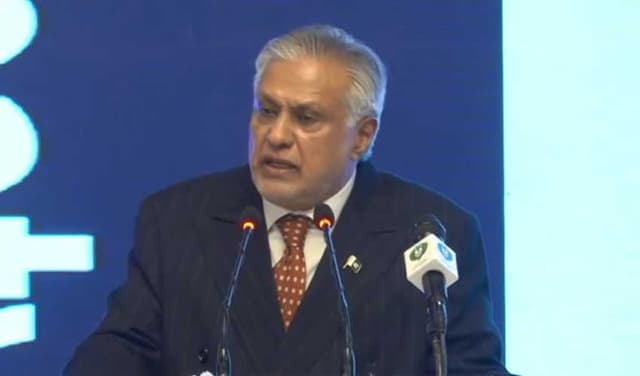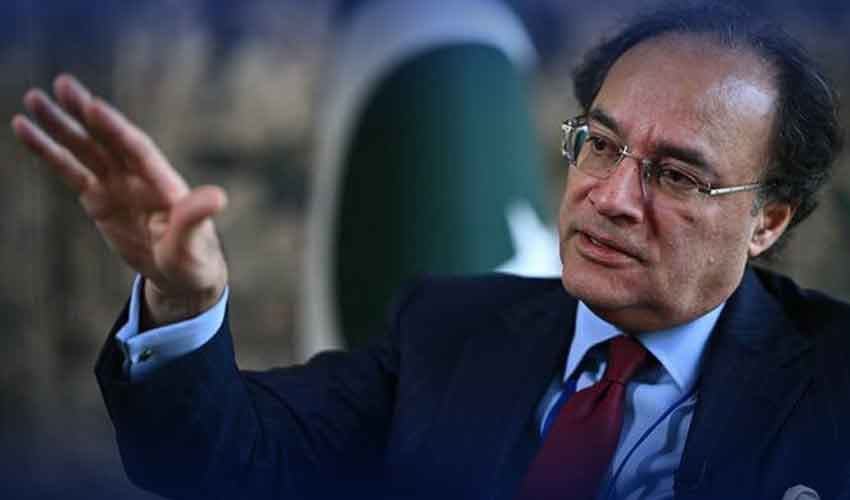
Finance Minister Muhammad Aurangzeb said on Wednesday that controlling the population will be vital to make Pakistan a $3 trillion economy by 2047, as sustainable development is not possible with an annual population growth of 2.55 percent.
Addressing the Pakistan Policy Dialogue, the finance minister said that although the trade deficit has increased, the current account deficit remains within the set target. "The performance of large industries was positive in the first quarter of the current financial year, while credit to the private sector has risen to Rs1.1 trillion," he maintained.
He said: "Remittances reached $38 billion last financial year and are expected to exceed $41 billion this year. The government is also planning to issue Panda Bonds in the Chinese market."
Aurangzeb said that four years ago Pakistan’s foreign exchange reserves were nearly exhausted, forcing the country to return to the IMF. However, investor confidence is now being restored. Referring to a survey, he said that 73 percent of investors favour investing in Pakistan, up from 61 percent previously.
The finance minister said that new business models must be considered to reduce taxes and electricity costs. "A cut in interest rates would remove the need for the Debt Management Office. Nevertheless, interest payments on loans remain the government’s largest expense," he added.
He added that the Debt Management Office was established to improve efficiency, resulting in savings of Rs 85 billion on interest payments last year, with similar savings expected this year.
Aurangzeb said that the structural reforms and the transformation of the Federal Board of Revenue (FBR) are ongoing. "Compliance and enforcement are being strengthened to ensure implementation of tax laws," he maintained.
The finance minister has made it clear that the tax policy now rests with the Ministry of Finance, while the FBR’s primary role is revenue collection.
Referring to reforms in the energy sector, Aurangzeb said that local investors also participated in the privatisation of PIA, while 24 institutions have been handed over to the Privatisation Commission. He revealed that nearly Rs 1 trillion was being lost annually in state-owned institutions, which led to the closure of Utility Stores, PWD, and Pasco, where subsidies were being misused.
The finance minister said that continuous increases in duties are harmful to the economy. "Duties must be made reasonable and business costs reduced. Pakistan has the third-largest freelancer workforce in the world, and the government’s role is to provide young people with effective systems and digital platforms so that they can contribute fully to the national economy."