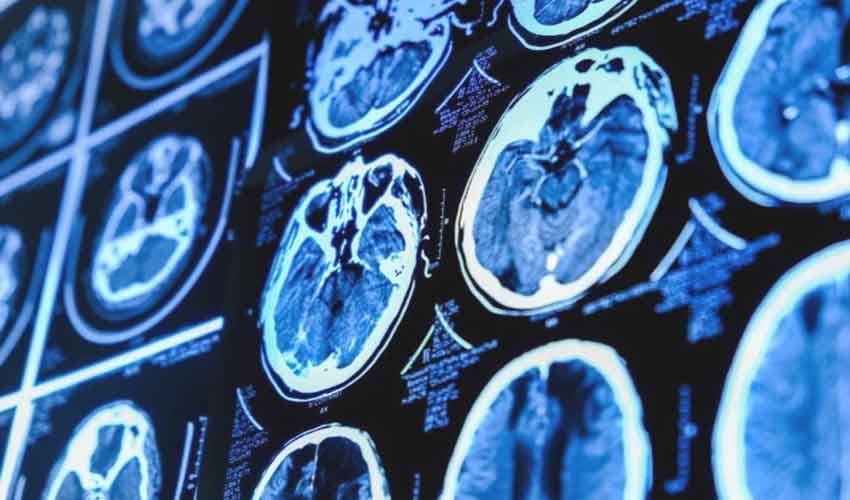
Scientists have warned that blockages in the brain’s natural drainage pathways could serve as an early warning sign of Alzheimer’s disease, potentially opening the door to earlier and more accessible diagnosis.
Researchers from Singapore’s Nanyang Technological University (NTU) have found that so-called ‘drainage pathways’ surrounding blood vessels in the brain - known as perivascular spaces - play a crucial role in clearing neural waste through cerebrospinal fluid.
However, conditions such as arterial stiffening and high blood pressure can disrupt this process, leading to the accumulation of waste in the arteries. When this happens, these drainage pathways begin to enlarge.
According to the study, enlarged perivascular spaces (EPVS) are more commonly observed in individuals showing early signs of Alzheimer’s disease.
Associate Professor Ngendaran Kandiah of NTU’s Lee Kong Chian School of Medicine, who led the research, said these abnormal brain changes can be detected through routine MRI scans that are already used to assess memory and cognitive decline. He explained that identifying EPVS could complement existing diagnostic methods for Alzheimer’s without requiring additional tests or added costs.
Co-author of the study and LKCMedicine student Justin Ong emphasized the importance of early diagnosis, noting that it allows doctors to intervene sooner and potentially slow the progression of symptoms such as memory loss, reduced thinking speed, and mood changes.
Previously, the link between EPVS and Alzheimer’s was not clearly established. To address this, the NTU team compared EPVS with other widely accepted indicators of Alzheimer’s disease. Their findings suggest that EPVS may be a strong early marker of the condition.
The research also fills a significant gap in Alzheimer’s studies by including participants from multiple ethnic groups in Singapore. Much of the existing Alzheimer’s research has focused on Western populations, and its findings may not always be applicable across different ethnicities.
Professor Kandiah noted that past studies show the prevalence of apolipoprotein E4 - a major genetic risk factor for Alzheimer’s - ranges between 50 and 60 percent among Caucasian dementia patients. In contrast, fewer than 20 percent of dementia patients in Singapore carry this gene variant, highlighting the need for population-specific research.
The study analyzed data from 979 individuals in Singapore, comparing those with mild cognitive impairment to those without any cognitive issues. MRI scans revealed that individuals with mild cognitive impairment were more likely to have enlarged perivascular spaces.
Researchers also examined seven established Alzheimer’s biomarkers. Among participants with EPVS, four of the seven biomarkers - including amyloid plaques and tau tangles, both strongly associated with Alzheimer’s risk - were more prevalent.
Damage to white matter, another common indicator of Alzheimer’s, was also assessed. While white matter damage was linked to six out of seven biomarkers, the association between Alzheimer’s biomarkers and EPVS was stronger than that with white matter damage among individuals with mild cognitive impairment. This suggests that EPVS may emerge earlier in the disease process.
“These findings are clinically significant,” Professor Kandiah said. “Although white matter damage is more commonly used in dementia assessments because it is easier to identify on MRI scans, our results indicate that enlarged perivascular spaces have unique value in detecting the early stages of Alzheimer’s disease.”
He added that the link between EPVS and Alzheimer’s points to MRI as a widely accessible tool that could enable earlier diagnosis and help slow disease progression before more severe symptoms develop.
The researchers said they will continue to monitor participants from the study to determine how many eventually develop Alzheimer’s disease and to further confirm whether EPVS can reliably predict the future risk of dementia.