Kashmiris on both sides of the Line of Control and across the world are observing Right to Self-Determination Day today, renewing their call for the UN-promised plebiscite as Indian forces enforce sweeping restrictions across occupied Kashmir.
January 5 marks the day in 1949 when the United Nations formally recognized the Kashmiri people’s right to self-determination through a historic resolution.
The resolution called for a free and impartial plebiscite in Jammu and Kashmir, a promise that remains unfulfilled more than seven decades later.
Protests called, valley turned into cantonment
The All Parties Hurriyat Conference called for protests across occupied Kashmir to mark the day.
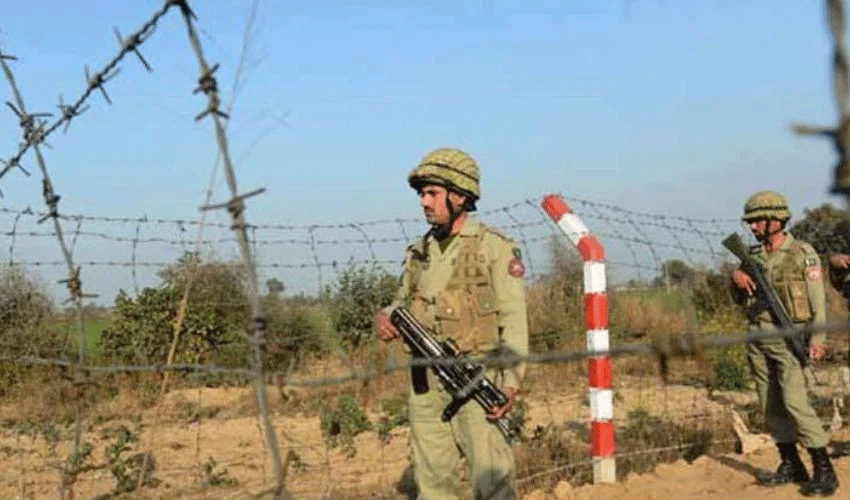
To prevent demonstrations, Indian forces have turned Srinagar and other cities into an open prison, setting up checkpoints, conducting house-to-house searches, checking mobile phones, and deploying additional personnel to restrict public movement.
Despite the heavy security presence, observers say the widespread restrictions reflect the continued fear of the Kashmiri demand for self-determination.
The Kashmiri people, however, remain steadfast, with their struggle continuing both inside the occupied territory and across the global diaspora.
President Zardari urges international action
In a special message, President Asif Ali Zardari said depriving Kashmiris of their right to self-determination is a clear violation of UN resolutions and international law.
He warned that India’s control over rivers flowing from Kashmir and its use of water as a weapon pose a serious threat to regional peace, urging the international community to move beyond statements and play a practical role in resolving the dispute.
PM Shehbaz Sharif salutes Kashmiri resistance
Prime Minister Shehbaz Sharif said all Indian tactics have failed to suppress the Kashmiri struggle for self-determination.
He praised the courage and resilience of the Kashmiri people and stressed that a just resolution of the Kashmir issue is the only path to lasting peace in South Asia.
Interior Minister Mohsin Naqvi expressed full solidarity with the oppressed people of occupied Jammu and Kashmir.
He said January 5 is a historic reminder of the UN’s global promise, adding that after 77 years, continued denial of Kashmiri rights is a grave injustice that shakes the conscience of the international community and human rights champions.
‘Occupied Kashmir world’s largest prison’
Mohsin Naqvi described occupied Kashmir as a picture of helplessness and oppression, where Indian atrocities have turned the region into a massive prison.
He said India’s attempts to suppress the right to self-determination through force violate international law, democratic principles, and expose the duplicity and silence of the world on human rights abuses.
The interior minister reaffirmed that Pakistan will continue to support the Kashmiri people’s right to self-determination on moral, political and diplomatic grounds.
He emphasized that Kashmir remains a disputed international issue awaiting resolution for more than seven decades.
Maryam highlights human dignity, freedom
Punjab Chief Minister Maryam Nawaz said the UN resolution of January 5, 1949 guarantees a free and fair plebiscite in Jammu and Kashmir.
She stated that the right to self-determination is inseparable from human dignity and that deviation from UN resolutions amounts to a violation of international human rights declarations.
Maryam accused India of attempting to alter Kashmir’s demographic structure to erase Kashmiri identity. She said occupied Jammu and Kashmir has been turned into the largest military zone in the world, but no wall or force can suppress the desire for freedom.
The Punjab chief minister expressed confidence that the Kashmiri struggle will ultimately bear fruit. She reiterated that freedom is the inherent right of Kashmiris and vowed continued political and moral support for their cause.