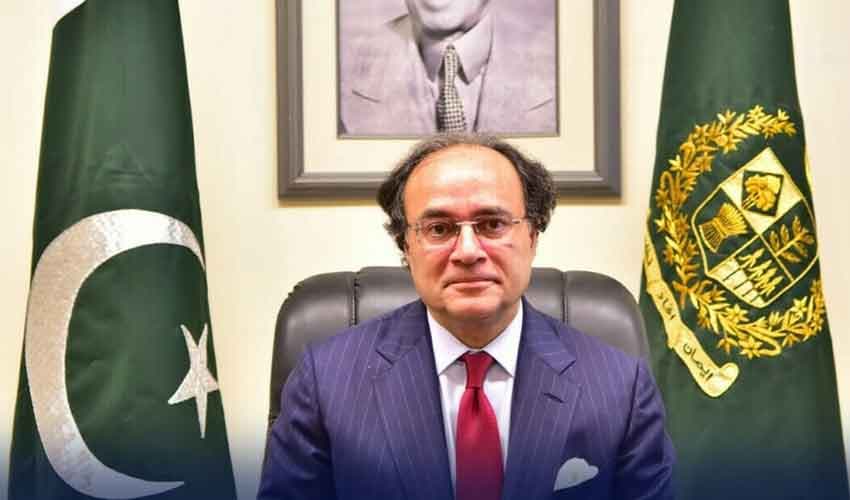
Pakistan has entered a new phase of development following economic stabilization, Federal Finance Minister Muhammad Aurangzeb said, highlighting falling inflation, rising foreign reserves, and a shift toward export-driven growth.
In an interview with USA Today, Finance Minister Aurangzeb said consistent economic policies have restored domestic and international investor confidence.
For the first time in several years, Pakistan recorded both a primary budget surplus and a current account surplus, reflecting stronger macroeconomic fundamentals.
He noted that inflation, which previously soared to nearly 38 percent, has now fallen to single digits, while foreign exchange reserves have surpassed $14.5 billion, marking a key milestone in economic recovery.
Transition to export-led growth
Aurangzeb emphasized that Pakistan is moving away from a consumption-driven economy toward export-oriented growth. IT exports have already crossed $4 billion and are expected to double within the next five years.
RELATED: Congratulations pour in on PIA's successful privatisation
Reforms in taxation, the energy sector, and state-owned enterprises are underway, while privatization and tariff rationalization aim to boost global competitiveness. The minister cited the World Bank’s “East Asia Moment” strategy as a potential roadmap for sustainable export-led development.
Key investment opportunities
The finance minister identified several high-potential sectors for investment:
-
Agriculture – modern techniques and infrastructure investment can enhance productivity.
-
Mining – Balochistan’s Tethyan and Reko Diq belts attract global attention for copper and other minerals.
-
Digital Economy & AI – data centers and IT infrastructure hold significant potential for growth and innovation.
Aurangzeb also stressed that women’s education and workforce participation are essential for sustaining long-term growth.
While celebrating progress, the minister highlighted climate change as a major challenge requiring international cooperation. He emphasized that Pakistan’s reforms are creating a stable environment, encouraging trade, investment, and long-term economic opportunities.