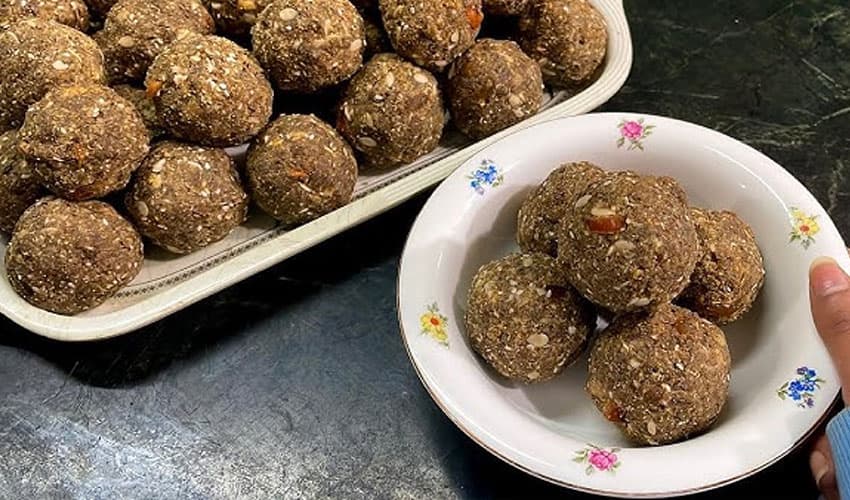
Across India and Pakistan, flaxseed pinni—also known as alsi pinni—continues to be a popular winter delicacy. Prepared using roasted flaxseeds, ghee and natural sweeteners, the treat is widely consumed for its nutritional value and energy-boosting qualities.
Flaxseed pinni is a traditional sweet treat commonly shaped into small balls or laddus. It is especially popular during the colder months and is often prepared in homes rather than purchased commercially.
The dish is rooted in regional food traditions, where warming foods rich in healthy fats are preferred in winter.
Key ingredients used
Flaxseeds (Alsi)
Flaxseeds form the core of pinni. They are roasted until they splutter and then ground into a fine powder, giving the sweet its distinctive nutty flavor.
Ghee and Sweeteners
Ghee is used to roast and bind the ingredients, while jaggery or sugar provides sweetness. Some recipes also use dates as a natural alternative.
Nuts, Flour and Edible Gum
Almonds, cashews, pistachios, walnuts and raisins are commonly added. Wheat flour or chickpea flour may be included, and edible gum (gond) is sometimes used for added texture and nourishment.
Health benefits linked to flaxseed pinni
Flaxseed pinni is widely considered a natural energy booster. Flaxseeds are rich in fiber, protein and Omega-3 fatty acids, making the sweet both filling and nutritious.
Regular consumption is believed to support digestion, help relieve constipation and assist in lowering “bad” cholesterol levels. The high fiber content may also promote a feeling of fullness, which can support weight management.
How flaxseed pinni is prepared
The preparation process begins with roasting flaxseeds and grinding them into powder. Nuts, edible gum and flour—if used—are fried separately in ghee until golden.
All ingredients are then mixed together with melted jaggery or another sweetener while still warm. The mixture is shaped by hand into small pinnis before cooling and setting.
Recipes for flaxseed pinni vary across households and regions. Sugar-free and oil-free versions are also available, shared widely on cooking websites and YouTube channels.
The sweet’s reputation as a wholesome winter food has helped maintain its popularity across generations.