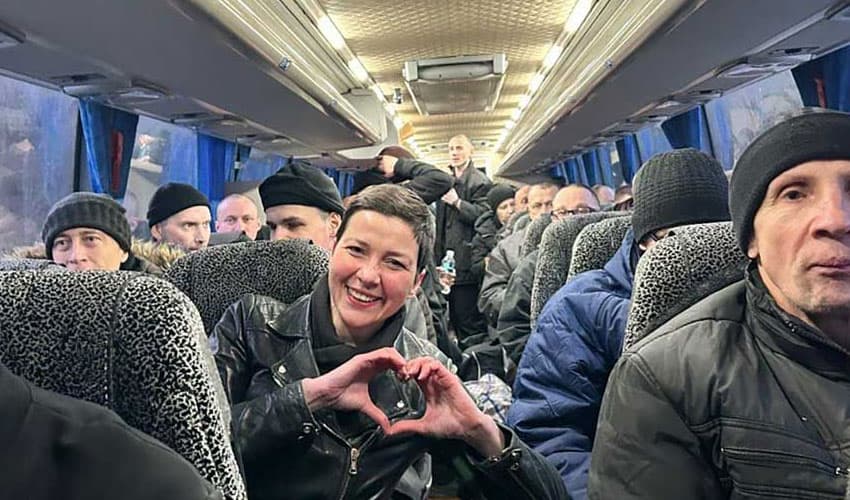
Belarus has released 123 prisoners, including Nobel laureate Ales Bialiatski and opposition leader Maria Kolesnikova, after the United States lifted sanctions on Belarusian potash.
The release marks the largest under President Alexander Lukashenko since the Trump administration began talks with the Belarusian leader earlier this year.
Among those freed were Belarusian political prisoners and Ukrainian citizens accused of working for Ukrainian intelligence. Ukrainian President Volodymyr Zelenskyy confirmed that five Ukrainians were among the released.
The freed prisoners will receive medical attention, and Belarusian citizens who wish to leave the country may be transported to Poland or Lithuania, according to Ukraine’s prisoner of war coordination center.
US lifts potash sanctions
John Coale, U.S. special envoy for Belarus, announced the lifting of sanctions on potash, a key Belarusian export and crucial ingredient in fertilizers, after two days of talks with Lukashenko in Minsk.
This decision is seen as a strategic effort to improve ties with Belarus and partially reduce Russian influence over the country.
International reactions
Exiled Belarusian opposition leader Sviatlana Tsikhanouskaya expressed gratitude toward the U.S. and highlighted that sanctions had effectively prompted the prisoner release. She emphasized the distinction between U.S. humanitarian sanctions and EU measures aimed at systemic democratic change.
Speaking from Warsaw, former Belarus diplomat Pavel Slunkin described the release as a major step toward restoring Minsk’s international legitimacy and improving relations with the West.
Western governments, including the U.S., EU, and UK, have long refused to recognize Lukashenko as Belarus’s legitimate president due to the 2020 elections, widely viewed as rigged. Previously, sanctions had targeted Belarus’s economy and international standing, while Russia remained Lukashenko’s key supporter.
U.S. officials stressed that engagement with Minsk is part of a broader strategy to reduce Belarusian alignment with Moscow, though the Belarusian opposition remains skeptical of the long-term implications.