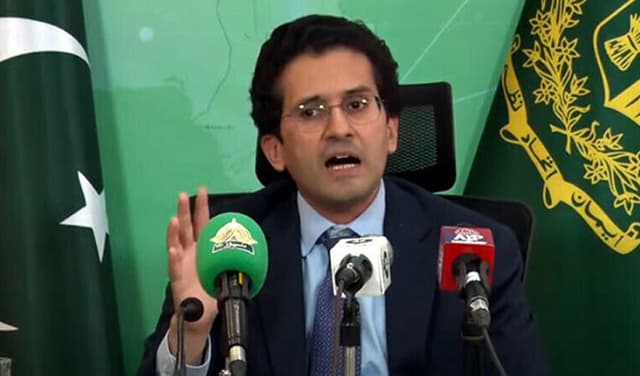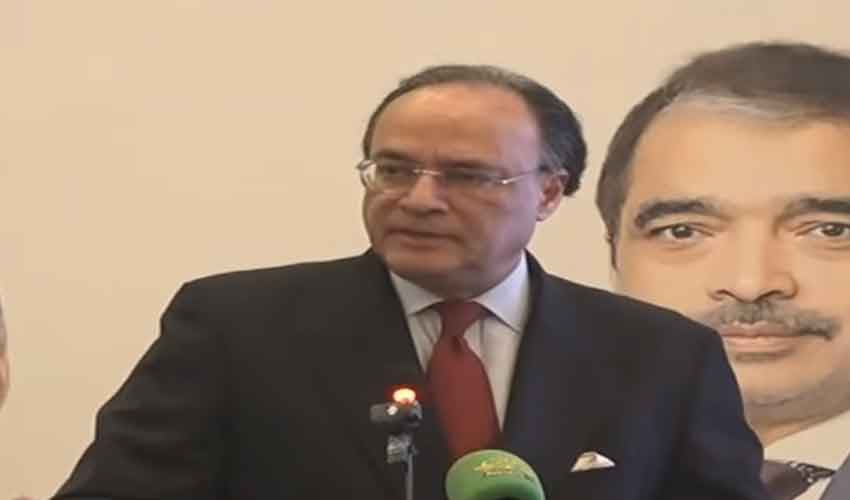
Federal Finance Minister Muhammad Aurangzeb has clarified that making public the assets of government officials is not an additional condition of the IMF, calling it a practical reform step as Pakistan pushes ahead with structural and economic changes.
Addressing the All Pakistan Chambers Conference in Lahore, Aurangzeb said publicising the assets of government officials is not an extra demand by the International Monetary Fund.
He explained that while parliamentarians’ assets are already available on official websites, the assets of bureaucrats should also be made public, adding that these details will be accessible to the public by December 31.
IMF engagement, structural reforms
The minister acknowledged widespread concerns that the IMF may impose additional restrictions, but said discussions with the Fund would focus on structural reforms.
He confirmed that Pakistan has received the fourth IMF installment of $1.2 billion, stressing that the country remains committed to reform under the 37-month IMF programme.
Also Read: IMF pushes Pakistan for officials’ asset disclosure
In an exclusive interview with Samaa TV, Aurangzeb dismissed speculation about a mini-budget. He said no mini-budget is planned and the government is instead working to improve the system, particularly strengthening enforcement mechanisms.
NFC committee by January
The finance minister announced that a National Finance Commission (NFC) committee will be convened by January, with progress to be made through consensus.
He said recent NFC discussions were positive, with all four provinces listening to each other, presenting suggestions, and agreeing to move forward collectively.
Aurangzeb said it is a tragedy that Pakistan’s economic policies change every day, undermining long-term planning.
He stressed the need for expert input at forums such as the NFC Award, saying ministers and the prime minister should be present, but technical experts are equally essential.
Burden on salaried class
The minister openly acknowledged the additional tax burden on the salaried class, saying he understands the pressure placed on formal sector workers. He added that relief can only be provided when the economy stabilises and begins to grow sustainably.
Aurangzeb said next year’s budget will be prepared by policymakers, with calculations and realism at its core.
Also Read: Pakistan assures IMF of timely energy tariff hikes amid tax shortfall
He warned that no country can function with an 8.8% GDP framework, stressing the need for consistency and credible economic planning.
Economic gains, fiscal discipline
Highlighting recent progress, the finance minister said the government saved Rs850 billion last year. He noted that large-scale manufacturing grew by 5 percent, the trade deficit declined, the balance of payments improved, and the current account deficit narrowed.
Aurangzeb said investment in the stock market has increased, with 150,000 to 200,000 new investors joining. He also announced plans to launch Panda bonds, while efforts are underway to move from FDR to NDR frameworks.
The finance minister confirmed that one bank has already been privatized and expressed hope that PIA could also be privatized successfully.
He added that preparations are underway for the privatization of three more institutions, alongside reforms targeting SMEs and reduced government expenditure.
Also Read: Pakistan meets most targets in second review of loan programme: IMF report
Aurangzeb emphasized the need to further strengthen Pakistan’s export industry, saying growth must extend beyond textiles to all sectors.
He said tariff regime reforms are underway, with the prime minister set to announce details next week.
New economy, crypto, technology push
The finance minister said Pakistan is moving toward a new economy, adopting modern systems while keeping the traditional economy running.
He revealed that licensed exchanges will now support blockchain, Pakistan has formed a Crypto Council, and the initiative has received backing from the White House and the UAE.
Aurangzeb said the IT sector is expected to earn $4 billion, while authorities continue to closely monitor the exchange rate. He added that local investors are active in the market and urged their participation if PIA bids are opened.
Reducing government footprint
Calling for private sector leadership, Aurangzeb said the government must reduce its footprint, noting there are 40 ministers and numerous ministries.
He stressed the need to reform how jobs are provided and to allow markets to function more efficiently.
Aurangzeb said PASSCO is being closed after becoming a hub of corruption, though strategic reserves will still be maintained through alternative mechanisms.
He also noted ongoing deregulation efforts in markets such as sugar, and potential reforms in other commodities, including rice.
Tax policy separation, enforcement
The finance minister said the DG Tax Policy is now based in Malaysia and that tax policy will no longer be linked to the FBR. Under the new framework, the FBR will focus solely on tax collection, while policy formulation remains separate.
Aurangzeb confirmed that authorities have taken action against sectors such as sugar and tobacco, sealing companies found violating regulations.
He said institutions that fail to comply with the law will face strict enforcement.
Concluding his remarks, the finance minister said Pakistan is fighting on both internal and external economic fronts.
“If the economy runs, the country will run,” he said, reiterating the government’s resolve to move toward a new, modern, and sustainable economic model.
Also Read: IMF releases $1.2bn tranche to Pakistan
A day ago, it had been reported that the IMF had imposed additional conditions on Pakistan to keep its ongoing loan program on track, emphasizing stricter anti-corruption measures and greater transparency in governance.
Among the key requirements was the online disclosure of assets held by senior government officials by December next year.
The IMF had reportedly directed Pakistan to take strict steps to curb corruption and prepare an action plan to reduce corruption risks. Provincial anti-corruption agencies are to be empowered further to enhance their effectiveness.
Officials are also required to publish their assets online, marking a significant step toward transparency.