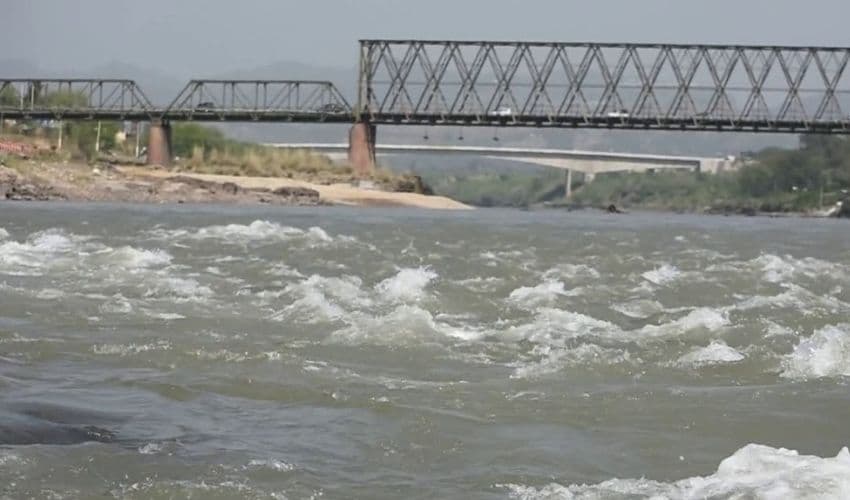
Pakistan has reported significant fluctuations in the flow of the Chenab River after India abruptly released and then restricted water from the Baglihar Dam.
WAPDA’s latest data shows a sharp swing in river inflows over the past 24 hours, prompting renewed concerns over India’s “tampering” with Chenab waters.
Sudden rise, fall in Chenab River flow
According to WAPDA, the Chenab witnessed a dramatic increase of 58,300 cusecs in water flow yesterday after India opened the Baglihar Dam spillways. However, within the next 24 hours, the river recorded a decrease of 48,000 cusecs, marking an unusually steep drop.
Today, the Chenab’s inflow stands at 10,100 cusecs, compared to 7,000 cusecs on Monday. Sources said India had released “excess water” the previous day but has now resumed storing water, raising fears of a further decline in the river’s flow.
WAPDA also reported the Chenab’s current discharge at 3,800 cusecs.
Concerns over future water reduction
Officials warn that if India continues to restrict outflows from the Baglihar Dam, Pakistan could face even lower water levels in the Chenab. The pattern of sudden releases followed by abrupt stoppages has heightened downstream vulnerability and added stress to water management systems.
WAPDA released updated statistics on river flows and national water storage:
Indus River
-
Inflow: 19,100 cusecs
-
Outflow: 28,000 cusecs
Jhelum River
-
Inflow: 3,400 cusecs
-
Outflow: 35,000 cusecs
Chashma Barrage
-
Inflow: 27,800 cusecs
-
Outflow: 38,000 cusecs
Kabul River
-
Inflow: 7,400 cusecs
-
Outflow: 7,400 cusecs
Reservoir levels
-
Tarbela Dam: 1,489.86 ft water level; storage 2.649 million acre feet
-
Mangla Dam: 1,211.20 ft water level; storage 4.988 million acre feet
-
Chashma Reservoir: 645.90 ft water level; storage 171,000 acre feet
WAPDA said the total usable water storage in the country’s reservoirs currently stands at 7.808 million acre feet.