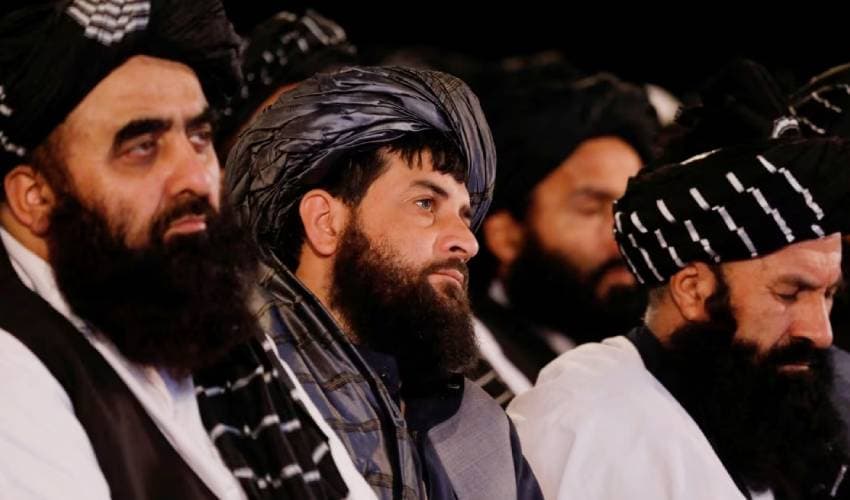
The Australian government has imposed financial sanctions and travel bans on four Taliban officials, citing severe oppression of women and girls in Afghanistan and concerns over the erosion of good governance and the rule of law.
Foreign Minister Penny Wong announced on Saturday that Canberra has established an autonomous sanctions framework for Afghanistan, allowing it to directly impose sanctions and travel restrictions on Taliban officials.
The framework also introduces an arms embargo and prohibits providing related services to Afghanistan, aiming to increase pressure on the Taliban.
Targeted Taliban officials
The officials named in the sanctions include:
-
Muhammad Khalid Hanafi, Minister for the Propagation of Virtue and the Prevention of Vice
-
Neda Mohammad Nadeem, Minister of Higher Education
-
Abdul-Hakim Sharei, Minister of Justice
-
Abdul Hakim Haqqani, Chief Justice
Wong stated the sanctions were imposed due to the officials’ involvement in restricting women’s rights, including access to education, employment, freedom of movement, and participation in public life.
Context: Women’s rights under Taliban
Since the Taliban regained power in August 2021, the group has severely restricted the freedoms of women and girls.
-
In December 2022, female students were banned from Afghan universities.
-
The UN estimates that at least 1.4 million girls, approximately 80% of school-age girls, have been denied education.
-
Restrictions on women’s work have fueled poverty, leaving millions dependent on humanitarian aid.
The International Criminal Court (ICC) issued an arrest warrant for Chief Justice Haqqani and Taliban leader Haibatullah Akhunzada in July 2025 for alleged crimes against humanity, citing persecution of women and girls.
The Taliban has rejected accusations of human rights violations, asserting that women’s rights are respected “within the framework of Islamic law.”
Australia’s sanctions build on the 140 individuals and entities already targeted under the UN Security Council’s Taliban framework. The new measures include a humanitarian permit, allowing aid provision despite restrictions.