As COP30 nears its midpoint, climate negotiations remain tense, with countries struggling to agree on key issues.
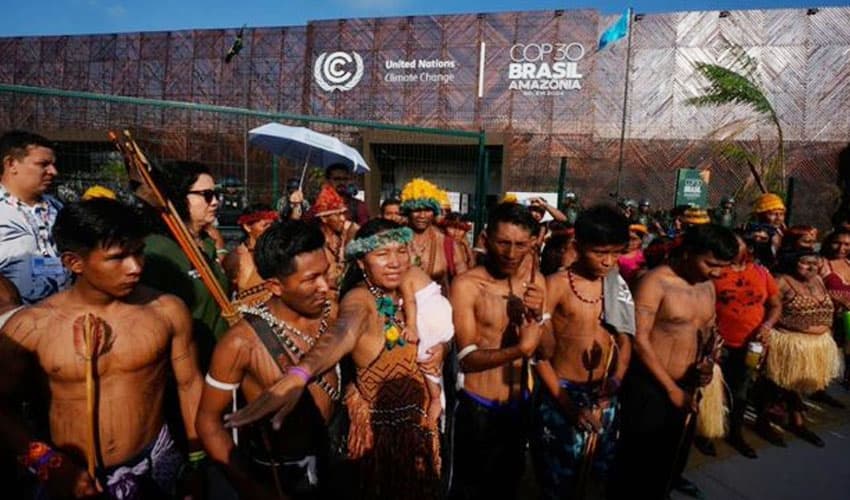
Outside the conference halls, Indigenous groups rallied to demand protection for their forests and recognition in climate talks.
Indigenous representatives staged a peaceful sit-in at the summit entrance, demanding a meeting with COP30 President Andre Correa do Lago.
“We are the ones who protect the climate, and the Amazon cannot continue to be destroyed to enrich big companies,” said the Munduruku Indigenous group, whose territory in northern Brazil spans nearly 24,000 square km.

Brazilian President Luiz Inacio Lula da Silva has highlighted Indigenous communities as crucial participants in this year’s negotiations. During their meeting with Correa do Lago, Indigenous leaders questioned why they were invited to Belem but not included in formal talks. Organizers promised additional conference passes, though Environment Minister Marina Silva suggested their demands were primarily for the Brazilian government.
Delegates nervous over summit ambition
Brazil’s COP30 presidency aims to focus on fulfilling past climate promises rather than introducing new commitments. To avoid early conflicts, contentious topics like climate finance, gaps in national climate plans, and global greenhouse gas reduction goals were set aside for separate discussions.
Negotiators from 195 countries continue to flesh out earlier agreements, including ways to measure and support resilience against climate extremes, referred to in COP terms as “adaptation.”
Some officials expressed concern that the summit could produce a weak outcome. Andrew Wilson, deputy secretary general for policy at the International Chamber of Commerce, warned, “If we continue on this current trajectory, there’s going to be a very, very weak outcome, that will kind of make this a washout when this was supposed to be a very pivotal moment.”
Fossil fuel transition remains contentious
Countries including host Brazil are pushing for a strong statement on moving away from fossil fuels, honoring COP28 commitments. However, formal discussion on the issue has been left off the agenda.
One potential way to reflect progress is through a negotiated cover text, often considered the conference’s central deal. “I know it can be a difficult topic to sort of find the right way to talk about, but if we can have a chance to do that here in Belem, I think that’s a good thing,” said Norwegian Climate Minister Andreas Bjelland Eriksen.
Momentum is slowly building for a cover text that could demonstrate global unity on climate change, despite uncertainties such as the United States’ reduced engagement.