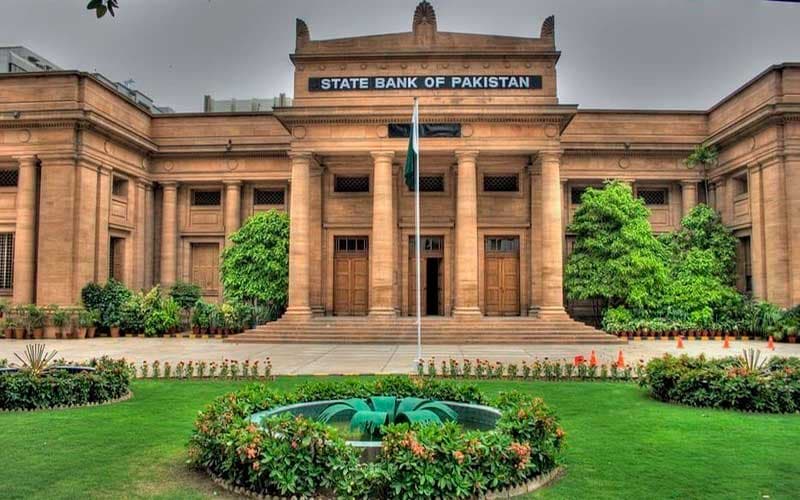
The Senate Standing Committee on Finance has recommended that the power to determine the salary of the State Bank of Pakistan (SBP) governor withdrawn from the bank's board and made subject to government approval. Senator Anusha Rehman called for legislation to formalise this recommendation.
According to details surfaced on Wednesday, concerns were also raised over an increase of Rs380 million in the salaries of officials at the Securities and Exchange Commission of Pakistan (SECP). The committee was informed that, as of October 2023, the SBP Governor's monthly salary stood at Rs4 million, excluding other allowances and benefits. The committee has summoned the Governor to explain the details of the salary package.
The committee was further informed that a legal bill aimed at regulating virtual assets and preventing money laundering and terror financing is expected to be passed soon.
Chaired by Senators Saleem Mandviwala and Muhammad Abdul Qadir, the committee also examined the terms and conditions of the SBP Governor’s appointment, and the procedure used to determine the salary. Former Deputy Governor and current Executive Director Dr Inayat Hussain indicated that the Finance Secretary, being a member of the Board, would be in a better position to provide clarity.
Officials from the Ministry of Finance stated that, in 2019, the monthly salary of the then Governor Reza Baqir was Rs2.5 million. However, in October 2023, the SBP Board approved a new monthly salary of Rs4 million. The committee requested full details of the current salaries and allowances of both the Governor and Deputy Governor and has summoned the SBP Governor and Finance Secretary for the next meeting.
Senator Anusha Rehman demanded that the Governor’s authority to determine their own salary be revised. Other committee members also supported the proposal for legislation in this regard. Members expressed concern that SECP officials increased their salaries by Rs 380 million without government approval. It was pointed out that neither the President nor the Prime Minister has the authority to set their own salaries.
A proposal was also made to introduce a uniform policy for salaries and allowances across all 19 regulatory bodies.
The committee reviewed the Virtual Assets Bill 2025. The Finance Secretary said the bill aims to regulate virtual assets and control money laundering. It is expected to enhance transparency and help curb terror financing.
The SBP Executive Director stated that cryptocurrency is not currently illegal, but exists in a grey area. Two options are under consideration: imposing a ban or regulating it. He added that the younger generation is more capable of handling digital assets.
Senator Saleem Mandviwala said that cryptocurrency is being used through hawala and hundi channels. Senator Mohsin Aziz stated that kidnappers are now demanding payments in cryptocurrency, rather than cash, cheques or gold. He added that banned organisations in Sindh and Khyber Pakhtunkhwa are also receiving foreign funding in this manner. He stressed that those involved in kidnapping for ransom are well-versed in using cryptocurrency, raising concerns over increased money laundering in the country.
Senator Dilawar Khan questioned the benefits this law would bring to the state, and its potential impact on debt. He suggested that reducing tax rates could increase overall revenue.
The Finance Secretary reiterated that the law is being introduced to regulate virtual assets in Pakistan and address money laundering concerns. He clarified that the law is not intended to affect debt or tax collection directly, but aims to improve regulatory oversight.
Senator Mandviwala added that investment in cryptocurrency is currently linked to hawala and hundi, and that implementation of the new law would help curb such practices.
The Finance Ministry officials stated that Pakistan is among the top ten countries in terms of investment in virtual assets. The committee conducted a clause-by-clause review of the Virtual Assets Bill 2025. The bill is expected to be approved in the next meeting after addressing the identified gaps.